
Bappenas maps out development priorities between government and business sector
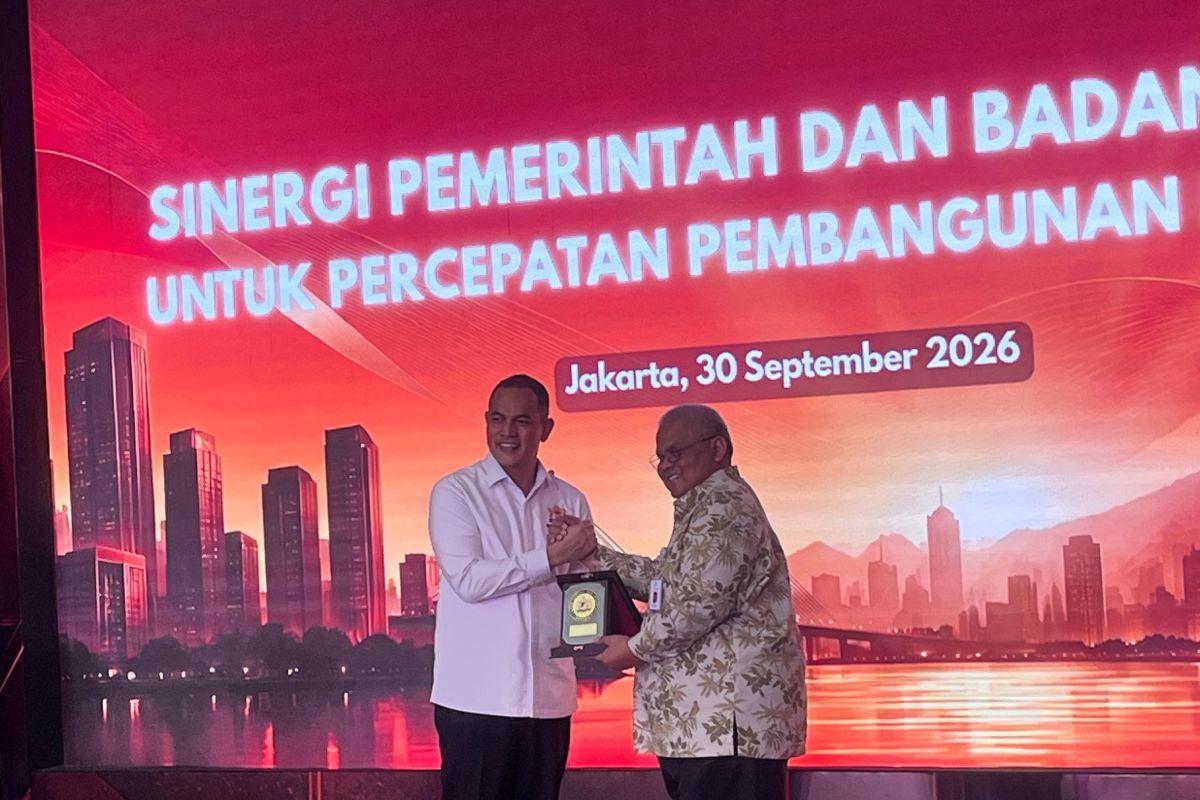
The Deputy for Development Financing and Investment at the Ministry of National Development Planning (Bappels/Bappenas), Putut Hari Satyaka, stated that development priorities in the context of the relationship between business entities and the government are food, energy, and industrial downstreaming.
“Regarding priorities, those funded by the State Budget (APBN) are currently more focused on human capital development and social development. However, for infrastructure, we are placing more emphasis on food sovereignty, energy sovereignty, and downstreaming,” Putut said during a press briefing following the Government and Business Synergy agenda for National Development Acceleration in Jakarta on Wednesday.
According to him, downstreaming steps are crucial so that Indonesia no longer merely sells raw materials but is capable of producing goods with high added value. Regarding the energy sector, the global uncertainty surrounding the Strait of Hormuz issue makes the development of renewable energy sources an urgent necessity that must be addressed collaboratively.
Currently, the government is facing the timelines of the 2025-2029 National Medium-Term Development Plan (RPJMN) and the 2025-2045 National Long-Term Development Plan (RPJPN). Consequently, 60 priority national development programmes and National Strategic Projects (PSN) must be realised immediately through the involvement of appropriate business actors and sound project planning.
“Project preparation cannot be undertaken by the private sector or the government alone, as we must formulate what the business model structure will look like. We need to determine how the government’s involvement via the state budget will work, what the private investment component will be, and what the risk mitigation entails. We are currently mapping these projects in detail,” Putut explained.
“From these 60 projects, we will determine which ones align with the efforts of the Indonesian Chamber of Commerce and Industry (Kadin), and in what manner. The milestone will be the success of several National Priority Work Programmes (PKPN), which are expected to commence in 2026. This does not mean that the PKPN or national strategic projects will be completed immediately, but they will begin based on increasingly solid information,” he added.
Taufan Eko Nugroho, Vice Chairman of Organising at Kadin Indonesia, emphasised that synergy with the government is vital to achieving these development targets.
“Regional areas require significant development. The business community is ready to synergise with the government. We are simply waiting to see which priorities need to be built and what the synergy pattern will look like, so that development can be accelerated, as the required development is much larger than what the current state budget can provide,” said Taufan.
“Therefore, with the potential available in the business world, God willing, we can further accelerate development,” he concluded.