
Bappenas: Low-carbon fish farming opens export opportunities to premium markets
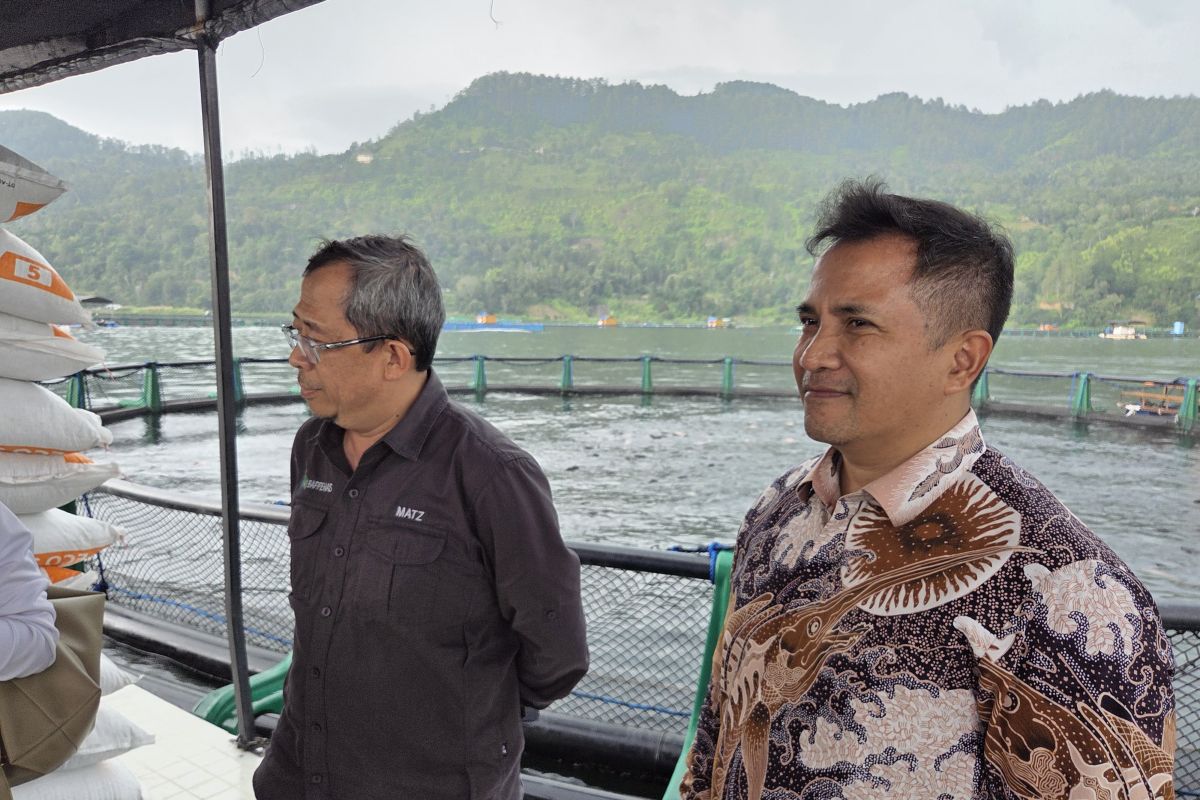
The Ministry of National Development Planning (Bappenas) is encouraging the implementation of low-carbon fishery cultivation to open access for Indonesian fish products, particularly tilapia, to premium export markets such as the United States and Canada.
Leonardo Adypurnama, Bappenas Deputy for Food, Natural Resources, and the Environment, stated that the demand for traceability in fishery products is increasing in the global market. Currently, traceability encompasses not only the origin of the product but also ensures that the production process is conducted sustainably.
“This low-carbon development is not merely a change in how we produce fish, especially through aquaculture, aimed solely at meeting market needs. It is actually part of Indonesia’s commitment to implementing low-carbon development,” said Leonardo while inspecting the Floating Net Cages (KJA) owned by PT Suri Tani Pemuka (Japfa) at Lake Toba, North Sumatra, on Friday.
Leonardo noted that Indonesia previously held the second position as a producer and exporter of tilapia globally, but by 2025, this position is expected to be overtaken by Vietnam. Therefore, Indonesia needs to reclaim that position by increasing production while simultaneously enhancing the competitiveness of Indonesian products in premium markets.
Leonardo also assessed that low-carbon cultivation needs to be applied to all types of farmed fish because fishery activities are directly related to environmental carrying capacity and other economic activities. He cited Lake Toba, which is utilised not only for fish farming but also for transport, tourism, clean water sources, and power generation.
“Therefore, these aspects need to be considered; even the smallest contribution to pollution, for instance, resulting from these aquaculture efforts, also affects the quality of other economic activities,” he added.
During the visit, Bappens observed the implementation of tilapia cultivation as an example of low-carbon development practices that could be expanded. This implementation includes the use of feed and cage designs tailored to the needs of the fish and the environmental carrying capacity. Feed technology is also designed to reduce phosphorus usage, which can trigger lake pollution.
As a main pillar of the green economic transformation within the 2025-2045 National Long-Term Development Plan (RPJPN), the Ministry of National Development Planning (Bappenas) is integrating Low Carbon Development (PRK) and Climate Resilience to drive sustainable economic growth while reducing greenhouse gas emissions. Through interventions in the energy transition sector, land management, blue carbon ecosystems, circular economy, green industry, and eco-friendly transport, the PRK targets an emission reduction of 31.89 per cent to 43.2 per cent by 2030. Furthermore, the reduction of emission intensity is targeted to reach 93.5 per cent by 2045.