
Bappenas: Investment in the Bioeconomy Hinges on Bankable Projects
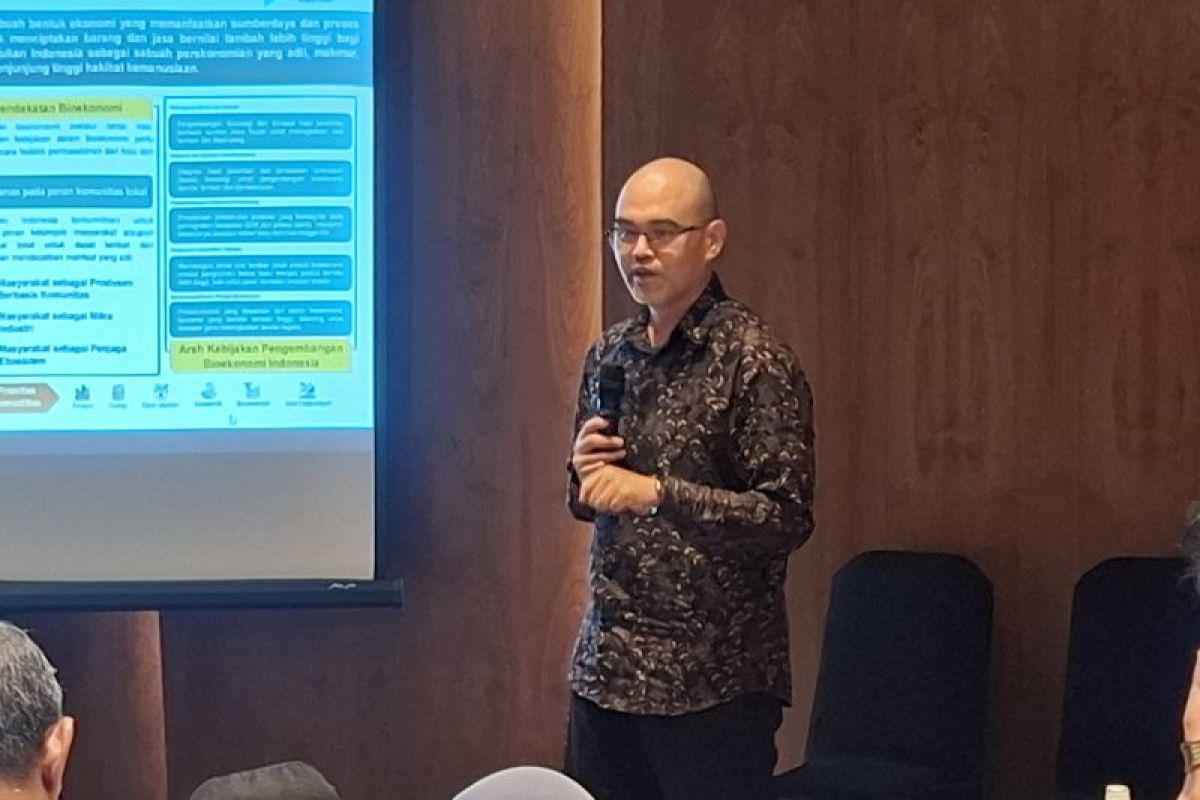
Jakarta (ANTARA) — The Ministry of National Development Planning/National Development Planning Agency (PPN/Bappenas) says the readiness of business projects is key to attracting investment in the bioeconomy, as investor interest and available funds are not matched by a sufficient number of projects suitable for financing.
Dadang Jainal Mutaqin, Bappenas’ Director of Forestry and Water Resources Conservation, said bioeconomy development required not only capital but also business projects that met investors’ requirements.
“What is still lacking is projects that are ready for financing — that are bankable,” Dadang said in Jakarta on Wednesday.
He said the obstacles included cross-sectoral licensing, land legality, raw materials, financing risks, market access and product traceability.
The government, businesses, investors and development partners therefore need to work together to prepare bioeconomy projects that are economically viable and attractive to funders.
“This requires collaboration with development partners: how do we create bioeconomy projects that are ready for investors to finance, or that are bankable,” he said.
Dadang said financing was needed from the research, innovation and business start-up stages through to business development and commercialisation. The government’s role was to align regulations, strengthen cross-sectoral coordination and prepare investment incentives.
Investors and the private sector can provide capital and act as buyers of the products. Development partners can help prepare projects, provide technical assistance and catalytic funding, and reduce investment risks.
Next steps include mapping financing gaps, preparing projects, bringing business owners together with prospective buyers and investors, and expanding the scale of investment.
In response to this need, the Koalisi Ekonomi Membumi (KEM), together with its partners, launched the Indonesia Bioeconomy Finance Lab (IBFL) at the Indonesia Impact Investment Summit 2026.
KEM Head of Executive Board Gita Syahrani said the IBFL was a collaborative platform bringing bioeconomy businesses and funders together to find financing arrangements suited to their needs.
“Think of the IBFL as an innovation lab where business operators can meet funders directly and discuss specific cases,” Gita said.
She identified three problems: limited working capital and capital expenditure; the need for infrastructure funding, such as for energy and logistics; and the difficulty growing businesses face in accessing financing appropriate to their size.
The last issue is known as the “missing middle”: businesses are too large for microfinance but do not yet meet the requirements for larger-scale investment.
A 2024 study by the Indonesia Impact Alliance (IIA) estimated that the annual financing gap for small and medium-sized enterprises focused on social and environmental impact was US$50.8 billion, or around Rp913.7 trillion.
The study found that 55 per cent of the businesses surveyed needed between US$100,000 and US$2 million in capital, equivalent to around Rp1.8 billion to Rp36 billion, while most impact investment funds set a minimum investment of US$1 million.
Gita said the IBFL had 18 partner organisations. KEM itself has 29 member organisations, around 18 businesses in its portfolio, and has curated about 40 other businesses from its partners’ portfolios.
Over the next eight months, the IBFL aims to develop three to five financing case studies, with the expectation that these could lead to funds being disbursed to businesses.
“Over the next eight months, the hope is that there will be financing products or instruments that are suitable and can actually reach the point of disbursement to those companies,” Gita said.
Hanny Chrysolite, Investment Manager at Southeast Asia Partnerships for Forests (P4F), added that investment readiness required market certainty, competitive pricing, product testing, and cooperation among suppliers, researchers and buyers.
Haga Ginting, Partnership Manager at PT Sobat Bumi Lestari (SOBI), cited the development of an agroforestry supply chain in the Menoreh Landscape, connecting farmers with buyers through records of supply and product origin.
According to Haga, these records help assess business viability, while early-stage grants are used to reduce risk before seeking larger investments.
Under SOBI’s revenue-sharing arrangement, 74 per cent of income goes to farmers, 6 per cent to local institutions and 20 per cent to SOBI.
Source: jawawa.id (https://jawawa.id/newsitem/bappenas-investment-in-the-bioeconomy-hinges-on-bankable-projects-1792587270)
Originally published by Antara (Indonesian) (https://www.antaranews.com/berita/5802629/bappenas-kesiapan-proyek-usaha-kunci-tarik-investasi-bioekonomi), translated from Indonesian