
Bappenas: Intellectual Property Key to Escaping Middle-Income Trap
The position of intellectual property is now considered not only an instrument of legal protection, but also a driver of national economic transformation.
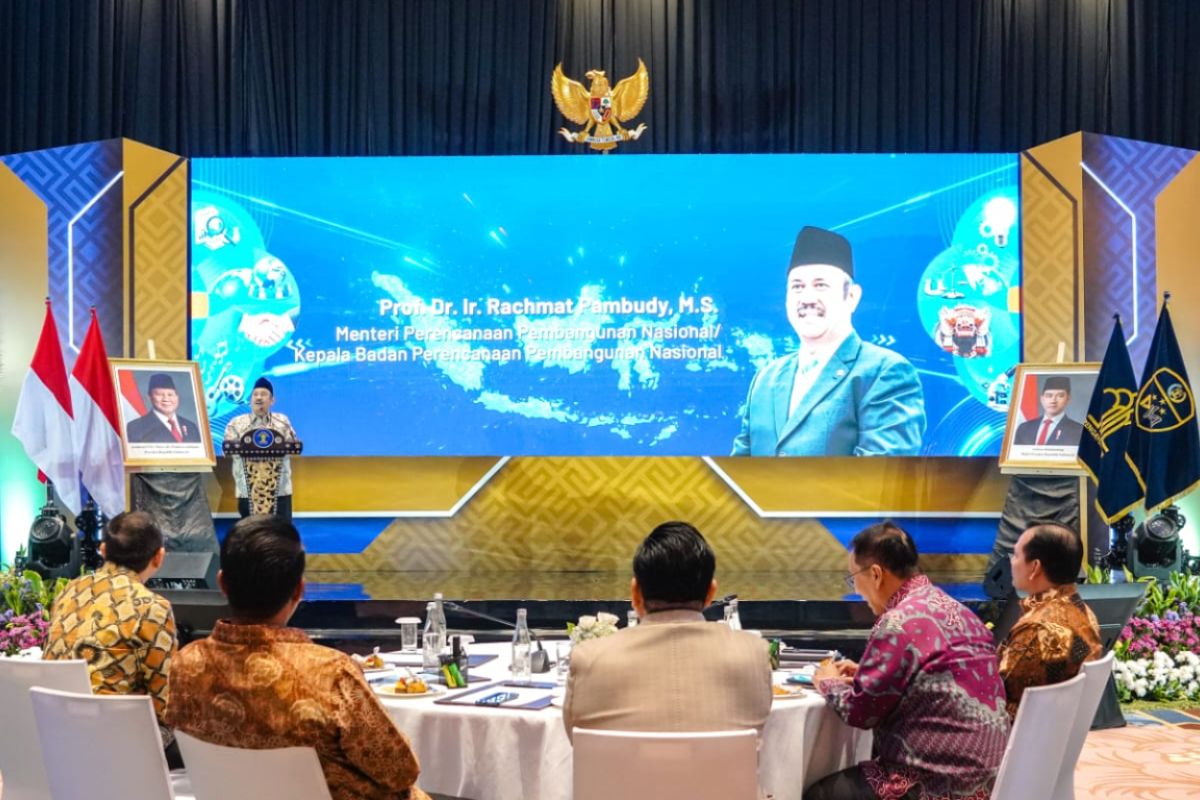
Minister of National Development Planning/Head of the National Development Planning Agency (Bappenas) Rachmat Pambudy said that intellectual property is a key instrument for escaping the middle income trap.
Indonesia’s 2045 economic vision targets the country to escape the middle income trap by 2038 and become one of the largest economic powers by 2045.
“If in the past a nation’s wealth was determined by natural resources, then in the 21st century advantage is determined by the ability to create knowledge, produce innovation, and turn creativity into high economic value,” said Rachmat Pambudy at the 2026 Indonesia Intellectual Property National Coordination Forum: “The Strategic Role of Ministries/Agencies in Building Indonesia’s Intellectual Property Ecosystem,” from an official statement in Jakarta on Friday.
On the same occasion, senior high-ranking officials from 36 ministries and agencies signed a joint commitment on the draft National Intellectual Property Master Plan 2027-2036. The document is being prepared as an important instrument in building an Indonesian economy that is increasingly innovative, productive, and competitive.
The position of intellectual property is now considered not only an instrument of legal protection, but also a driver of national economic transformation.
Indonesia’s 2045 economic target is expected to be achieved through economic transformation that does not rely solely on the exploration and exploitation of natural resources, but on an economy based on innovation, technological productivity, value-added industry, and intellectual property.
Indonesia is recorded as lagging behind the European Union in geographical indication registrations, despite the country’s wealth of traditional distinctive products.
The government is encouraging this potential to be converted into protected economic value, taking lessons from the success of other countries that have monetised products based on geographical identity.
“The discussion on intellectual property is not only about legal protection, but also about national development strategy, a strategy for winning competitiveness, and a strategy for building Indonesia’s economic future,” said Rachmat Pambudy.