
Bappenas: Integrated Funding Needed to Accelerate Digital Transformation
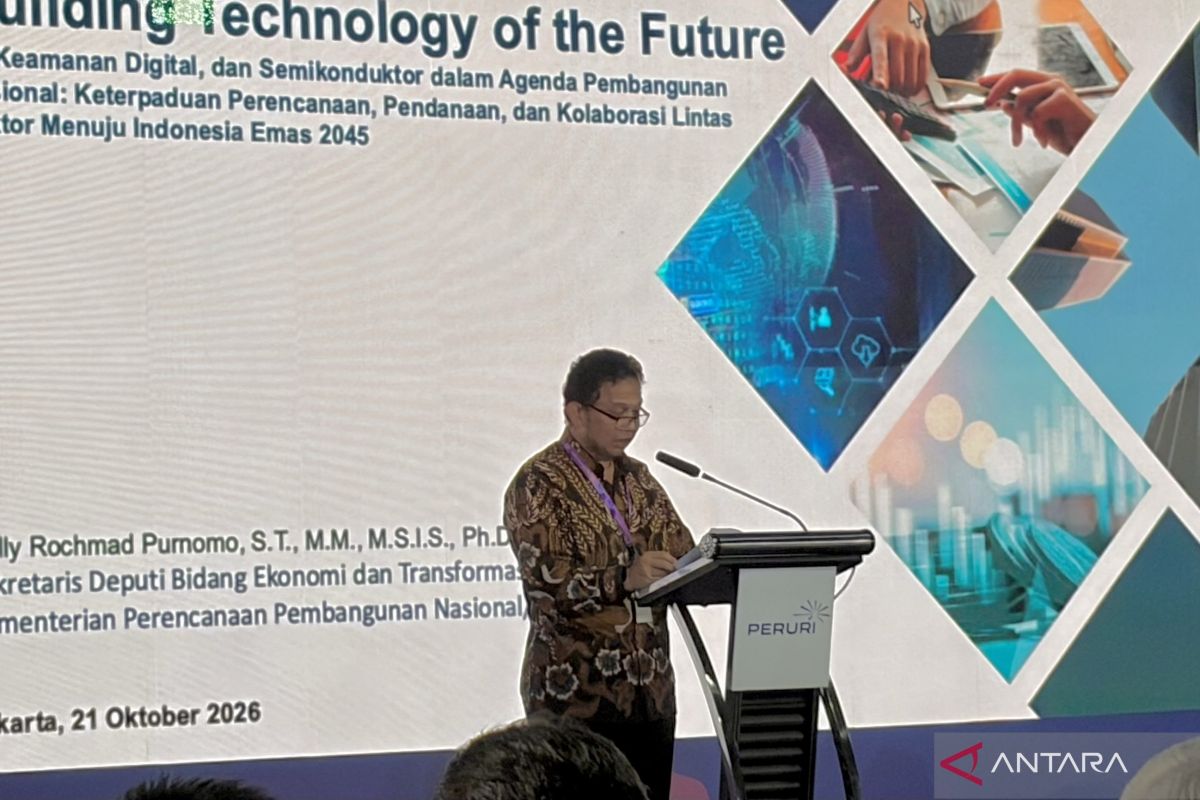
Digitalisation across sectors is intended to boost productivity, efficiency and innovation, thereby strengthening the contribution of the digital economy to economic growth.
Jakarta (ANTARA) – The Ministry of National Development Planning/National Development Planning Agency (PPN/Bappenas) considers integrated funding important to efforts to drive digital transformation, particularly to increase the digital economy’s contribution to the national economy.
“Digitalisation across sectors is intended to boost productivity, efficiency and innovation, thereby strengthening the contribution of the digital economy to economic growth,” said Rolly Rochmad Purnomo, secretary to the deputy for economy and digital transformation at the Ministry of National Development Planning, in Jakarta on Wednesday.
He said that, in 2027, the strategy for supporting digital transformation through funding would emphasise combining resources from central government, state-owned enterprises, regionally owned enterprises, the private sector, and public-private partnerships (PPPs).
“This would be complemented by instruments such as blended finance, sustainable financing and results-based financing,” Rolly said.
He added that aligning central and regional needs was important to ensure funding was connected to development requirements and outcomes.
Most funding for the digital sector generally comes from private or non-government sources. Government funding, meanwhile, will focus on non-commercial areas, including the 3T regions—frontier, outermost and disadvantaged areas.
“Therefore, government policies are needed to provide fiscal and non-fiscal incentives to attract investment in the digital sector, alongside alignment between central and regional regulations to ensure legal and investment certainty,” Rolly said.
He also said the emerging technology ecosystem was important, as it offered significant potential to drive growth in the digital economy.
“One example is the adoption of artificial intelligence (AI), which could help accelerate the development of the digital economy by raising productivity, improving efficiency and opening up opportunities for innovation across strategic sectors,” he said.
In finance, education and healthcare, Rolly said, the use of AI was intended to improve business processes and service quality.
However, he said, this potential would not be realised simply by introducing technology. Digital infrastructure, high-quality data, adequate digital literacy and integrated funding were also needed to ensure its application met development needs.
“Therefore, the accelerated adoption of artificial intelligence needs to go hand in hand with stronger digital infrastructure, data governance and security, so that it can be deployed responsibly and to its full potential,” Rolly said.