
Bappenas: Indonesia’s Biodiversity Could Become an Engine of Inclusive Growth
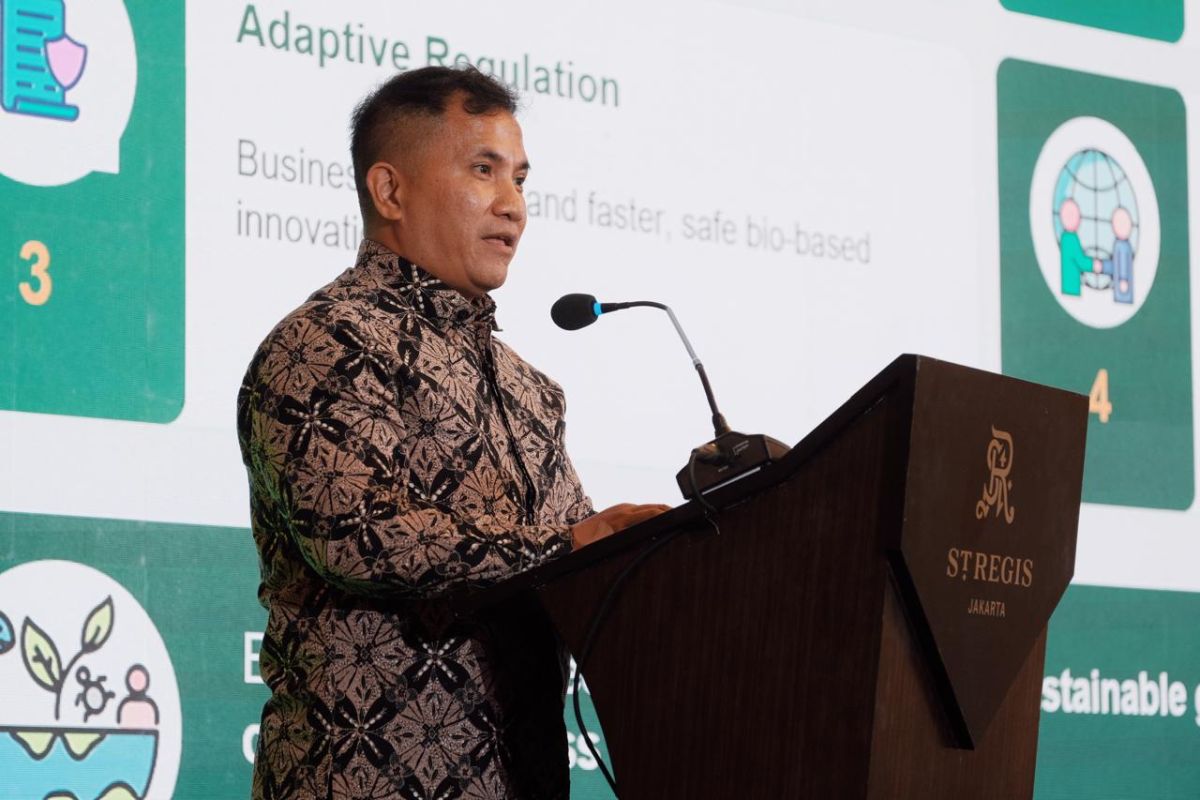
Jakarta (ANTARA) – Indonesia’s Ministry of National Development Planning (Bappenas) said the country’s biological wealth could become a powerful engine of inclusive and sustainable growth.
The statement was delivered by Leonardo A A Teguh Sambodo, deputy for food, natural resources and the environment at the ministry, during the launch of a report titled “The Value of Biosolutions: Growth and Prosperity to 2035 – Indonesia Edition”, according to a Bappenas statement received in Jakarta on Friday.
Compiled by Amsterdam Data Collective (ADC) at the initiative of Novonesis, in collaboration with the Royal Danish Embassy, the report is the first comprehensive study to measure the economic potential and value of biosolutions specifically in Indonesia.
“Its findings give us evidence, direction and confidence that Indonesia’s biological wealth can become a powerful engine of inclusive and sustainable growth. Biosolutions are not a standalone sector. They are a cross-sector driver that can increase productivity, efficiency and added value throughout the bioeconomy,” Teguh said.
Indonesia has the potential to produce biosolutions through the development of biological innovation. Biosolutions are technologies based on living organisms that are used to address environmental, food and energy challenges while increasing economic value.
The Value of Biosolutions study projects that the economic value of biosolutions in Indonesia will nearly triple, from almost US$1 billion today to US$2.3 billion by 2035. Each job in the biosolutions industry is expected to support 3.8 indirect jobs in other industries, above the global average of 2.4.
The report launch supports the preparation of the Indonesian Bioeconomy Development Roadmap, which is targeted for completion by the end of 2026. The initiative is also in line with the 2025–2045 National Long-Term Development Plan (RPJPN), which identifies the bioeconomy as a new source of economic growth.
“Bioeconomy development will focus on the food, energy, health, cosmetics, biomaterials and environmental services clusters,” he said.
Denmark’s ambassador to Indonesia, Timor-Leste, Papua New Guinea and ASEAN, Sten Frimodt Nielsen, said biosolutions offered new opportunities for cooperation between Indonesia and Denmark, which celebrated 75 years of diplomatic relations last year.
“If we are given a choice between economic growth and well-being, we often feel we have to choose one. But what if innovation could help us achieve both? This is where biosolutions can make a difference,” Sten said.
He said an important lesson from Denmark’s experience was that innovation needed the right conditions to succeed, including clear regulation, investment in research and development, and close cooperation between government, industry and academia.
Novonesis Indonesia country manager Ang Yonny Setiady expressed confidence in Indonesia’s position in the region.
“Indonesia has strong capabilities and ambition to become a bioeconomy leader in Southeast Asia. With the right policy interventions, biosolutions will accelerate inclusive economic growth, create quality jobs and speed up the achievement of the Golden Indonesia 2045 Vision,” Yonny said.
Dadang Jainal Mutaqin, director of forestry and water resources conservation at Bappenas, also stressed the importance of an independent bioeconomy based on domestic assets.
National bioeconomy development, he said, should rely on Indonesia’s own resources: indigenous microbes, local knowledge and a national research base, supported by market certainty through strategic policies such as the B50 and E20 mandates.
The roadmap is expected to encourage the commercialisation of research, provide pilot-plant facilities, ensure regulatory and financing certainty, and guarantee a fair distribution of benefits for communities.
All the report’s findings and contributions from the panel discussion will be incorporated into the preparation of the Indonesian Bioeconomy Roadmap, which is being developed through an inclusive and participatory process. The full report, The Value of Biosolutions: Growth and Prosperity to 2035 – Indonesia Edition, is available at www.thevalueofbiosolutions.com.
Source: jawawa.id (https://jawawa.id/newsitem/bappenas-indonesias-biodiversity-could-become-an-engine-of-inclusive-growth-1793339595)
Originally published by Antara (Indonesian) (https://www.antaranews.com/berita/5821123/bappenas-kekayaan-hayati-ri-dapat-jadi-mesin-pertumbuhan-inklusif), translated from Indonesian