
Bappenas: Indonesia Has Strong Foundation to Develop Tokenisation Ecosystem
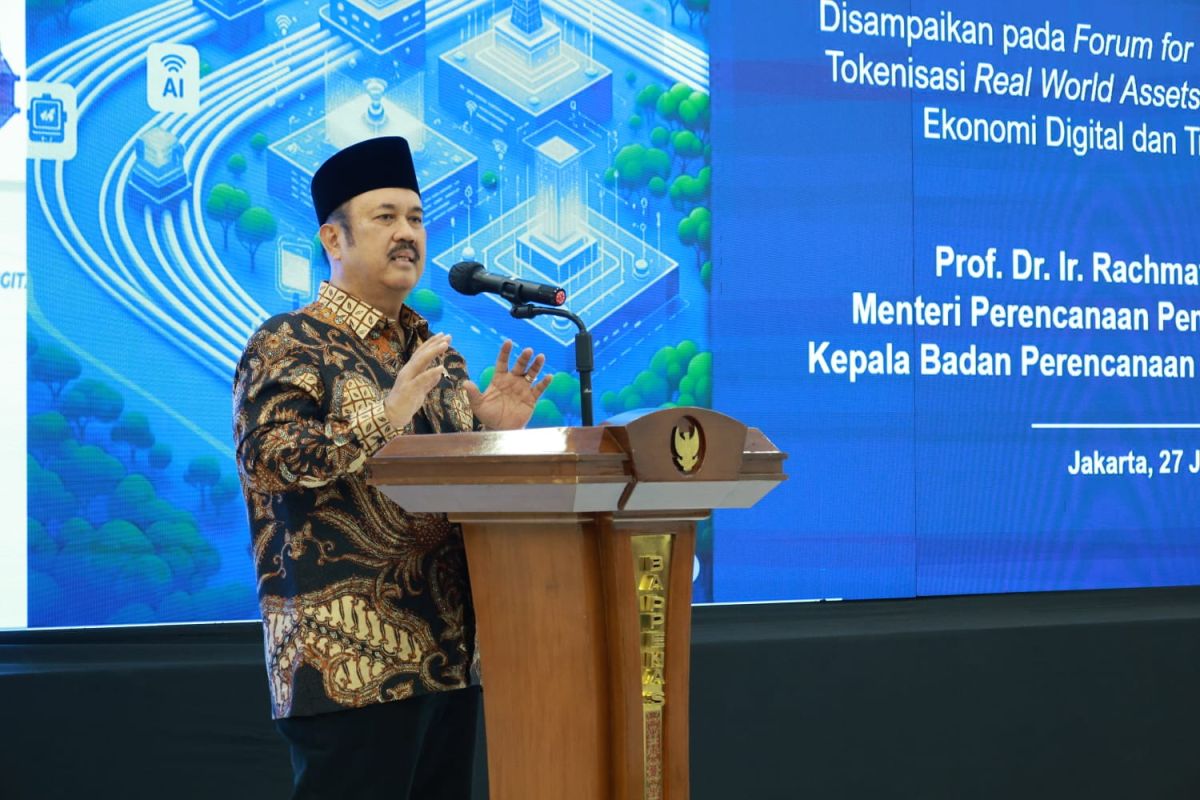
Minister of National Development Planning/Head of the National Development Planning Agency (Bappenas) Rachmat Pambudy stated that Indonesia has strong capital to develop a tokenisation ecosystem. “The high internet penetration, rapid digital economy, and increasing adoption of digital financial services are the foundation for technology-based financing innovation,” he said during the Forum for Discussion and Solution: Real World Assets (RWA) Tokenisation for Digital Economy Acceleration and Digital Transformation, according to an official statement in Jakarta on Wednesday. He stressed the importance of developing Real World Assets (RWA) tokenisation as a financing innovation to accelerate digital transformation and the economy, broaden investment access, and strengthen financing for productive sectors. Given that digital transformation is one of the main levers for the national economy to achieve a growth target of 8 percent by 2029, he noted that the digital economy plays a strategic role through the utilisation of blockchain technology and real asset tokenisation. Through tokenisation, real assets such as property, commodities, gold, securities, and infrastructure assets can be represented in the form of digital tokens, allowing them to be traded more efficiently, increasing asset liquidity, and expanding public investment access. “This tokenisation will truly change our economic order, but in an Indonesian way. Changing with our own thoughts, and changing to prosper us,” said the Head of Bappenas. Nevertheless, Rachmat Pambudy emphasised that the development of RWA tokenisation must be accompanied by comprehensive governance. A number of challenges still need to be addressed, ranging from strengthening the governance of underlying assets, readiness of digital infrastructure and ecosystems, consumer protection, to regulatory harmonisation and cross-authority coordination, so that reinforcement is needed for this innovation to develop safely, reliably, and sustainably. He explained that the government is promoting RWA tokenisation through three main policy directions: expanding use case implementation across various strategic sectors, strengthening the regulatory and governance framework, and fostering closer collaboration between the government, regulators, industry, academia, and associations in building the national tokenisation ecosystem. “We hope today we will succeed in producing more concrete solutions. Most importantly, this technology will eventually help low-income community groups, including farmers, fishermen, and livestock breeders, as well as Indonesians who have so far been unreached by the global or our national economic system,” the Minister of National Development Planning stated. On the same occasion, Deputy for Economic and Digital Transformation at the Ministry of National Development Planning/Bappenas, Vivi Yulaswati, conveyed that her office is conducting various studies and discussions with regulators, business players, associations, academics, and development partners to map the potential of tokenisation in several priority sectors, including financial services, agriculture, tourism, the creative economy, and other productive sectors. “Indonesia already has initial capital through various regulatory sandbox initiatives, but the implementation of tokenisation still requires strengthened governance, regulatory harmonisation, and ecosystem readiness to develop optimally,” Vivi said.