
Bappenas: Human Resources Must Work in an Integrated Way for Sustainable Development
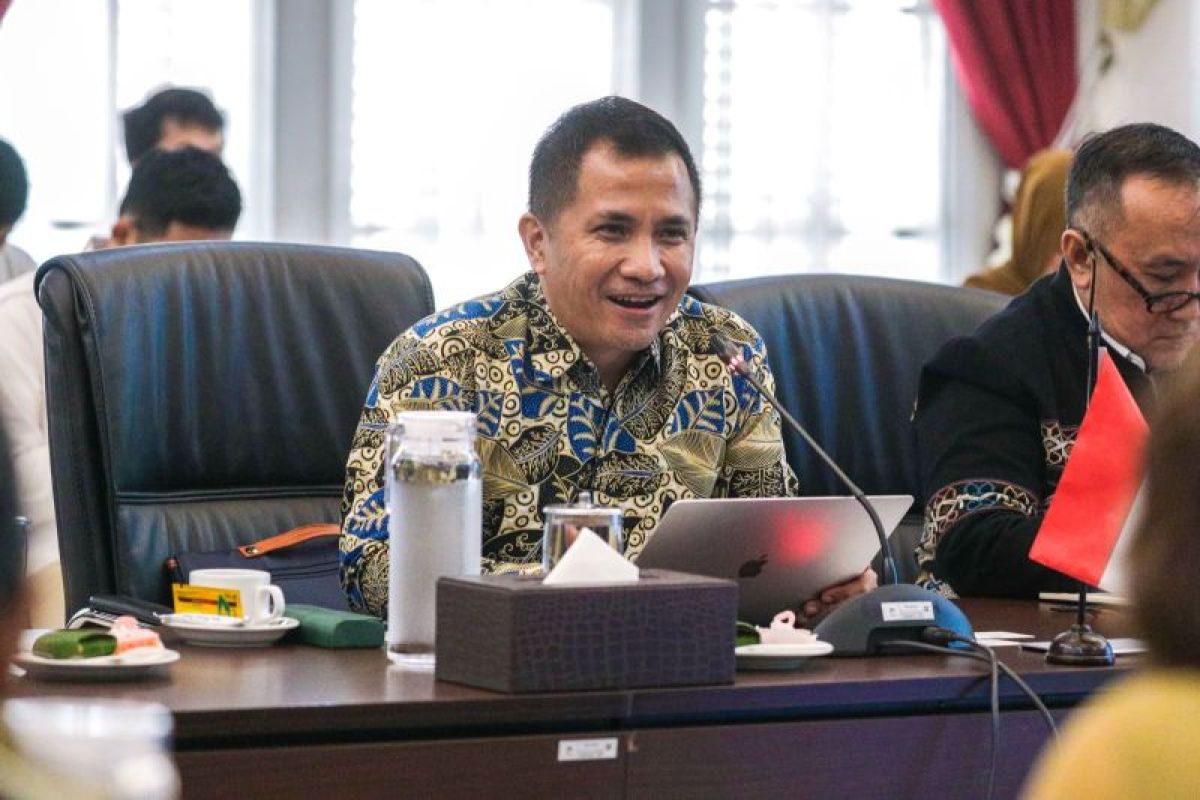
The Deputy for Food, Natural Resources, and Environment at the Ministry of National Development Planning/Bappenas, Leonardo A.A. Teguh Sambodo, stated that sustainable development demands talent or human resources to work in an integrated and mutually reinforcing manner. “Sustainable development requires us to work in a more integrated and mutually reinforcing way in utilising resources to be more effective, for collaboration to have a more real impact, and for the courage to continuously correct and improve approaches that have not yet resulted in the expected changes,” he said during the virtual Kick-Off Meeting for Indonesia’s SDGs Action Awards 2026 on Thursday.
He noted that the world has entered a critical phase in implementing the Sustainable Development Goals (SDGs), with only five years remaining until the 2030 target, amidst increasingly complex, rapid, and interconnected challenges. In this context, his ministry is continuing the Indonesia SDGs Action Awards (SAA) agenda, which has been held since 2022, as a space to appreciate both government and non-government actors contributing to the achievement of the SDGs.
Entering 2026, the SAA is being strengthened as a national platform to identify, document, and disseminate practices that truly produce real change. The overarching theme for the 2026 SAA is “Real Action to Accelerate SDG Achievement Towards 2030,” carrying three main messages. The first is real action, meaning commitment to the SDGs must not stop at documents, statements, commitments, forums, or ceremonies, but must be translated into policies, programmes, services, investments, and governance changes whose benefits can be felt by the community.
“Real action also means ensuring that development reaches all those in need, such as the poor, women, children, persons with disabilities, indigenous peoples, residents in underdeveloped regions, and groups that have not yet received equal access and opportunities. The principle of ‘no one left behind’ is therefore not merely a complement; it is a principle that serves as the main measure of sustainable development success,” Teguh stated. He added that good practices do not have to be large-scale or require large budgets, as innovation can emerge from regions, communities, universities, civil society organisations, or small business actors. What matters most is the accuracy in addressing problems, the quality of the benefits produced, and the practice’s potential for further development.
The final main message of the 2026 SAA theme is collaboration as a shared responsibility. This involves the government, which holds policy and public service authority; the business sector, with its capacity for investment, innovation, technology, and value chain development; universities, with their strength in research and science; civil society organisations, which understand community needs; philanthropic institutions, which can provide flexible and catalytic support; and the media, which plays a role in building awareness and ensuring accountability. According to Teguh, this collaboration is needed to align objectives, distribute clear roles, contribute concretely, and complement one another.
Furthermore, the 2026 SAA is also intended as an open learning space to study good practices and their challenges, the limitations of adjustments, and the lessons learned during the implementation process. “Therefore, I invite all prospective participants to make the 2026 SAA a moment of reflection. Does our programme truly answer the community’s needs? Do its benefits reach the most disadvantaged groups? Has the community been involved in the process? Can the resulting changes be sustained? Can the challenges and obstacles be resolved thoroughly? And can the experience be learned from and developed by other parties?” he said. “The success of the SAA is ultimately not only determined by who receives the award. True success is when good practices become a source of learning, inspire other regions or individuals, strengthen collaboration, and drive the expansion of impact,” concluded the Bappenas Deputy.