
Bappenas Head: Livestock Productivity Begins with Seed Quality
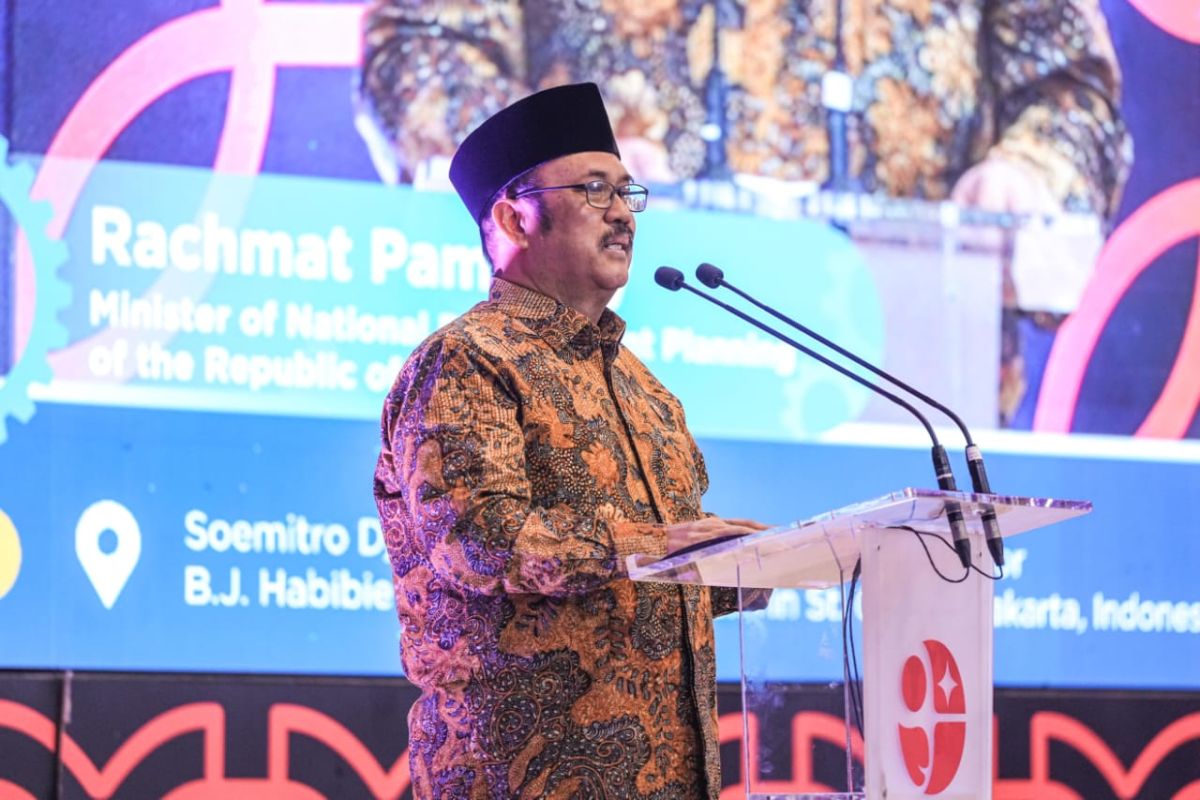
Jakarta (ANTARA) - The Minister for National Development Planning/Head of the National Development Planning Agency (Bappenas), Rachmat Pambudy, stated that increasing livestock productivity must begin with strengthening the upstream foundation, particularly seed quality and feed availability.
“The first and foremost thing we must have is good seeds. Seeds are the source of progress in increasing production and productivity. We also have extraordinary livestock feed raw materials from our plantation waste,” he said in an official Bappenas statement in Jakarta on Tuesday.
Furthermore, the Head of Bappenas highlighted the large domestic demand as both an opportunity and a challenge for Indonesia to boost domestic production. The government itself targets a significant increase in national milk production to reduce high import dependency.
Currently, milk production in Indonesia is only around 21%, and it is hoped to increase to nearly 96% by 2029.
According to him, strengthening the livestock sector aligns with the President’s directives to implement development based on science and technology, as well as enhancing food security and the success of the Free Nutritious Meals (MBG) programme through increased availability of quality animal protein.
“We from the Ministry of National Development Planning/Bappenas will certainly support BRIN, because the source of progress is research and development, and that is also in line with the President’s directives; we must work based on the latest scientific research,” he said at the Livestock Investment Forum organised by the Indonesian National Research and Innovation Agency (BRIN).
Meanwhile, the Head of BRIN, Arif Satria, conveyed that strengthening research not only focuses on increasing production but also on sustainability aspects.
Innovations in animal nutrition and feed are continuously being developed to improve efficiency while reducing environmental impacts, including methane gas emissions from the livestock sector.
His side assured that it will continue to encourage collaboration with universities, ministries/institutions, and the private sector to create an adaptive livestock system to climate change and sustainable in the long term.
Through synergy between research, investment, and global collaboration, the government is optimistic that the national livestock sector can develop more rapidly, increase food self-sufficiency, and strengthen Indonesia’s competitiveness at the global level.