
Bappenas Head: Implementation of 2027 Government Work Plan through 8 PKPN Clusters
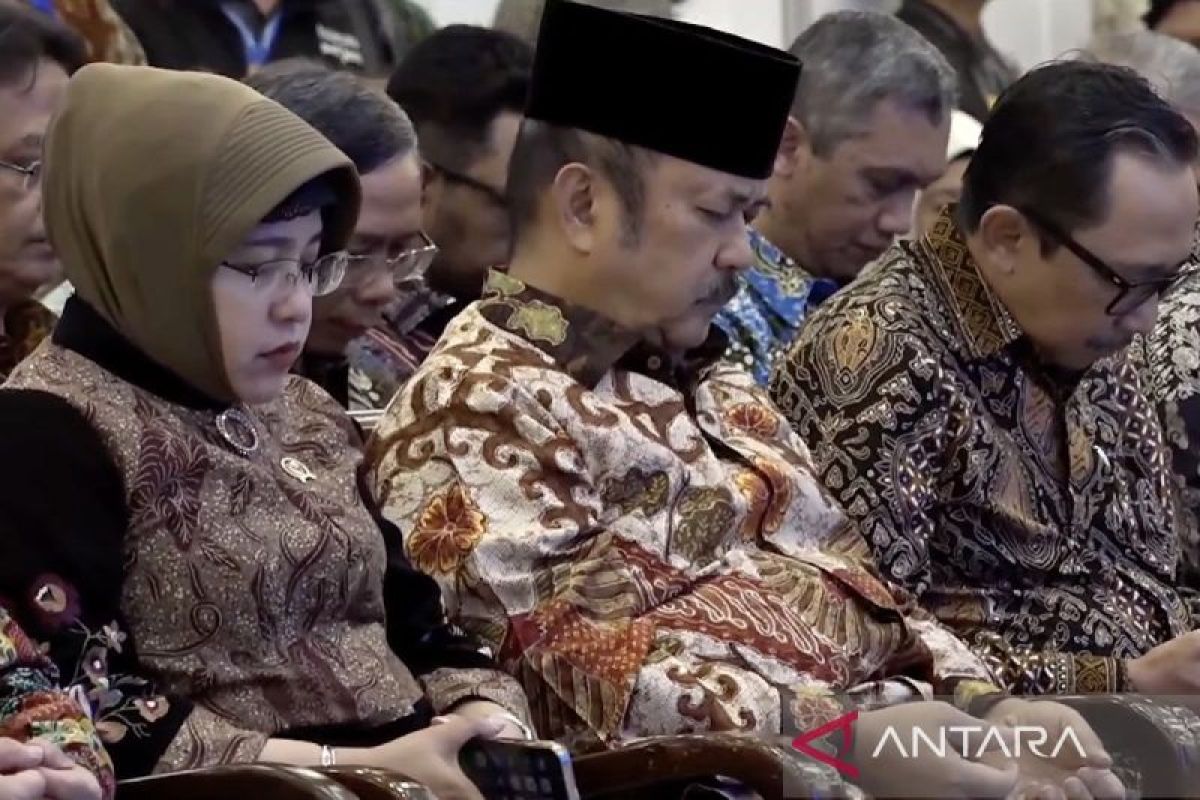
The success of the entire PKPN agenda is supported by the foundation of defence and security.
Jakarta (ANTARA) - Minister of National Development Planning/Head of the National Development Planning Agency (PPN/Bappenas) Rachmat Pambudy stated that the 2027 Government Work Plan (RKP) will be implemented through eight clusters of the National Priority Work Programme (PKPN).
The eight clusters, comprising a total of 60 programmes, are food sovereignty, energy and water independence, education, health, downstreaming and industrialisation, poverty reduction, people’s economy and villages, as well as infrastructure, housing, and disaster resilience.
“The success of the entire PKPN agenda is supported by the foundation of defence and security, legal approaches, governance, digitalisation, and economic diplomacy,” he said during the Central Development Coordination Meeting (Rakorbangpus) 2026 in the Context of Preparing the 2027 Government Work Plan (RKP) in Jakarta on Thursday.
For food sovereignty, the work programmes include 5,000 Red White Fisherman Villages (KNMP), 4,582 modern fishing vessels, 40,000 thematic inland fish farming sites, revitalisation of 14,090 hectares (ha) of brackish water tilapia ponds in the northern coastal areas (Pantura), modelling and replication of 2,000 ha of integrated shrimp ponds, development of plantation areas (palm oil, sugarcane, cocoa, coconut, coffee, guava, cashew, and spices), as well as increasing production of meat, milk, and eggs.
In energy and water independence, this includes mandatory biodiesel 50 (B50) and bioethanol 20 (E20), the 1,000 gigawatt (GW) Solar Power Plant (PLTS) Programme, implementation of Minimum Energy Performance Standards (SKEM), conversion of 6 million internal combustion engine (BBM) motorcycles to electric motorcycles, construction of City Gas Networks (Jargas) for 1 million Household Connections (SR), then increasing oil and gas lifting with 10 small-scale green modular refineries and 6 storage facilities (deployable mass model).
Furthermore, exploration of 10 new oil and gas blocks, electrification of 10,000 villages, Waste Management into Electricity Energy (PSEL), large-scale integrated Hydroelectric Power Plant (PLTA), electric stoves for 2-5 million households, optimisation of 45,000 community oil wells, optimisation of lifting in 13,824 old wells, and water self-sufficiency.
The third cluster is education, which includes Free Nutritious Meals (MBG) for schoolchildren, revitalisation of school/madrasah facilities and infrastructure, school equipment assistance, 500 Integrated National Schools (SNT), teacher studios, education digitalisation (2 million interactive digital boards), 20 New Garuda Schools and 80 Garuda Transformation Schools, 514 People’s Schools, then 10 new universities; a STEMM-based (Science, Technology, Engineering, Mathematics, and Medicine) medical university.
Additionally, 500,000 vocational high school (SMK) graduates going global, a national sports academy and national training centre, improving teacher welfare; direct transfer of allowances, and child protection in the digital space through PP TUNAS (Government Regulation Number 17 of 2025 on the Governance of Electronic System Management in Child Protection).
The fourth is health, encompassing MBG for pregnant women, breastfeeding mothers, and toddlers; upgrading 66 hospitals, free health check-ups, and eradicating tuberculosis. The fifth is downstreaming and industrialisation, consisting of downstreaming of strategic industries (18 projects), national car, national motorcycle, aerospace industry ecosystem, and semiconductor industry development.
The sixth cluster is infrastructure, housing, and disaster resilience, which includes the giant sea wall programme, rehabilitation and reconstruction post-Sumatra disaster, ASRI movement (roofing, waste control, greening), 3 million houses; 1 million new houses and 2 million house renovations, and development of the national railway network.
Seventh, people’s economy and villages with programmes for 80,000 Red White Village/Subdistrict Cooperatives and accelerating development in 3T regions (Lagging, Frontier, and Outermost). Finally, poverty reduction with the PRO-KESRA (people’s welfare) integrated social assistance programme and PRO-KESRA for 10 million working and employed population.
The entire agenda of the eight clusters is supported by the development of a national data centre, eradication of online gambling, eradication of smuggling, as well as prevention, eradication of misuse and illicit drug trafficking (P4GN).
“This ambition will soon be accompanied by measured steps, solely for one goal: Growth that drives welfare, is equitable, and truly felt by all Indonesian society,” said the Bappenas Head.