
Bappenas: Hajj and Umrah Management Undergoes Paradigm Shift
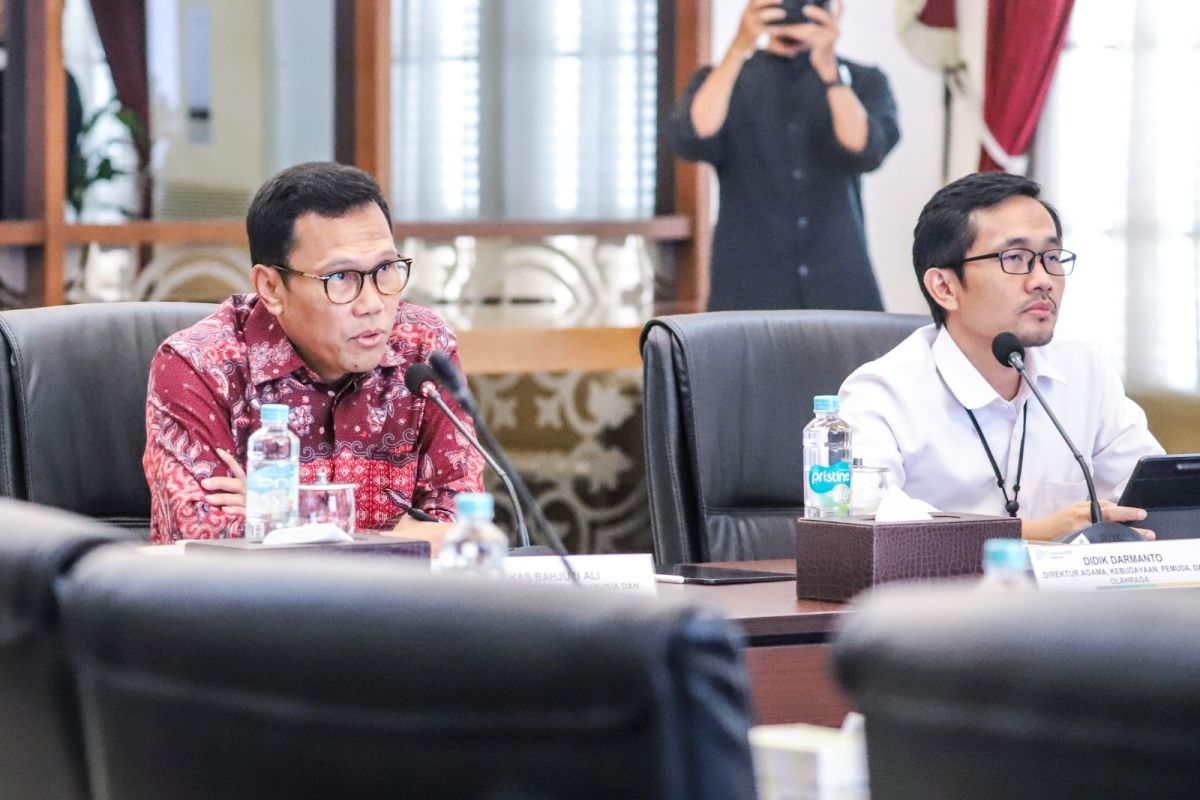
Jakarta (ANTARA) - Deputy for Human Development and Culture at the Ministry of National Development Planning/National Development Planning Agency (PPN/Bappenas), Pungkas Bahjuri Ali, stated that the current management of Hajj and Umrah is undergoing a paradigm shift. “The management of Hajj and Umrah has experienced a paradigm shift, from a sectoral approach to an integrated, cross-sectoral economic ecosystem,” he said during the Kick-off Meeting for the Preparation of the Grand Design for the Development of the Hajj and Umrah Economic Ecosystem, quoted from an official statement in Jakarta on Tuesday. The paradigm of Hajj and Umrah management is said to have shifted from sectoral-ritualistic to an integrated economic ecosystem, meaning spiritual activities are positioned as the main driver to create economic added value. This approach aligns with the pilgrimage economy concept, where religious journeys are not only spiritual in dimension but also become drivers of large-scale economic activities across sectors and countries. This is reflected in the increasing number of pilgrims, particularly for Umrah, which has grown by nearly 70 percent over the past three years and is projected to reach around 1.7 million pilgrims in 2025. In this context, Bappenas is preparing a grand design for the development of the Hajj and Umrah economic ecosystem as a strategic step to optimise domestic economic potential while curbing the outflow of economic value abroad in the organisation of Hajj and Umrah worship. They are formulating a holistic and end-to-end grand design, covering the entire value chain from upstream to downstream, starting from domestic services to integration with the global ecosystem. This development is supported by strengthening regulatory and institutional pillars, domestic industry, international partnerships, financial systems, as well as data integration and digitalisation. “Indonesia is not only a market for pilgrims but must also be an actor capable of taking a role in the global Hajj and Umrah value chain. The vast economic potential needs to be managed optimally to avoid inefficiencies,” Pungkas stated. Director of Religion, Culture, Youth, and Sports at the Ministry of PPN/Bappenas, Didik Darmanto, conveyed that Indonesia has a very large Hajj and Umrah economic scale. Recorded, around 221,000 Hajj pilgrims and 1.6–2 million Umrah pilgrims per year, with an economic turnover of approximately Rp40 trillion. However, around 80 percent of this value still flows abroad. “Our issue is not the lack of potential, but the absence of an integrated ecosystem. Various supporting sectors still operate in a fragmented manner, so economic added value has not been fully enjoyed domestically,” Didik said.