
Bappenas: Growing Older Population Could Create a New Market
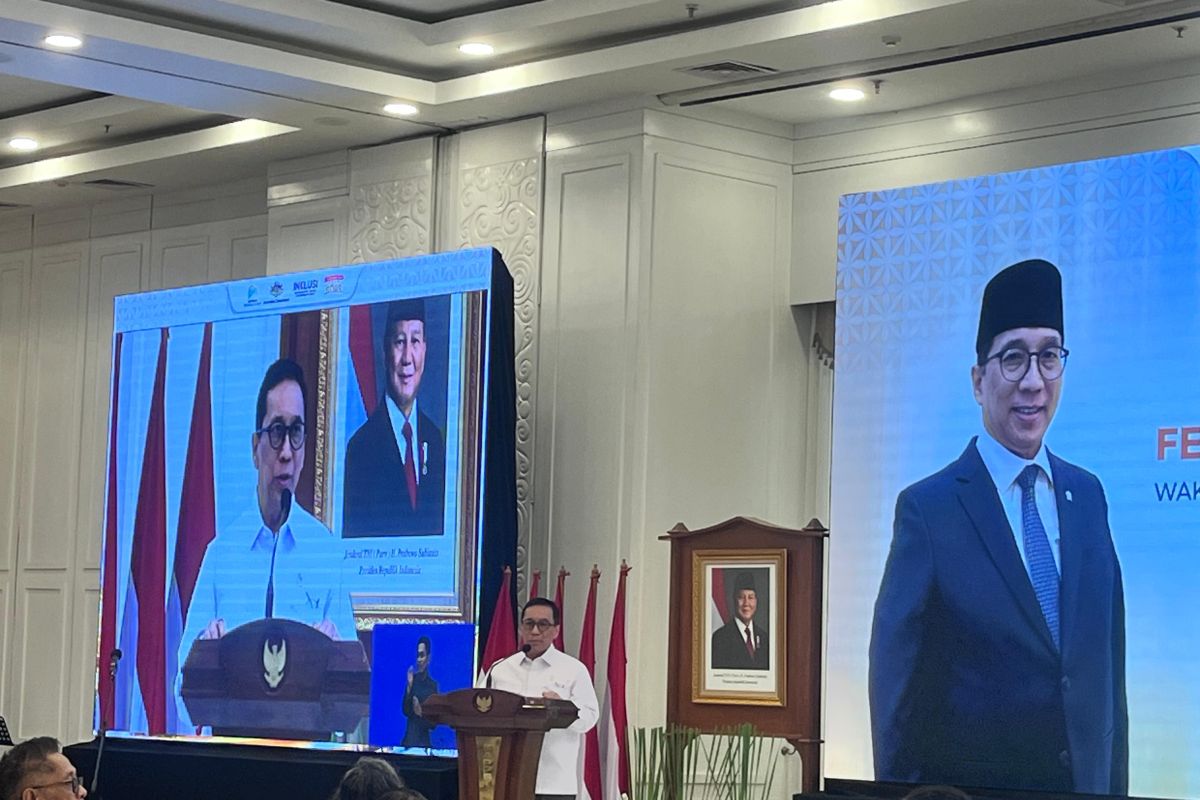
Jakarta (ANTARA) – Deputy Minister of National Development Planning and Deputy Head of the National Development Planning Agency (Bappenas) Febrian Alphyanto Ruddyard said the growing elderly population could create a new market.
“An increase in the elderly population has often been viewed as an economic burden. Yet demographic change also creates markets, investment, jobs and sources of economic growth,” he said at the launch of the book Muda Menata, Tua Berdaya and the kick-off of the development of Indonesia’s Silver Economy Design in Jakarta on Wednesday.
He said the presence of older people presented opportunities in healthcare, care services, digital technology, financial services, housing, tourism, the food industry and healthy-living products.
He said a change in perspective was needed to recognise that the silver economy — economic activities, products and services intended to meet the needs of older people and help people prepare for old age — should be seen as part of the national economic growth strategy, rather than simply an expansion of social welfare programmes.
In other words, the silver economy must not create opportunities only for older people with purchasing power. Investment and innovation must go hand in hand with greater accessibility, affordability and protection for all older people.
“In this way, the silver economy can become a new source of growth while also helping to reduce inequality,” Febrian said.
He cited Japan as an example of a country that had supported older people, enabling the healthcare industry to expand, increasing demand for technologies that support older people’s lives, creating jobs in care services, and prompting the development of products and services specifically for older consumers.
Drawing on Japan’s experience, Febrian said Indonesia had the opportunity to develop the silver economy as a new economic sector. Bappenas projects that the population aged 65 and over will reach 50 million by 2050, or 16 per cent of the total population.
Against this backdrop, he said he hoped the launch of the initiative to develop Indonesia’s Silver Economy Design would shift perceptions of ageing: from a matter of social protection alone to an element of human development and national economic growth.
He stressed that longer life expectancy was an indicator of successful development, reflecting progress in areas such as health and education. Therefore, people living longer must also be able to enjoy a better quality of life.
At present, most older Indonesians are said to have no pension savings, while more than half continue to work, particularly in the informal sector, where protection is very limited. The need for long-term care is also growing, while most responsibility for providing it still falls on families.
“Ageing policy cannot focus solely on social protection. Social protection remains important, especially for people who are poor or vulnerable, and those who need care. But we must also recognise that older people are not a homogeneous group,” he said.
“Some need full protection, some still want to work, some want to start businesses, and many have valuable experience, knowledge and skills to offer society. We need to change our perspective: instead of seeing older people merely as aid recipients, we should recognise them as citizens who retain rights, abilities, choices and opportunities to contribute,” Febrian said.