
Bappenas Formulates Cross-Sector Response in Four Key Clusters to Face El Niño
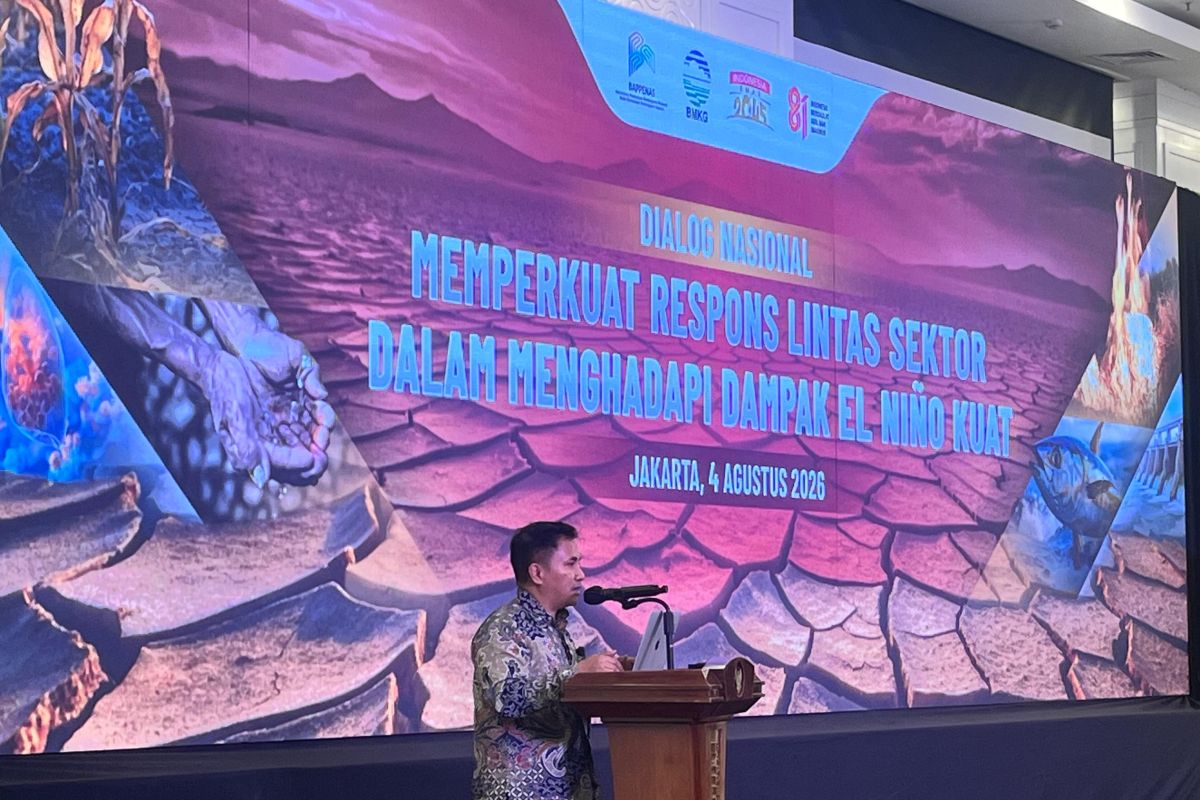
The government has formulated a response direction across four main development clusters to manage the risks of a strong El Niño phenomenon predicted for the second half of 2026. The policy brief, a collaborative effort involving various ministries and agencies including the Meteorology, Climatology, and Geophysics Agency (BMKG), was announced by the Deputy for Food, Natural Resources, and Environment at the Ministry of National Development Planning/Bappenas, Leonardo A.A. Teguh, during a national dialogue in Jakarta. The document not only identifies risks but also maps the spread of impacts and formulates strategic responses across four clusters.
Based on predictive analysis from the BMKG, the El Niño event is expected to bring extreme low rainfall, affecting several regions. Without early anticipation, the economic losses due to climate change in priority sectors could be significant. The first cluster, focusing on forests, land, and agriculture, faces potential declines in rainfall that heighten the risk of forest and land fires, particularly in Sumatra and Kalimantan. The agricultural sector is threatened by drought, which could reduce the productivity of staple crops like rice and plantation commodities such as palm oil and coffee. Proposed responses include strengthening firefighting operations, weather modification, activating boreholes, distributing drought-resistant seeds, improving irrigation, and expanding agricultural insurance. Conversely, the dry season presents an opportunity to optimise the cultivation of dry-season crops like secondary food crops, sugarcane, and certain horticultural varieties.
The second cluster addresses energy and water resources. Prolonged drought is expected to diminish water reserves and river flows, impacting raw water availability and the operation of hydroelectric power plants (PLTA). Prepared responses include dredging and maintaining water storage infrastructure, watershed conservation, and weather modification operations. However, the reduced cloud cover also opens opportunities to increase electricity production from solar power plants, including rooftop solar systems.
The third cluster concerns health, where high temperatures and altered humidity can create conditions favourable for disease vectors such as dengue and malaria. The dry atmosphere also poses a risk of respiratory problems. Prevention strategies are focused on strengthening surveillance of climate-sensitive diseases, ensuring the preparedness of health facilities, guaranteeing clean water supplies at health service centres, and enhancing public risk communication.
The fourth cluster covers aquatic food. The strengthening of El Niño can trigger upwelling, bringing nutrients to the surface and potentially increasing catches of pelagic fish like skipjack, tuna, and mackerel, as well as supporting national salt production. However, freshwater aquaculture and seaweed cultivation will be negatively impacted by changes in temperature and water quality. Mitigation strategies include developing production calendars, utilising oceanographic data, and providing effective aquaculture technology assistance. The policy brief highlights that Java will experience the most widespread impacts, while Bali and Nusa Tenggara face water and energy issues. Maluku and Papua, meanwhile, may see increased fisheries productivity but also risks to land-based production. The document represents a cross-ministerial effort to provide a detailed, scientific, and implementable framework for national preparedness.