
Bappenas: Ensuring Development Benefits Are Felt by the Public Is a Global Challenge
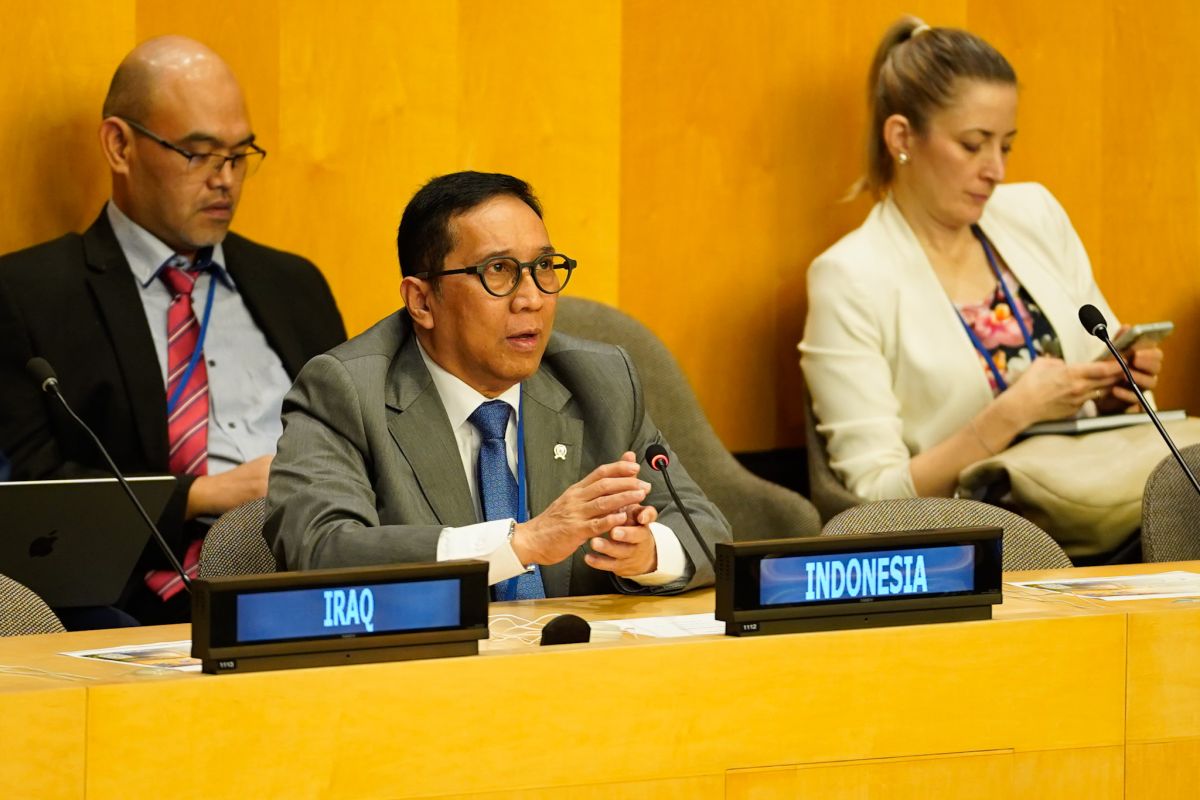
The current global challenge is ensuring that the benefits of development are felt directly by the public, according to Deputy Minister of National Development Planning (PPN)/Deputy Head of the National Development Planning Agency (Bappenas) Febrian Alphyanto Ruddyard. The message was delivered during Indonesia’s diplomatic mission at the High-level Political Forum on Sustainable Development (HLPF) 2026 at the United Nations Headquarters in New York, United States, from 7 to 16 July 2026.
“Food crises, climate change, rising debt burdens, and geopolitical fragmentation are making development increasingly complex. Yet these challenges further underscore the importance of the SDGs. The question we must answer is no longer whether we have the right goals, but whether we can achieve them in the right way,” he stated during the 2026 ECOSOC High-Level Segment.
On that occasion, he emphasised that accelerating the achievement of the SDGs requires global development governance that is fairer, more integrated, and oriented towards tangible results. He added that development must shift from a fragmented approach to an integrated one, translating global commitments into measurable national actions, ensuring innovation benefits all, and building a stronger development financing architecture through partnerships capable of mobilising long-term investment.
During his visit to New York, Febrian represented Indonesia in several high-level forums, including the General Debate of the Ministerial Segment, the United Nations High-Level Meeting on Critical Energy Transition Minerals, the Ministerial Roundtable on the Pact for the Future, the ECOSOC High-level Segment, and the High-level Meeting on the Midterm Review of the New Urban Agenda. He also spoke at a side event titled Leveraging Renewable Energy for Food Security through South–South and Triangular Cooperation.
In these forums, Indonesia stressed the importance of beginning to formulate a post-2030 global development framework, continuing the spirit of the SDGs while addressing new challenges in a more resilient, inclusive, and innovative manner. At the side event on leveraging renewable energy for food security through South-South and Triangular Cooperation, Deputy Minister Febrian highlighted the importance of a cross-sectoral approach to development.
“No single country can undertake this transformation alone. South-South and Triangular Cooperation is becoming increasingly vital, not only as a means of technology transfer but as a foundation for building trust, strengthening investment, driving innovation, and creating long-term partnerships that yield real transformation,” he said.
Febrian also held bilateral meetings with several strategic partners, including Director of the United Nations Office for South-South Cooperation Dima Al-Khatib, Swiss State Secretary to the 2030 Agenda Markus Reubi, Parliamentary State Secretary of Germany’s Federal Ministry for Economic Cooperation and Development Bärbel Kofler, and Special Representative of the President of the Russian Federation for Relations with International Organizations for Achieving SDGs Boris Yuryevich Titov. Other bilateral meetings discussed strengthening Indonesia’s cooperation with strategic partners, particularly in development financing, energy transition, green economy, sustainable urban development, and the formulation of the post-2030 global development agenda.
Indonesia also encouraged expanded collaboration in developing green jobs, downstream industry, innovative financing, and strengthening South-South Cooperation as an instrument to accelerate the achievement of the SDGs. Through this series of diplomatic agendas at the UN, Indonesia reaffirmed its commitment to act as a bridge between developed and developing nations in strengthening multilateralism and accelerating the achievement of the SDGs by 2030. This commitment is also part of Indonesia’s contribution to a more inclusive, fair, and sustainable global development framework towards the Golden Indonesia 2045 vision.