
Bappenas emphasises importance of synergy in strengthening palm oil upstream-downstream sectors
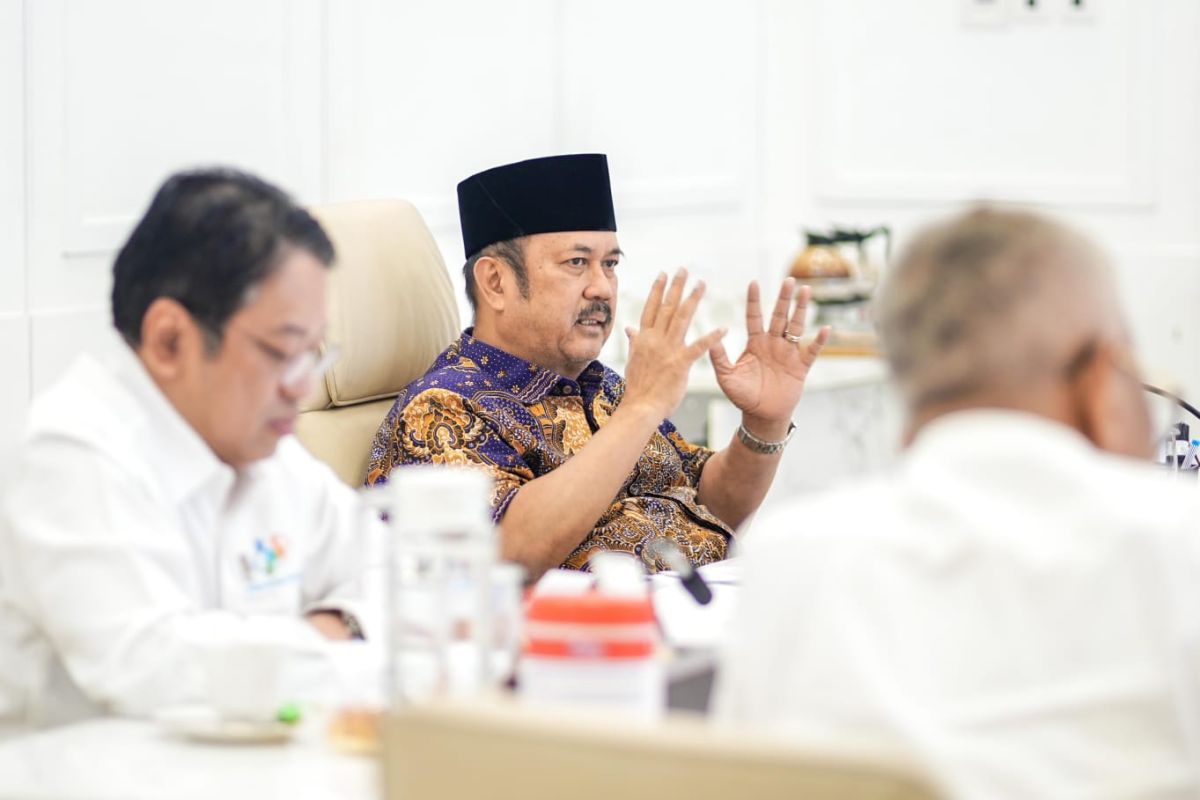
The Minister of National Development Planning/Head of the National Development Planning Agency (PPN/Bappenas), Rachmat Pambudy, has emphasised the importance of synergy between the upstream (on-farm) and downstream (off-farm) sectors to strengthen the palm oil agribusiness.
According to a Bappenas statement received in Jakarta on Monday, Rachmat Pambudy stated that this synergy is a follow-up to the directives from President Prabowo Subianto regarding the National Strategic Project (PSN) for the Acceleration of Strengthening Governance, Downstreaming, and the Palm Oil Agribusiness Ecosystem.
“The President’s directive is very important for us to follow up immediately. We share the same emphasis. PT Agrinas Palma Nusantara focuses more on the on-farm sector, while the Ministry of PPN/Bappenas focuses on policies for downstream development or off-farm. However, off-farm development cannot proceed without on-farm support. Therefore, we must work in unison,” he said while receiving an audience with the President Director of PT Agrinas Palma Nusantara (Persero), Mohammad Abdul Ghani.
Currently, the area of palm oil plantations reaches approximately 17 million hectares, though field estimates suggest it could potentially double. To address this, he noted the need for the role of the Central Bureau of Statistics (BPS) in compiling a single national palm oil data set to ensure data accuracy as a basis for policy formulation.
The strengthening of partnership principles with palm oil farmers will also be implemented to ensure increased farmer welfare while simultaneously driving national palm oil productivity. Furthermore, a cooperative-based development model is viewed as strategic so that the added value of the palm oil industry can be enjoyed directly by smallholders, rather than depending solely on fresh fruit bunch (FFB) prices.
Furthermore, Rachmat P_ambudy emphasised the importance of applying sustainability principles through the development of palm oil processing systems that are low-emission, energy-efficient, and remain economically competitive.
“The government will formulate a grand framework for strengthening the governance and ecosystem of the palm oil agribusiness, based on the Sustainable Development Goals (SDGs),” said the Head of Bappenas. The management of palm oil by PT Agrinas Palma Nusantara (Persero) is expected to contribute as widely as possible to the achievement of SDGs 1 through 17. Consequently, the strengthening of palm oil governance is expected not only to maintain the sustainability of the national palm oil industry but also to serve as a vital component in realising inclusive and sustainable development that provides broad benefits to society.