
Bappenas Develops Sea Level Rise Analysis Through SEPAKAT System
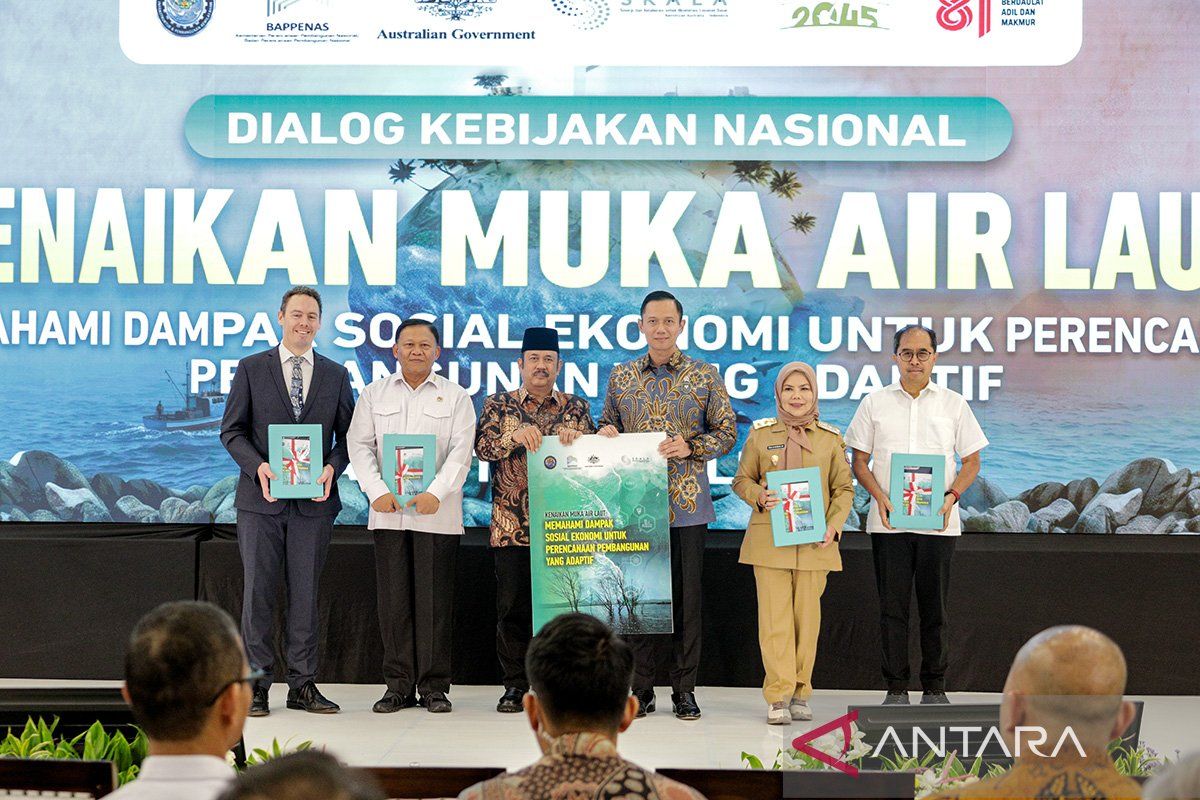
The Ministry of National Development Planning (Bappenas) has developed an analysis of sea level rise through the Collaborative Planning and Integrated Data Analysis System (SEPAKAT). This analysis integrates spatial, socio-economic, basic services, infrastructure, vulnerable groups, and social protection data from various government institutions. It provides an overview of areas requiring attention, communities potentially affected, services needing reinforcement, and development interventions that can be prioritised.
‘The SEPAKAT analysis helps broaden understanding of the impacts of sea level rise, not only on the physical conditions of an area but also on community welfare, basic services, economic activity, and infrastructure,’ said Maliki, Deputy for Community Empowerment, Population, and Manpower at Bappenas, during the National Policy Dialogue on Sea Level Rise in Jakarta on Tuesday.
The results of the analysis are presented in the Sea Level Rise Dashboard within the SEPAKAT application and a book titled ‘Sea Level Rise: Understanding the Socio-Economic Impacts of Sea Level Rise for Adaptive Development Planning’, which was launched concurrently with the dialogue. Based on the SEPAKAT analysis, a 25-centimetre sea level rise scenario requires policy attention for 4,787 informal urban workers, 4,566 workers in the fisheries and livestock sectors, 65.5 per cent of female heads of household who are not recipients of social assistance programmes, 14.59 per cent of coastal micro, small, and medium enterprises (MSMEs), and 537 strategic infrastructure assets.
‘This sea level data already exists and the phenomenon will occur. We, as ministries, agencies, local governments, and other stakeholders, have the opportunity to anticipate this much earlier, so that we can build community mitigation and resilience as quickly as possible,’ stated Deputy Maliki. Tim Stapleton, Acting Deputy Australian Ambassador to Indonesia, conveyed that the Australian Government supports the Indonesian Government’s efforts to develop a planning approach that is increasingly responsive to climate change and community needs. ‘Through SKALA, the Australia-Indonesia partnership programme for decentralised governance, Australia supports the Indonesian government in strengthening evidence-based planning, data utilisation, and the provision of basic services for the poor and vulnerable. Australia and Indonesia will continue to work together to build resilience, protect vulnerable communities, and support evidence-based inclusive development,’ said Tim Stapleton.