
Bappenas develops 'blue food' concept to boost fish consumption
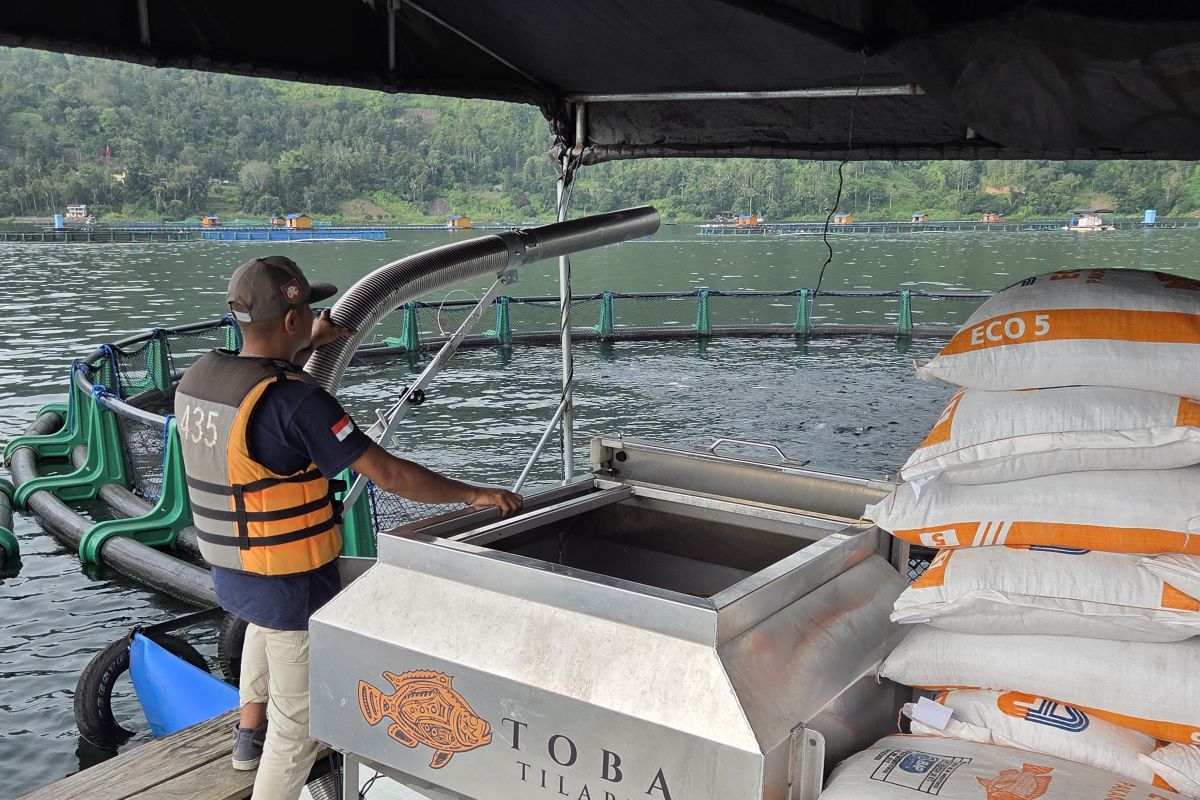
Samosir, North Sumatra (ANTARA) - The Ministry of National Development Planning/Bappenas is developing the ‘blue food’ concept, which focuses on food derived from aquatic resources, particularly fish, to increase public protein consumption.
Mohamad Rahmat Mulianda, Director of Marine and Fisheries at Bappenas, stated that the development of blue food is an effort to increase fish consumption by applying measurable sustainability principles. “How can we ensure that in this archipelagic nation we consume fish? We increase it through production that must be environmentally friendly,” said Rahmat while inspecting floating net cages (KJA) owned by PT Suri Tani Pemuka (Japfa) at Lake Toba, North Sumatra, on Friday.
According to him, blue food encompasses food originating from both marine and freshwater ecosystems, such as fish, shrimp, shellfish, seaweed, and other aquatic biota used as food and nutritional sources for the community.
Rahmat explained that the application of sustainability principles in blue food production must include the control of water quality and environmental pollution. “Furthermore, activities must ensure sustainability accurately, meaning there must be measurable metrics. Issues regarding water quality and pollution must be controlled,” he said.
Rahmat noted that the development of blue food in Lake Toba must also consider the balance between economic, ecological, and social aspects. This is crucial because Lake Toba is utilised not only for fisheries but also for tourism, livestock, transport, water resources, and other economic activities.
“Sustainability must be balanced among all these sectors. We always emphasise to all parties that this principle must be applied in the management of Lake Toba because it is a highly complex environment with many related sectors, including tourism, livestock, and even the inland forests,” he explained.
On the same occasion, the Deputy for Food, Natural Resources, and Environment at Bappenas, Leonardo Adypurnama, stated that the development of blue food is part of the food system transformation currently being undertaken by the government. “This signifies that our goal of achieving food self-sufficiency must be accompanied by strategies that ensure our food production is low-emission, low-water consumption, and more supportive of natural resource sustainability and environmental carrying capacity,” said Leonardo.
He noted that as an archipelagic nation, Indonesia possesses highly relevant protein sources from its waters. Based on statistics from the National Socio-Economic Survey (Susenas), approximately 55 per cent of the protein sources for the Indonesian people come from fish.
“Now, with major programmes such as the Free Nutritious Meal (MBG) programme and others, there is a need to continue encouraging protein consumption, which remains low in Indonesia, and one way to do this is through blue food,” he said.
Leonardo mentioned that Bappenas, together with international development partners—including Stanford University, the European Union, and several partners from the Asia-Pacific region—is developing the Blue Food Assessment as a research initiative to support its development in Indonesia. “Therefore, we are here to observe an example. An example that ensures fish production as a vital component of Indonesia’s food system transformation is supported by good practices, including initiatives from companies such as Japfa,” he concluded.