
Bappenas Delivers Bitter Truth: Indonesia Trapped as Middle-Income Country for 33 Years
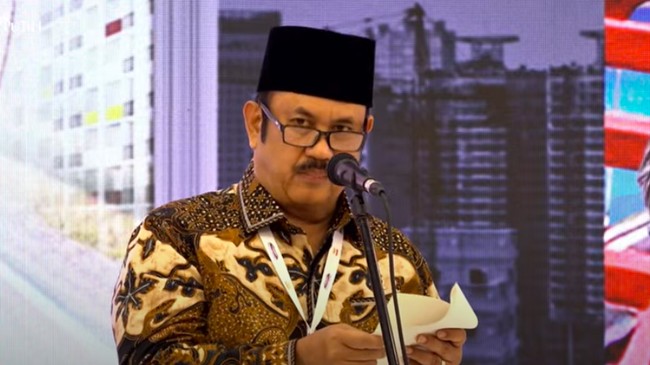
Minister of National Development Planning and Head of Bappenas Rachmat Pambudy stated that Indonesia has remained shackled by the middle-income trap since 1993. This means the country has been in the middle-income trap for 33 years and has yet to make the leap to high-income status. ‘Indonesia has indeed exited the low-income category but has not been able to jump to become a high-income country,’ he said during a meeting with Commission XI at the DPR RI building in Jakarta on Wednesday (10/6/2026). Rachmat noted that lessons from previous crises, such as the 1998 crisis and the COVID-19 pandemic, show that the economic foundation still needs strengthening, as Indonesia remains vulnerable to shocks impacting the economy. ‘Indeed, things are still difficult now, but the notes delivered by the Finance Minister will provide increasingly strong direction. Therefore, high growth is needed to enlarge national production capacity, increase per capita income, expand employment opportunities, and strengthen our industrial competitiveness,’ he explained. He mentioned that the government has several targets that must be achieved by 2029. These are outlined in the National Priority Work Programme, which consists of 60 programmes spread across clusters covering food, energy and water, education, health, downstreaming, infrastructure, the people’s economy, village development, and poverty reduction. ‘From these eight clusters, we have created 60 concrete programmes, and the essence is that these eight clusters do not run independently. We are trying to make them interconnected: food is connected to nutrition, nutrition is connected to education, education is connected to productivity, productivity is connected to industry, and industry creates jobs. In this context, there will be a reduction in the number of poor people while also creating broader employment opportunities,’ he elaborated. He explained that the 2027 Government Work Plan is designed as a development ecosystem, not merely a collection of activities. The implementation of the National Priority Work Programme is designed in an integrated manner so that its impact on development is holistic. ‘For example, in an integrated food zone, the government does not only drive food production but also ensures quality standards, farmer mentoring, zone productivity, and infrastructure support run as a single unit carried out across multiple ministries and agencies,’ he detailed. According to him, this way, the National Priority Work Programme does not only produce activity outputs but builds a more productive food ecosystem that is interconnected and directly impacts the community. He continued that the same principle is being applied to the formation of 80,000 Merah Putih Village and Sub-district Cooperatives. It is not sufficient for cooperatives to be established only administratively; they must become drivers of the village economy. Cooperatives need to be supported by digital infrastructure, accurate data infrastructure, access to financing, value chains, production facilities, training assistance, strong institutions, and governance that must be continuously strengthened. ‘Therefore, this programme involves the interests of various institutions in an integrated manner. The message is clear: the National Priority Work Programme ensures that priority programmes do not run independently but lock into each other within a development ecosystem that mutually improves for broader development goals. In this sense, intervention becomes a benefit, and programmes become drivers of the people’s economy,’ he stated. Bappenas noted that in the 2027 Government Work Plan, the government has set a national economic growth target in the range of 5.8% to 6.5%. This figure is part of efforts to maintain momentum towards the 8% economic growth target by 2029. In the 2027 Government Work Plan development target document, the government is targeting a GNI per capita of US$5,800 to US$5,840. Additionally, greenhouse gas emission intensity is targeted to fall by up to 39.57%, while the Environmental Quality Index is projected to be at 76.84. In terms of social welfare, the government is targeting the poverty rate to be reduced to a range of 6.0% to 6.5% by 2027, while extreme poverty is targeted at 0%. The government is also targeting a Gini ratio in the range of 0.362 to 0.367 as an indicator of reduced income inequality. The open unemployment rate is projected to fall to a range of 4.30% to 4.87%. The government has set a Human Capital Index target of 0.575. ‘So, the direction for 2027 is to ensure growth creates added value and more equitable welfare,’ he said. Other development indicators are also targeted for improvement, including the Farmer Welfare Index, which is pegged at a level of 0.8038, and the proportion of formal job creation at 40.81%.