
Bappenas: Cultural Investment Key to Boosting Economic Value and Competitiveness
Jakarta (ANTARA) - The Ministry of National Development Planning (PPN)/Bappenas considers investment through strengthening the arts and culture and developing creative human resources to be an important strategy for increasing economic value added whilst reinforcing Indonesia’s competitiveness at the global level.
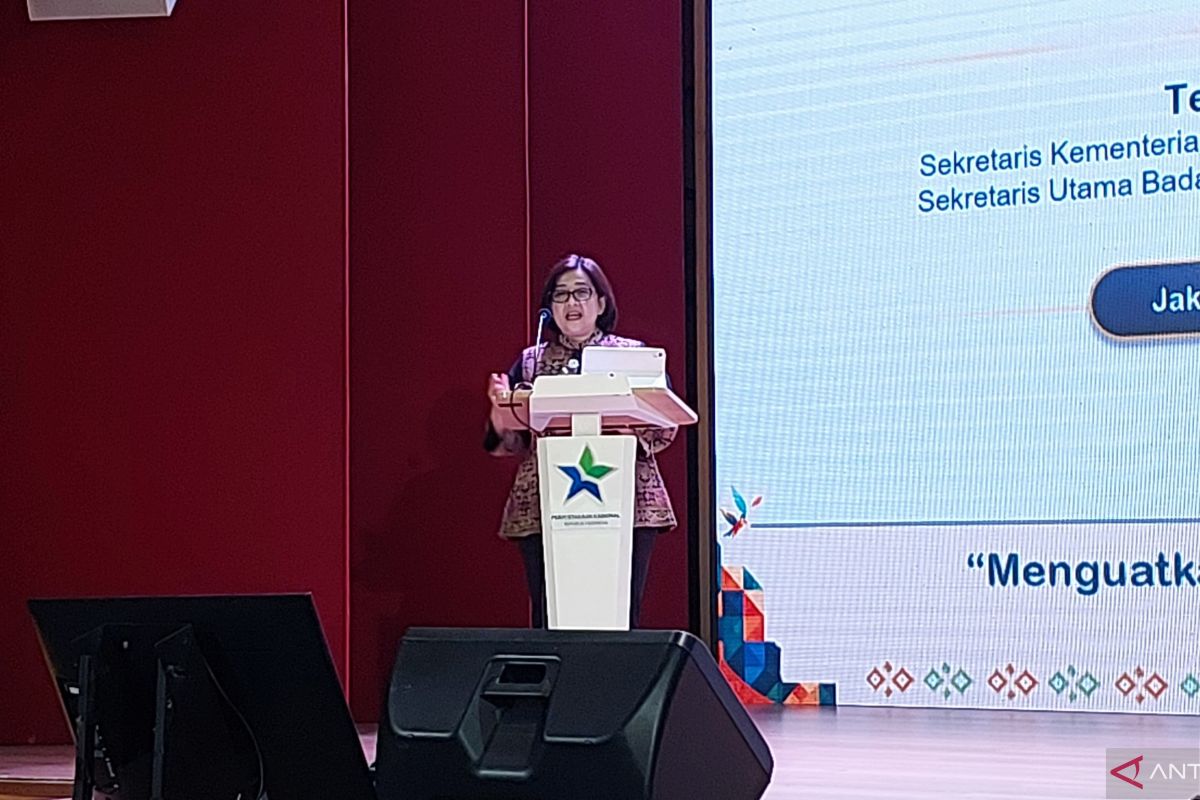
The Secretary of the Ministry of PPN/Secretary Main of Bappenas, Teni Widuriyanti, said National Talent Management is being prepared as a policy instrument to build superior human resources in a structured, systematic and sustainable manner.
“National Talent Management is designed as an effort to safeguard and nurture existing potential. It is the government’s serious endeavour to form human resources that are superior and competitive,” said Teni at the Road to Talent Fest 2026 event for the Arts and Culture sector, in Jakarta, on Wednesday.
Teni considered that the arts and culture sector has not so far been fully regarded as an economic driver, even though Indonesia possesses immense cultural capital.
According to her, the arts and culture sector has a strategic role in raising national productivity and supporting economic growth, in line with the government’s development vision.
Through National Talent Management, the government wishes to improve the quality of creative talent, encourage the emergence of high-value cultural works and products, and strengthen the creative industries encompassing visual arts, music, film, performing arts, crafts and literature.
“That affirms that this arts and culture sector is a motor of growth — not always the social sector or other economic sectors. In fact, the potential is right before our eyes. Why don’t we prepare it as well as possible, because it will make a very, very large contribution to our growth,” she said.
She explained that the government also wants to ensure that artists and cultural actors have a clear development pathway, receive recognition for their work, and enjoy sustainable career prospects. In that way, arts and culture become not merely a space for expression, but also an economic sector capable of creating jobs and value added.
According to Teni, Indonesia’s cultural wealth, spread across various regions, is a competitive advantage that many countries do not possess. This potential needs to be managed in a more integrated fashion so that it can produce creative works with competitiveness in the global market.
To that end, talent development is no longer carried out sectorally, but through a measurable process starting from identifying potential, incubation, development, through to strengthening talent.
National Talent Management is the Indonesian government’s long-term strategic programme and a national priority programme in the effort to achieve the Golden Indonesia 2045 vision.
Bappenas will also strengthen collaboration with the Ministry of Culture, relevant ministries and agencies, regional governments and non-governmental actors in order to build an ecosystem that supports the growth of creative talent.
One of the steps being encouraged is the development of facilities such as cultural parks as centres for development, capacity building and spaces of expression for talent in the regions.