
Bappenas: Creative Economy Part of National Development Strategy
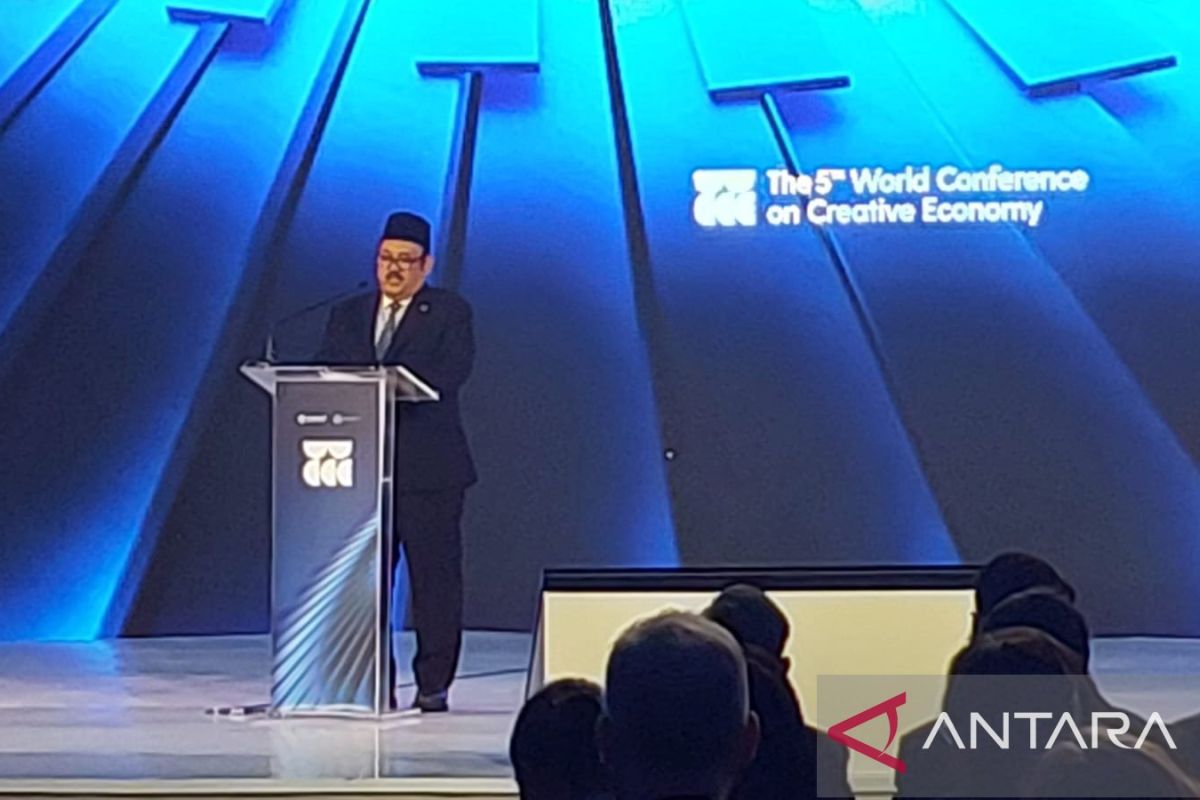
Jakarta (ANTARA) - The Ministry of National Development Planning (PPN)/National Development Planning Agency (Bappenas) has made the creative economy an integral part of the national development strategy, centred on creativity and innovation.
National Development Planning Minister and Bappenas head Rachmat Pambudy said the National Long-Term Development Plan (RPJPN) 2045 positioned the creative economy as a growth engine, with a target of raising its contribution to Indonesia’s gross domestic product (GDP) to more than 8% by 2029.
“Our medium-term development plan identifies the creative economy as a new engine for growth, with the ambition of increasing its contribution to more than 8% of GDP by 2029,” Rachmat said at the opening of the 2026 World Conference on Creative Economy (WCCE) in Jakarta on Thursday.
He said the creative economy had become a new engine of growth through stronger innovation, human resource development and increased added value for products based on intellectual property.
The sector’s performance in 2025 has provided a foundation for pursuing that target. Rachmat said it generated around Rp183 trillion in investment, nearly US$32 billion in exports and employed about 27 million people.
However, the development of the creative economy should focus not only on increasing production volumes, but also on creating added value from local works and innovation.
“These are not just economic statistics. They represent livelihoods, opportunities and many aspirations. The next challenge is to move further up the value chain,” Rachmat said.
The government believes that stories, design, films and games should be developed into economic assets capable of generating sustainable income and delivering fair returns to their creators.
Strengthening the ecosystem is a key step towards achieving this goal. It requires collaboration among government, businesses, academics, communities and other stakeholders, including to widen market access and strengthen intellectual property protection.
Digital transformation and the use of artificial intelligence (AI) are also increasingly affecting how value in the creative economy is generated, distributed and recognised.
Technological advances therefore need to be accompanied by policies that strengthen creators’ position and ensure creative workers benefit economically from their work.
“Natural resources are unevenly distributed, financial capital is concentrated, but creativity exists in every community. Our task is to ensure that talent everywhere has the opportunity to thrive,” he said.