
Bappenas: Climate Challenges Overcome Through Cross-Sector Development
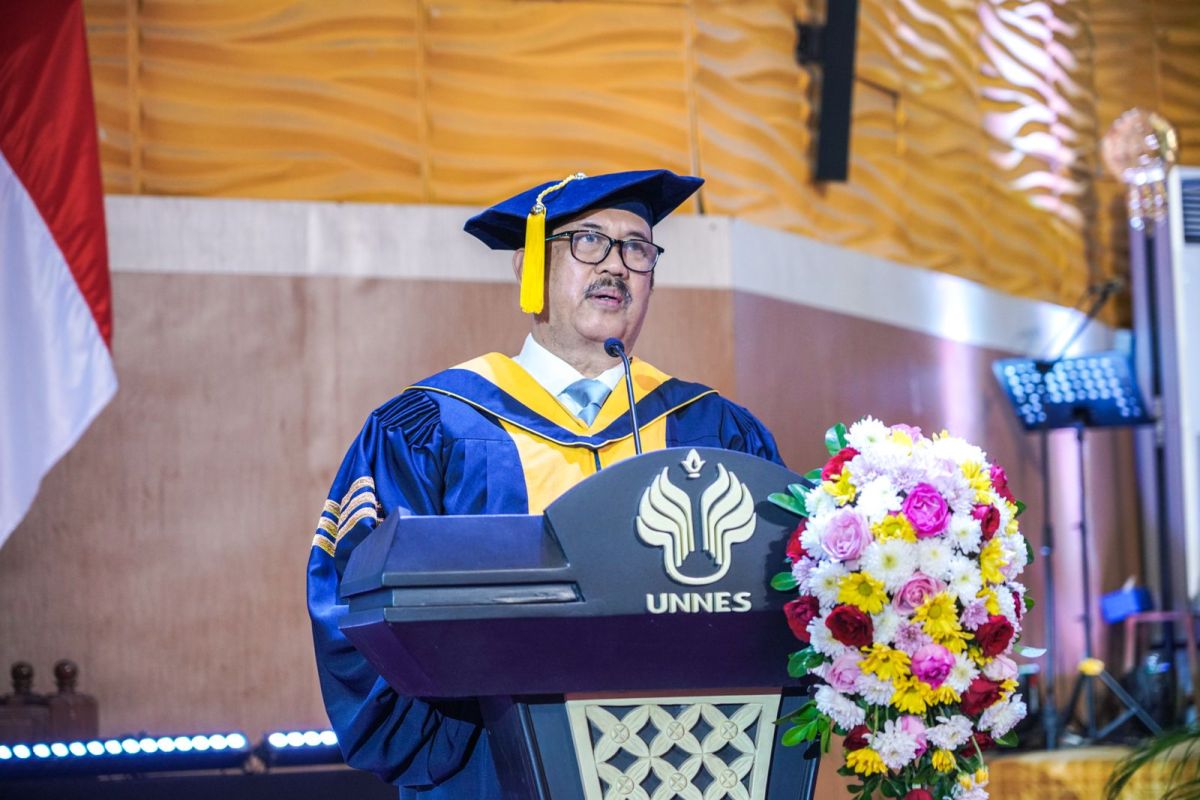
Minister of National Development Planning/Head of the National Development Planning Agency (PPN/Bappenas) Rachmat Pambudy stated that resolving climate challenges requires the implementation of mutually complementary cross-sector development. “The marine and coastal sector, coastal protection infrastructure development, the application of nature-based solutions, and the strengthening of spatial planning based on disaster mitigation and risk,” he said in a statement received in Jakarta on Monday. While delivering a scientific oration entitled Sustainable Development Goals (SDGs), Sustainable Development, and the Role of Higher Education: Towards a Golden Indonesia 2045, in the context of the 61st Dies Natalis at Semarang State University (UNNES), Central Java, he also conveyed how cross-sector development also needs to be carried out for the water resources and agriculture sectors. For the water resources sector, according to him, it is necessary to strengthen water stocks by increasing technological efficiency through water conservation and the application of water accounting principles. Meanwhile, in the agriculture sector, the application of smart agriculture needs to be continued. On that occasion, he emphasised the fundamental principle of the 2030 SDGs agenda, namely the principle of equity in economic growth or leaving no one behind. Amid the triple planetary crisis challenges hitting the world, he continued, Indonesia has successfully completed 153, or 62.7 percent, of the 244 indicators evaluated in the Sustainable Development Goals (SDGs) Programme in Indonesia. This achievement is supported by a commitment to integrate the SDGs into the national development planning system, both in the National Medium-Term Development Plan (RPJMN) and the Government Work Plan (RKP), so that the SDGs become part of the national development planning, budgeting, implementation, and evaluation cycle. Therefore, he continued, cross-sector collaboration is necessary, including with universities. “UNNES has also taken a strong role in the SDGs agenda, particularly through education, research and innovation, and community service. UNNES is committed to presenting data related to the implementation and achievements of the SDGs transparently through the SDGs Dashboard,” said Rachmat. This commitment was strengthened by the signing of a Memorandum of Understanding between the Ministry of PPN/Bappenas and UNNES concerning Collaboration on National Development Planning through Education, Research, and Community Service. On the same occasion, Minister Rachmat Pambudy received the UNNES Conservation Award 2026: Upakarti Dharmakarya Pranata Bhuana. The award was given to appreciate the contribution and dedication of the Head of Bappenas in formulating and overseeing the implementation of the SDGs in Indonesia, as well as his role in building Indonesia over four decades to date. “Universities must position themselves not only as educational institutions, but as catalysts for sustainable development, and our challenge going forward is to ensure that innovation does not stop in the laboratory. Universities must be transformed into real solutions. Let us bequeath forests that remain green, rivers that flow clear, air that remains clean, and an earth that remains preserved for the lives of our children and grandchildren,” he said.