
Bappenas Chief: Energy Transition Key to Building Indonesia's Future
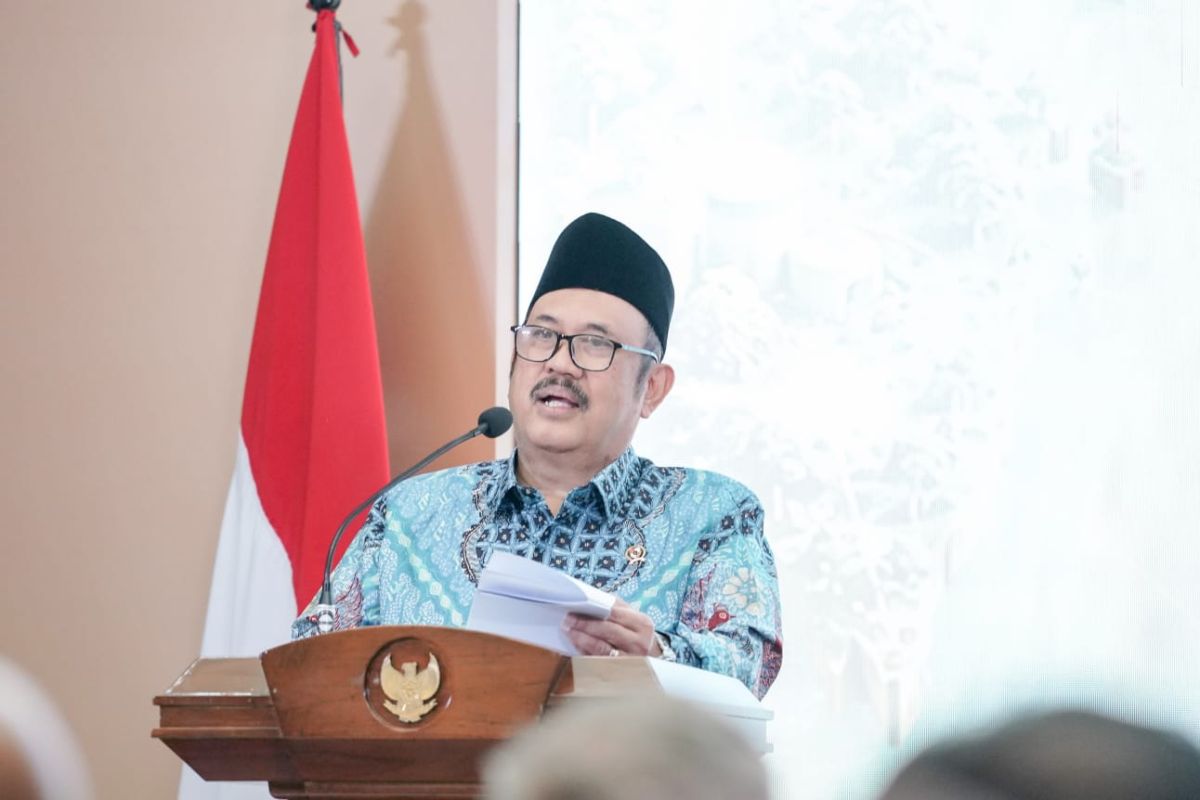
Minister for National Development Planning/Head of the National Development Planning Agency (PPN/Bappenas) Rachmat Pambudy has stated that the energy transition is an important part of building Indonesia’s future towards the Golden Indonesia 2045 vision.
“We are blessed with abundant energy sources spread across the archipelago, such as geothermal, hydropower, solar power, wind power, bioenergy, gas, and critical minerals for future technologies. From this, we hope that all potential energy sources can be utilised. Not only for Indonesia now, but for Indonesia’s future,” he said during the launch of the book ‘Regional-Based Energy Transition Strategy Towards Golden Indonesia 2045’.
Rachmat, in a statement received in Jakarta on Monday, said that moving towards an energy transition will involve a major transformation that radically changes the economic and employment structure. Therefore, the path to transition must be managed fairly, gradually, and in a planned manner.
In the book compiled by the Ministry of PPN/Bappenas together with the GIZ Indonesia & ASEAN Energy Programme, a new approach to national energy planning is discussed, placing regional aspects as an important factor in the success of the energy transition. This approach is considered relevant to Indonesia’s position as an archipelagic country with highly diverse energy systems, levels of development, and resource potential between regions.
With this approach, the energy transition strategy is expected to be designed more adaptively to support inclusive development while accelerating the achievement of national energy and climate targets.
Deputy for Food, Natural Resources, and Environment at the Ministry of PPN/Bappenas, Leonardo A A Teguh Sambodo, emphasised that the energy transition strategy needs to be tailored to the characteristics and energy consumption levels of each region.
“This is certainly a concern when we see different characteristics, and the transition may need to be adjusted. In areas with very low real energy consumption, growth policies, encouragement and infrastructure preparation, as well as ecosystem development in order to encourage the implementation of the energy transition, may differ,” said Teguh.
Based on the study conducted, Indonesia faces major challenges in meeting energy needs to achieve the vision of a developed country by 2045, while simultaneously fulfilling emission reduction commitments and the Net Zero Emissions (NZE) target. Therefore, the energy transition needs to be designed as part of a national development strategy integrated with the agendas of economic growth, industrialisation, equitable development, and energy security.
Findings in the book show that the energy transition is not only related to the construction of renewable energy power plants, but also involves economic transformation, industrial development, energy security, regional development equity, and the creation of new growth opportunities for Indonesia.
Through close collaboration between the central government, regional governments, the private sector, academics, development institutions, and the community, Indonesia is considered to have a great opportunity to build a cleaner, resilient, equitable, and sustainable energy system as a foundation towards Golden Indonesia 2045.
German Ambassador to Indonesia Ralf Beste affirmed the German government’s commitment to supporting Indonesia’s energy transformation through a partnership that has been established for many years.
“Germany and Indonesia have built strong cooperation in the energy sector. The energy transition is an opportunity to strengthen energy security, increase economic competitiveness, and promote sustainable development. We are proud to continue supporting Indonesia in realising these goals through cooperation based on knowledge, innovation, and long-term partnership,” he said.
Through this event, the Ministry of PPN/Bappenas and GIZ hope to strengthen the national dialogue on the direction of Indonesia’s energy transition while enriching the national energy policy-making process, including the update of the National Energy General Plan (RUEN) and strengthening the implementation of the Regional Energy General Plan (RUED).
Source: jawawa.id (https://jawawa.id/newsitem/bappenas-chief-energy-transition-key-to-building-indonesias-future-1782727036)
Originally published by Antara (Indonesian) (https://www.antaranews.com/berita/5627268/kepala-bappenas-transisi-energi-bagian-penting-bangun-masa-depan-ri), translated from Indonesian