
Bappenas chief: Enactment of One Data Indonesia Law a key moment in unifying data
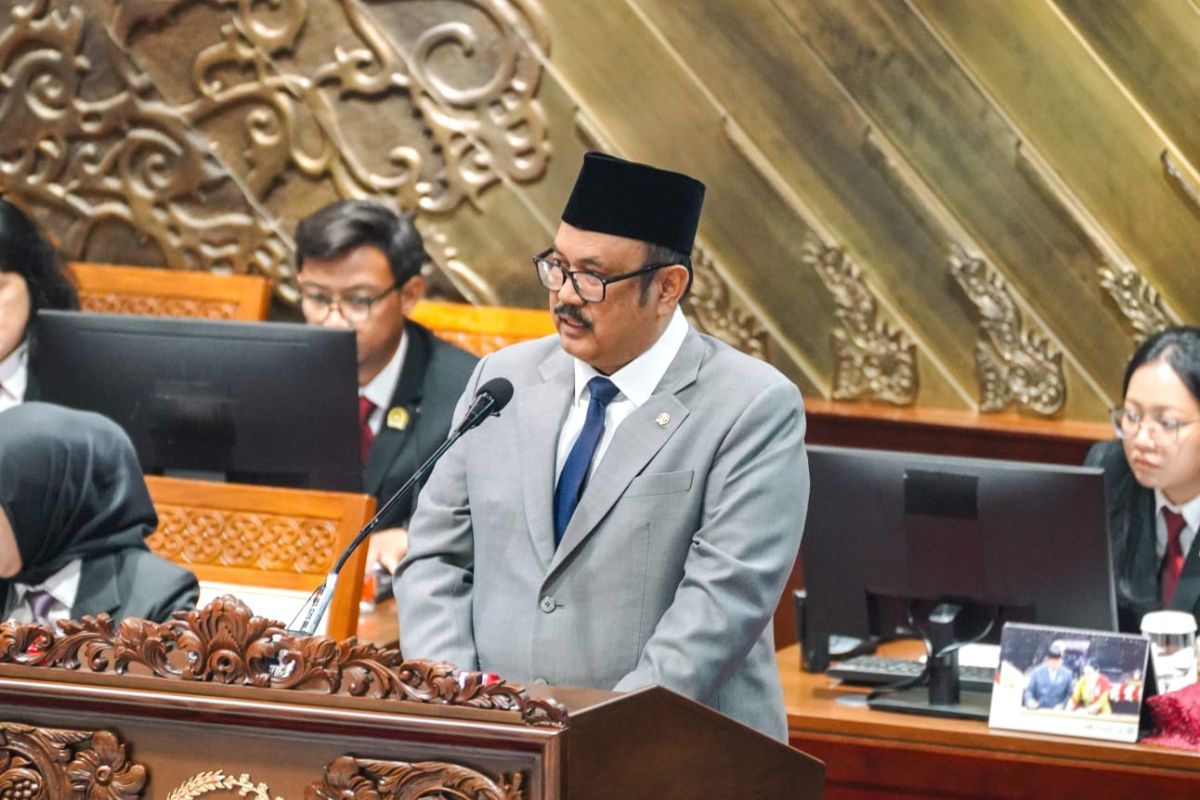
Jakarta (ANTARA) – National Development Planning Minister and National Development Planning Agency (Bappenas) chief Rachmat Pambudy said the enactment of the One Data Indonesia Law (UU SDI) marks an important moment in bringing together one of the nation’s strategic assets for the future: data.
“Data must deliver social justice, uphold human dignity and bring tangible benefits to the people,” he said, according to an official statement issued in Jakarta on Friday. Pambudy, who also chairs the SDI Steering Council, was speaking in his final remarks on behalf of the President at a plenary session of the House of Representatives (DPR RI).
The law strengthens the legal basis for national data governance, which was previously regulated under Presidential Regulation No. 39 of 2019 on One Data Indonesia. Indonesia now has a single national data foundation, he said.
The new regulation is intended to foster a national data ecosystem that is accurate, up to date, integrated, secure and interoperable. This is expected to support policymaking and ensure government programmes, including social assistance and public protection schemes, are better targeted.
The enactment of the law, which was proposed by the DPR RI, followed intensive discussions between the government and parliament. The two sides had agreed on the results of deliberations on the One Data Indonesia bill at a DPR RI Legislative Body meeting on Monday (5 October).
During the discussions, the government submitted 1,338 items on the List of Issues, which were considered by the working committee from 23 September to 5 October 2026. The deliberations were conducted in accordance with the principles of transparency and openness to public input. The law comprises 20 chapters and 141 articles.
Among the strategic provisions is the creation of National Core Data as the main reference for development planning, fiscal policy and budgeting, as well as social assistance distribution. The data will be classified as open, restricted or closed in accordance with applicable legislation.
The working committee also agreed to strengthen institutional arrangements by establishing an SDI Administrator accountable to the President. The roles of data stewards, data producers and data users will be defined at successive levels, from the national level down to villages and urban wards.
Implementation of One Data Indonesia will be reinforced through coordination powers and adequate security measures, without taking over the substantive duties already carried out by ministries and agencies. Stronger data governance is expected to reduce sectoral silos and strengthen collaboration and data connectivity across government institutions.
The law also governs data access, data security and personal data protection. The use of digital technologies, including artificial intelligence, will remain subject to human oversight.
The public will also be given opportunities to participate, including by submitting feedback and reporting suspected irregularities. Any disputes will first be addressed through deliberation and a mediation process.
“Data is not merely a string of numbers. It is not just a statistical table, nor simply something stored on government servers. Data is a mirror of the Republic’s honesty. It tells us who has benefited from development, but also who has been left behind,” the planning minister said.
“One Data Indonesia is not merely about bringing data together, but about uniting our efforts to ensure development reaches all people without exception,” the Bappenas chief said.
Source: jawawa.id (https://jawawa.id/newsitem/bappenas-chief-enactment-of-one-data-indonesia-law-a-key-moment-in-unifying-data-1791550382)
Originally published by Antara (Indonesian) (https://www.antaranews.com/berita/5778954/kepala-bappenas-pengesahan-uu-sdi-jadi-momentum-penting-satukan-data), translated from Indonesian