
Bappenas and BSI accelerate halal certification for abattoirs and strengthen Juleha
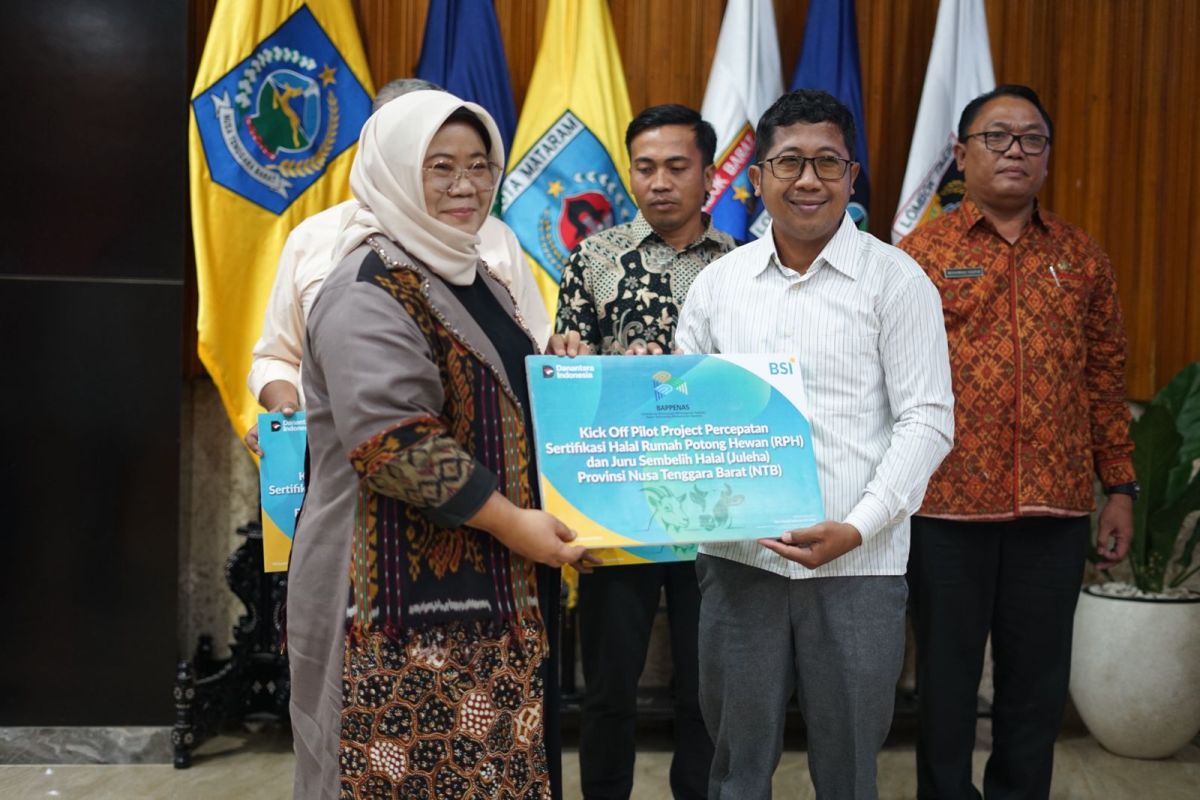
Jakarta (ANTARA) - The Ministry of National Development Planning/Bappenas together with PT Bank Syariah Indonesia Tbk (BSI) have presented a pilot project to accelerate halal certification for abattoirs (RPH) and strengthen the capacity of halal slaughterers (Juleha) in West Nusa Tenggara Province (NTB). The implementation of the pilot project is supported by the NTB Provincial Government as part of efforts to build a more integrated halal ecosystem in the region.
“The pilot project is not solely directed at achieving halal certification, but is also part of efforts to build an implementation model capable of producing a multiplier effect for economic development and the halal ecosystem in the region,” said Rosy Wediawaty, Director of Sharia Economy and State-Owned Enterprises at the Ministry of National Development Planning/Bappenas, during the kick-off of the pilot project at the Sangkareang Building, NTB Governor’s Office Complex, according to an official statement in Jakarta on Thursday.
It is recorded that around 96.9 percent of NTB’s population is Muslim, so the need for a halal product ecosystem and assurance is very large. Meanwhile, the number of abattoirs and certified Juleha in NTB remains limited. The initial focus on abattoirs and Juleha is considered strategic because the slaughtering process is one of the critical points in the value chain of animal-derived food products and plays an important role in guaranteeing product halalness from the upstream.
Through the pilot project, Rosy continued, strengthening the halal ecosystem is directed not only at certification compliance aspects, but also at connectivity between actors in the value chain. “This pilot project is a starting point to bring together policy, financing, human resource capacity, and implementation at the regional level. From this process, we want to gain learning about needs and challenges in the field, while building a model that can be developed and replicated according to regional characteristics,” she said.
Going forward, the learning from NTB is said to be able to serve as a basis for expanding the programme’s scope towards developing the halal value chain and circular economy, among others through the utilisation of abattoir by-products, strengthening micro, small and medium enterprises around the supply chain, creating new business opportunities, and connectivity with sharia financing access. Her ministry will encourage the learning outcomes from the implementation of the pilot project in NTB as input for strengthening policy and developing models that can be replicated in other regions.
“With this approach, the acceleration of halal certification is expected not to stop at increasing business actor compliance, but can also become an entry point for creating new economic value and strengthening a sustainably growing halal ecosystem,” she stated. The kick-off of the pilot project supported by the NTB Provincial Government marks the beginning of the implementation phase of the Cooperation Agreement between the Ministry of National Development Planning/Bappenas and PT Bank Syariah Indonesia Tbk.
Source: jawawa.id (https://jawawa.id/newsitem/bappenas-and-bsi-accelerate-halal-certification-for-abattoirs-and-strengthen-juleha-1787795566)
Originally published by Antara (Indonesian) (https://www.antaranews.com/berita/5712873/bappenas-dan-bsi-percepat-sertifikasi-halal-rph-dan-penguatan-juleha), translated from Indonesian