
Bappenas: 6 GHz Spectrum to Accelerate National Economic Growth
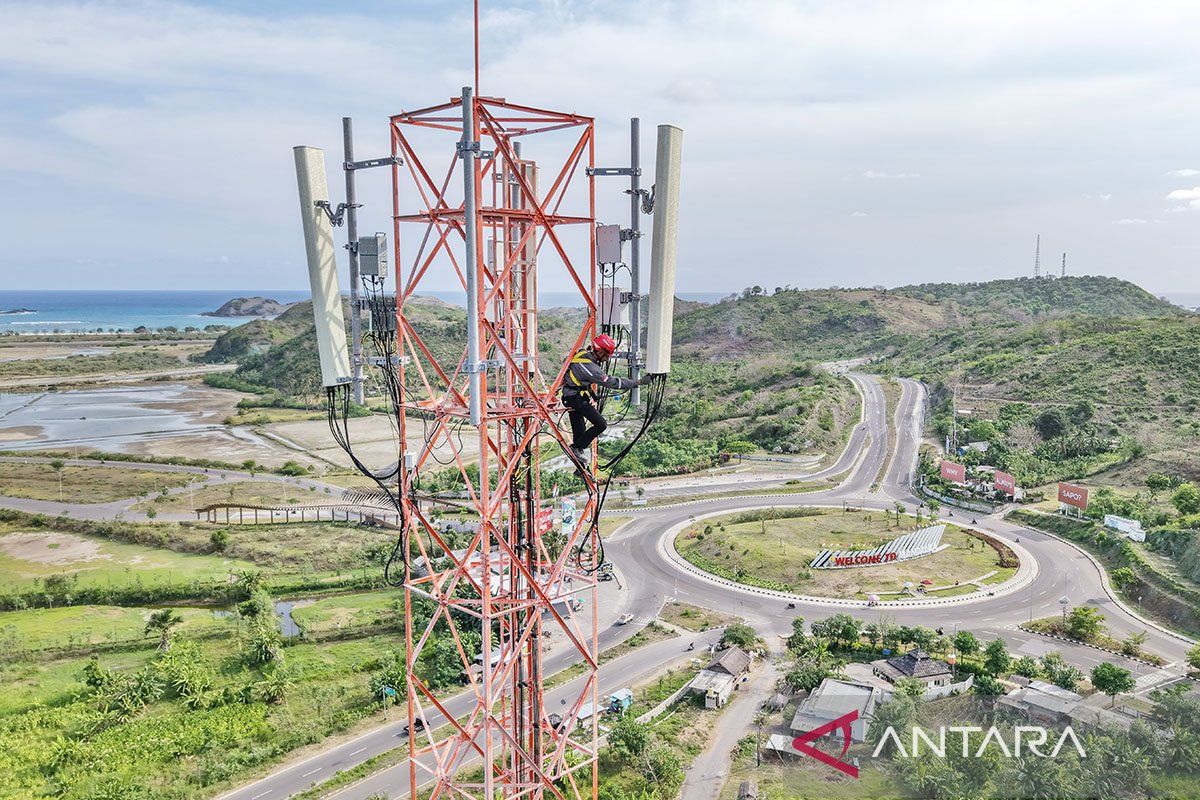
The Ministry of National Development Planning (PPN)/Bappenas assesses that the utilisation of the 6 GHz spectrum will be a strategic factor in supporting digital transformation and strengthening the foundation of the national economy to realise the Indonesia Emas 2045 vision. Coordinator for the Digital Ecosystem and Space at the Ministry of PPN/Bappenas, Andreas Bondan Satrio, stated that digital transformation is no longer merely an option but has become an engine of national economic growth. “If we support the Indonesia 2045 vision, digital transformation is no longer just an option; it must become an engine of growth so that Indonesia can escape the middle-income trap,” Andreas said during a National Seminar & Workshop in Jakarta on Thursday. In this context, the 6 GHz spectrum is seen as a solution to meet the ever-increasing demand for network capacity. He assessed that the 6 GHz frequency band, in the 6,425-7,125 MHz range, is a valuable resource that can serve as a bridge for the development of next-generation telecommunications technology, including 5G and 6G. Beyond increasing network capacity, opening the 6 GHz spectrum is also considered capable of driving efficiency in telecommunications infrastructure development because it offers more economical coverage compared to millimetre-wave frequencies. Bappenas also views the spectrum’s utilisation as having the potential to accelerate the implementation of Industry 4.0 and the development of smart grids by providing high-speed, low-latency connectivity for the manufacturing, port, logistics, and industrial automation sectors. In the public service sector, the use of the new spectrum is assessed to open opportunities for developing more advanced services, such as remote medical treatment utilising telemedicine technology and telesurgery, which require very high-speed connectivity and low latency. Furthermore, Bappenas assesses that spectrum optimisation has the potential to increase the digital economy’s contribution to the gross domestic product (GDP), create new jobs in the technology sector, and strengthen the digitalisation of micro, small, and medium enterprises (UMKM). Andreas stressed that spectrum utilisation policy must be formulated based on mature techno-economic studies, not solely oriented towards non-tax state revenue (PNBP), but also providing broader social and economic benefits to the community. “We hope that in the formulation of the 6 GHz optimisation plan, the techno-economic study will be mature and maximise the socio-economic index. So it is not just about optimising PNBP, but also being useful for the wider community,” said Andreas.