
Bapanas Strengthens Beef Price Stabilisation with State and Regional Enterprises
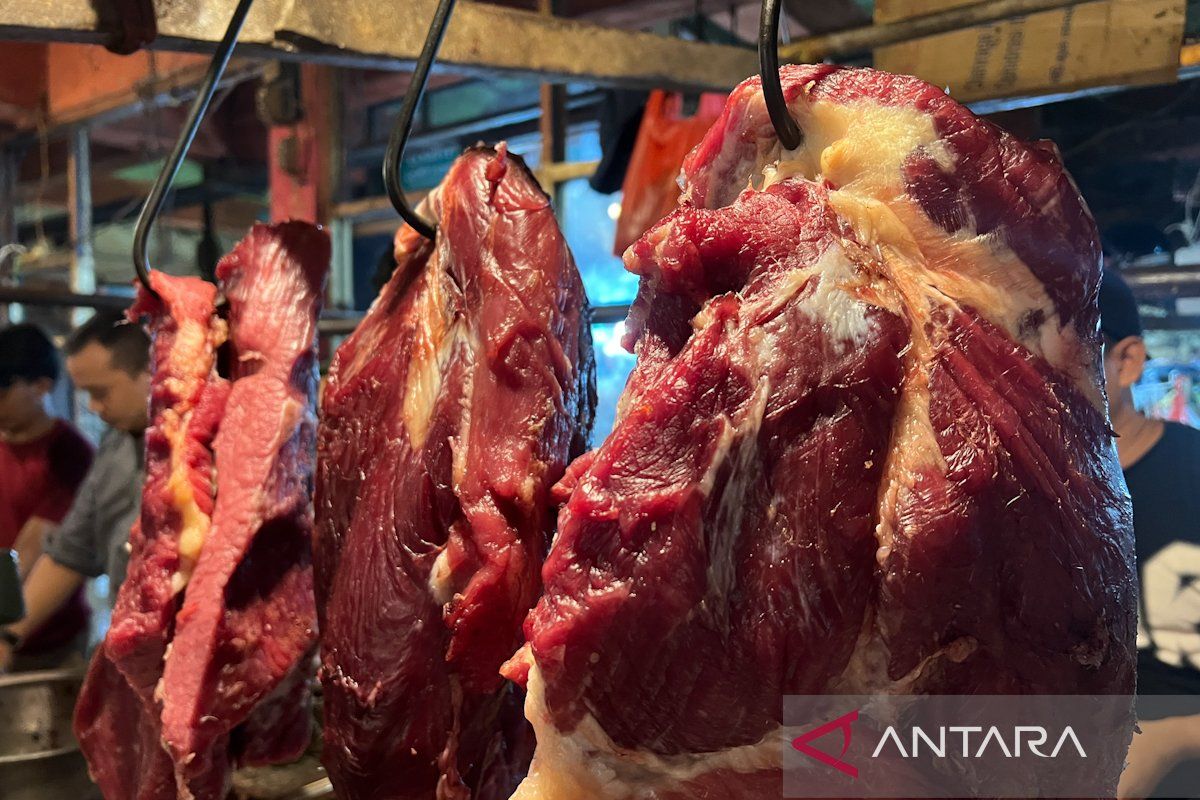
The National Food Agency (Bapanas) is strengthening beef price stabilisation efforts in collaboration with State-Owned Enterprises (BUMN) and Regional-Owned Enterprises (BUMD) to maintain supply, control consumer prices, and support sustainable national cattle self-sufficiency. “For beef price stabilisation, the government will establish collaboration with various parties, from BUMD to BUMN,” said Bapanas Deputy for Food Availability and Stabilisation I Gusti Ketut Astawa in a confirmed statement in Jakarta on Monday. Bapanas has confirmed that the development of beef prices at the consumer level remains under control. He mentioned that beef prices reaching Rp160,000 to Rp180,000 per kilogramme at some sales points are generally premium products, such as tenderloin that has been trimmed of fat, and therefore do not reflect the general market price of beef. “We also visited several areas yesterday, like Rawamangun Market and Senen, where there was also beef at Rp140,000 per kg. The ones at Rp160,000 are relatively the true tenderloin with the fat removed. Nevertheless, we will certainly continue to monitor this,” Ketut explained. Based on Bapanas monitoring, up to the third week of July 2026, the national average beef price is slightly above the Sales Reference Price (HAP), but it cannot be described as volatile. The difference from the HAP is around 2.57 percent, with the national average beef price at Rp143,601 per kg, while the consumer-level HAP is set at a maximum of Rp140,000 per kg. Regarding the long-term strategy to address beef price fluctuations and accelerate local cattle production, the government has initiated a self-sufficiency programme. This major step aims to gradually reduce annual beef imports. “As directed by the Minister of Agriculture and Head of Bapanas (Andi Amran Sulaiman), we continue to encourage and support cattle self-sufficiency. Hopefully, this programme can also reduce imports,” Ketut stated. According to the Food Balance Sheet projection, local cattle and buffalo production in 2026 is estimated to reach 2.15 million heads, equivalent to 421.29 thousand tonnes of meat, while national demand is projected at 794.29 thousand tonnes. This need will be met through a combination of domestic production and carefully estimated external supply sources, resulting in a projected year-end stock of 324.09 thousand tonnes. “This amount is an increase compared to the previous year’s carry-over stock of 185.81 thousand tonnes and is considered sufficient to meet needs for approximately five months at the beginning of 2027,” he said. Ketut stated that the government will immediately strengthen beef price stabilisation through collaboration with various parties, from BUMD to BUMN. He noted the government has also assigned BUMN to import frozen beef and buffalo meat as a measure to maintain supply adequacy while supporting price control efforts in the market. Additionally, Bapanas continues to coordinate with Perumda Pasar Jaya, Berdikari, and the Indonesian Trading Company (PPI) to ensure smoother beef distribution so that prices remain stable and affordable for the public. “This is one solution, so hopefully prices can be stabilised,” Ketut elaborated. Previously, Head of Bapanas and Minister of Agriculture Andi Amran Sulaiman had requested beef importers to release their stock during Ramadan until Eid al-Fitr. Amran also assured that firm action would be implemented if price anomalies occur. “We have asked everyone to release their meat. Do not let prices rise. If any producer, particularly feedlotters, raises the price of feeder cattle, I will revoke their permit and ban them from importing again. The price increase is happening at the big distributors, the middlemen,” Amran stressed. The government does not want intermediary traders or middlemen to manipulate prices for the benefit of a few parties while making things difficult for the public.