
Bapanas Says Rice Prices This Month Are the Most Stable in Four Years
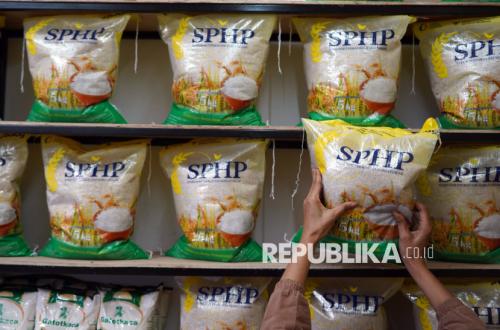
JAKARTA — The National Food Agency (Bapanas) said rice inflation in the third quarter of 2026 was the lowest in four years, supported by stronger government rice reserves (CBP), with no medium-grade rice imports, and the distribution of rice to the public.
Bapanas head and Agriculture Minister Andi Amran Sulaiman said the government had not imported medium-grade rice, but had brought in only specialist rice that is not produced domestically.
“We have not imported medium-grade rice; what there has been is smuggling, and those responsible have been caught. Imports are limited to specialist rice that is not grown here, such as Basmati. The quantity is very small,” Amran said in Jakarta on Sunday (1 November 2026).
Historical data from Statistics Indonesia (BPS) show that annual rice inflation at the end of the third quarter of 2026 was the most stable in the past four years.
Annual rice inflation stood at 18.44% in September 2023, partly as a result of the El Niño phenomenon that began affecting Indonesia. It then fell to 5.91% in September 2024 and continued to ease, reaching 4.06% in September 2025.
In September 2026, annual rice inflation was 3.73%, its most stable level in the four-year period.
Amran said the result was partly supported by the distribution of CBP rice to the public, which gave the government greater scope to intervene in the market.
He said the government’s rice reserves, which currently stand at 4.5 million tonnes, enabled it to distribute food assistance and implement programmes to stabilise food supplies and prices effectively.
Bapanas recorded that Perum Bulog had distributed 2.88 million tonnes of CBP rice from January to 28 October 2026. This figure does not include a further 76,800 tonnes assigned to the Rice Supply and Price Stabilisation Programme (SPHP) and rice food assistance through to the end of the year.
The rice food assistance allocation for the remainder of 2026 totals 997,000 tonnes, to meet the needs of eligible recipients.
Amran estimated that total CBP distribution to the public could approach four million tonnes by the end of 2026, which would be a record. The previous record was set in 2024, when 3.37 million tonnes were distributed through various government food intervention programmes.
Of the 2.88 million tonnes distributed by October, 1.63 million tonnes came through rice food assistance. This comprised 662,860 tonnes in the first phase and 967,510 tonnes in the completed second phase.
The rice assistance programme for 33.24 million beneficiary households accounts for the largest share of government CBP use. Bapanas is optimistic that the expanded programme can help bring down rice prices while keeping food inflation under control.
“When rice prices at the consumer level begin to stabilise, inflation can also be better controlled,” Amran said.
In addition to food assistance, CBP distribution through the SPHP rice programme reached 1.16 million tonnes by October to maintain supplies for the public. SPHP sales comprised 221,050 tonnes in January and February, 828,000 tonnes from March to September, and 123,100 tonnes in October.
Other distributions included 13,900 tonnes for disasters and emergencies, and 71,400 tonnes for budget groups.
Source: jawawa.id (https://jawawa.id/newsitem/bapanas-says-rice-prices-this-month-are-the-most-stable-in-four-years-1793523081)
Originally published by Republika (https://ekonomi.republika.co.id/berita/tnte92502/bapanas-sebut-harga-beras-bulan-ini-paling-stabil-dalam-4-tahun-terakhir), translated from Indonesian