
Bapanas: Rice aid to be distributed in one go after budget approval
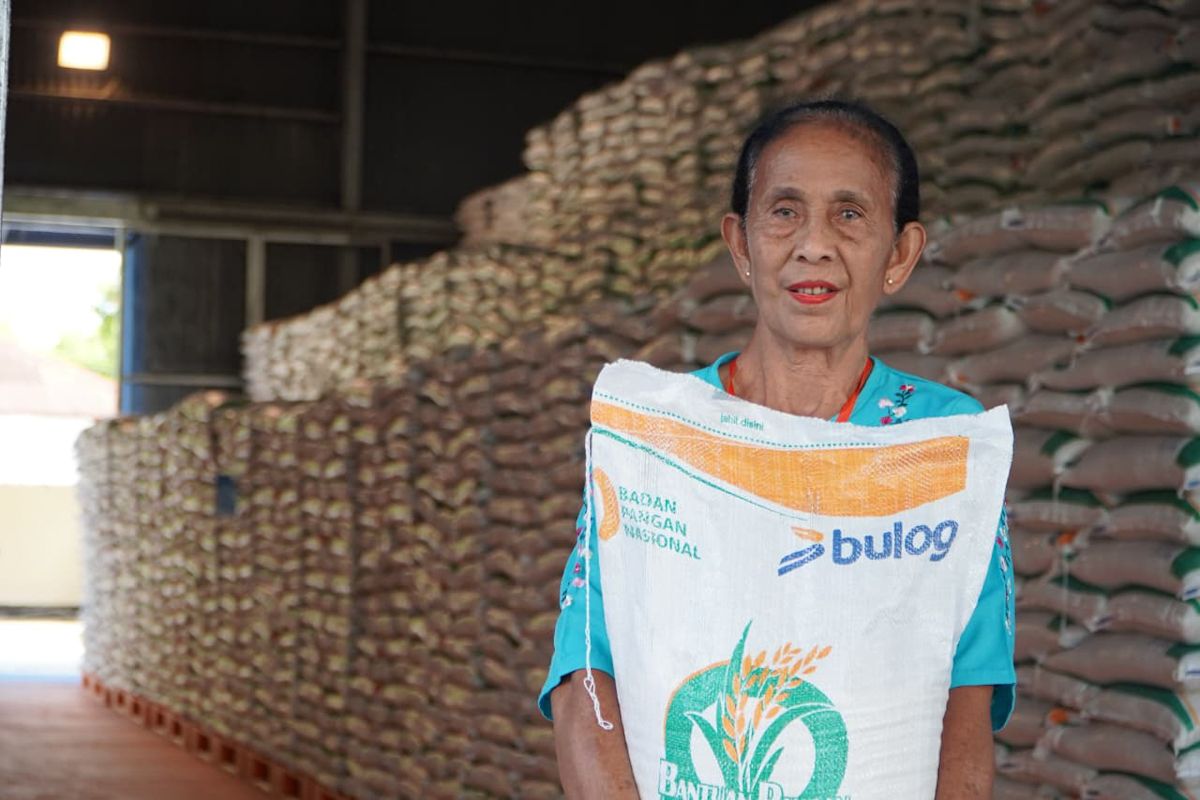
The National Food Agency (Bapanas) has confirmed that rice food aid for 33.24 million beneficiary families (KPM) will be distributed in one go for three months after the Rp17.52 trillion budget was approved by the Ministry of Finance (Kemenkeu). “The approval is for three months. The budget is Rp17.52 trillion. Initially, we wanted one month first, but the Ministry of Finance provided room to go directly for three months. So it can be one shot for three months at once,” said Deputy for Food Availability and Stabilisation at Bapanas, I Gusti Ketut Astawa, in Jakarta on Wednesday. The second phase of the rice food aid programme for 33.24 million KPM covers the allocation for July, August, and September 2026. The proposed additional spending budget (ABT) from Bapanas of Rp17.52 trillion will subsequently be processed into a Budget Unit Allocation Letter (SP SABA). Previously, at an inflation control meeting at the Ministry of Home Affairs on 27 July 2026, the government stated that rice food aid would begin distribution for a one-month allocation first in August. However, with the latest developments, Bapanas has confirmed that the distribution of rice food aid will be carried out at once for a three-month allocation, namely July, August, and September. “As per the previous meeting at the Coordinating Ministry for Economic Affairs, food aid will begin to be distributed in August. Of course, subsequently there will be an assignment from the Head of the National Food Agency (Andi Amran Sulaiman) to Perum Bulog,” Ketut explained. Bapanas is finalising preparations with Perum Bulog to distribute the aid. This is supported by the government’s rice reserve stock (CBP) across all Bulog warehouses, which has reached 5.25 million tonnes. “So, with these steps, hopefully we can also immediately control rice prices in August,” he said. Furthermore, Ketut stated that the pro-people food aid programme is one of President Prabowo Subianto’s directives, planned to begin distribution in one go in August. A total of 997.2 thousand tonnes of rice will be distributed to 33.24 million KPM, each receiving 10 kilogrammes for the three-month allocation. For comparison, the allocation for the rice food aid programme in 2026 will be larger than in 2025. The previous year’s food aid programme was implemented for four months of allocation, covering June-July and October-November. Meanwhile, the implementation of the food aid programme in 2026 will run for at least five months of allocation. Bapanas is optimistic that the scaled-up food aid, amounting to nearly one million tonnes, can suppress rice prices in the market. When rice prices at the consumer level stabilise, the inflation rate will also be more under control. “Imagine, 33 million KPM times three months means almost one million tonnes of rice. This is received directly by consumers. Naturally, the need to buy rice in the market will decrease. So, this will slightly slow down inflation,” Ketut added. The Central Statistics Agency (BPS) noted that until the fourth week of July, the Rice Development Index (IPH) was still experiencing an increase. However, the number of districts and cities experiencing a decline in the IPH for rice also increased in the fourth week of July. Currently, BPS records 43 districts and cities experiencing a decline in the rice IPH, whereas the previous week there were only 40 and 41 districts and cities. Looking at the rice inflation rate up to June, it remains relatively under control. BPS data shows that rice inflation in June 2026 on a year-on-year (yoy) basis was 3.98 percent. This figure has eased by 0.57 percent compared to May 2026, which reached 4.55 percent. For month-to-month rice inflation up to June 2026, it was recorded at 0.45 percent. This index is still below the 1 percent level, reflecting relatively controlled rice price movements.