
Bapanas Reports 5,597 Low-Cost Food Drives Held to Curb Inflation
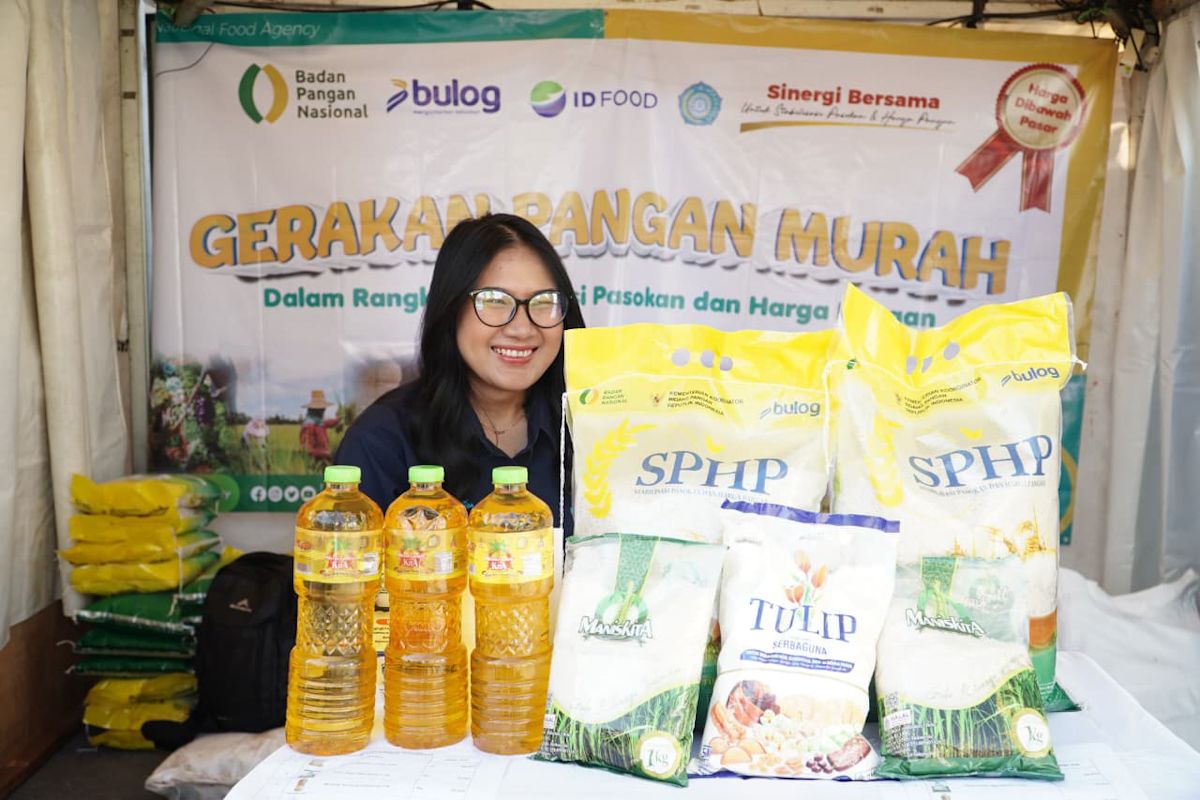
The National Food Agency (Bapanas) has reported that 5,597 low-cost food drives (GPM) have been held across various regions as an effort to maintain price stability, curb inflation, and strengthen public purchasing power. “From January to June 2026, GPMs were implemented 5,597 times across 37 provinces and 378 regencies/cities,” said Head of Bapanas and Minister of Agriculture Andi Amran Sulaiman in a confirmed statement in Jakarta on Wednesday. Bapanas stated that the three provinces with the most GPMs were Central Java, West Java, and East Java. However, Papua Pegunungan Province has yet to hold a GPM in its territory. The massive initiative is designed to ensure that staple needs such as rice, eggs, cooking oil, sugar, onions, and other strategic food commodities are available at more affordable prices. The success of the GPMs in various regions is inseparable from the strong commitment of local governments, including the role of state-owned food enterprises such as Perum Bulog and ID FOOD as pillars of large-scale staple food supply, supported by the involvement of the TNI, Polri, private businesses, and associations. Amran emphasised that with food availability dominated by supplies from domestic farmers and livestock breeders, Indonesia is not overly dependent on other countries. Food inflation can thus be more controlled so that it does not fluctuate too high, yet remains within a reasonable price threshold from upstream to downstream. “It does not stop until Indonesia becomes a Golden Indonesia, a superpower, standing alongside other powerful nations. That is our big dream, and God willing, it will become a reality in the future,” Amran declared. Meanwhile, Statistics Indonesia (BPS) recorded that annual food inflation up to June 2026 decreased by 0.66 per cent, from 6.24 per cent in May 2026 to 5.58 per cent in June 2026. This index is increasingly approaching the government’s annual food inflation target set in the range of 3 to 5 per cent. Monthly food inflation also decreased by 0.08 per cent, from 0.22 per cent in May 2026 to 0.14 per cent in June 2026. Food commodities contributing to this included shallots, garlic, and rice. Commodities such as red chillies, broiler chicken meat, and bird’s eye chillies also contributed to annual food inflation. “The volatile price component experienced monthly inflation of 0.14 per cent. This component contributed 0.02 per cent to inflation, while the dominant commodities contributing to inflation were shallots, garlic, and rice,” said BPS Deputy for Distribution and Services Statistics Ateng Hartono in Jakarta on Wednesday (1/7). The volatile price component experienced annual inflation of 5.58 per cent, with a contribution of 0.66 per cent, dominated by rice, red chillies, broiler chicken meat, bird’s eye chillies, and shallots. Furthermore, year-to-date food inflation was significantly stabilised. From January to June 2026, year-to-date food inflation stood at 1.61 per cent, a decrease of 0.54 per cent compared to the year-to-date inflation up to June 2025, which was recorded at 2.15 per cent. This correction in year-to-date food inflation during the first half of 2026 indicates improving domestic food price conditions compared to the first semester of the previous year.