
Bapanas pushes for 'value-added revolution' in Food Law revision
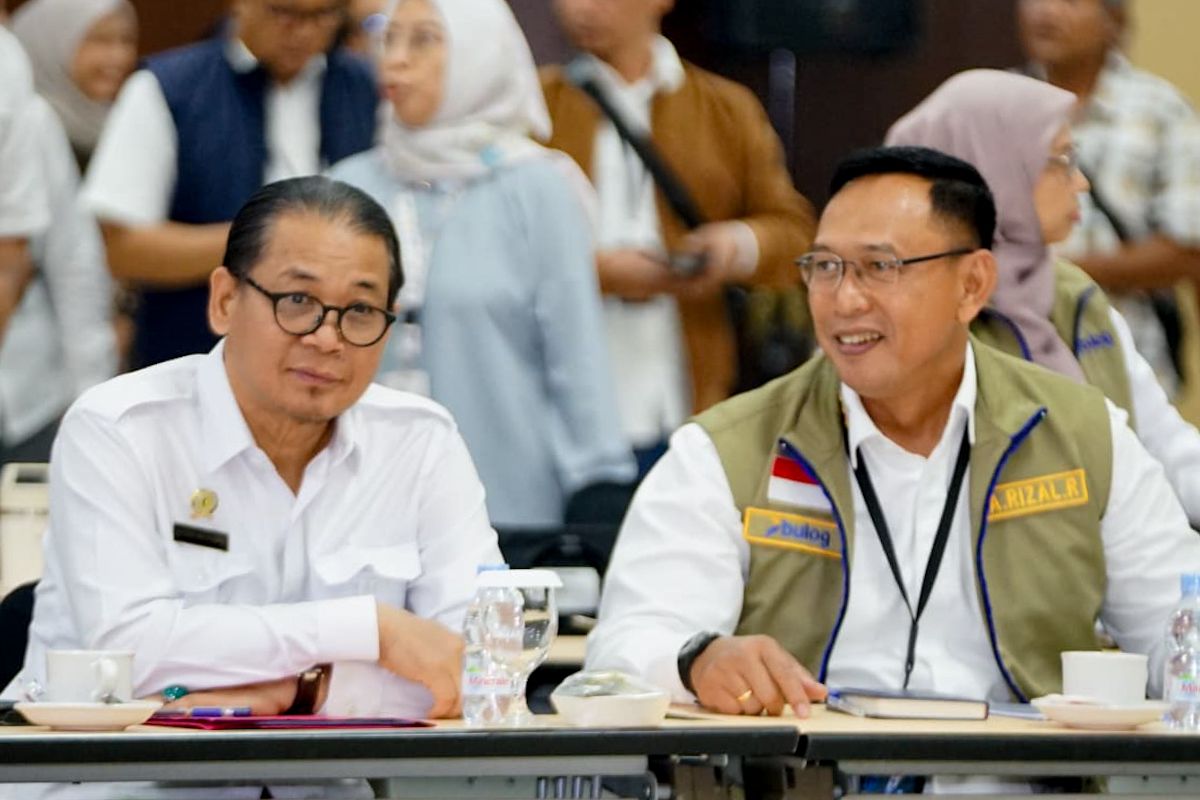
The National Food Agency (Bapanas) is pushing for the strengthening of a value-added revolution in the revision of the Food Law to bolster the national food ecosystem, enhance competitiveness, and drive food-based economic growth from upstream to downstream.
Deputy for Consumption Diversification and Food Safety at Bapanas, Andriko Noto Susanto, assessed that a value-added revolution in food is necessary to strengthen the connection between primary producers and business actors within a mutually reinforcing food ecosystem. “We consider this value-added revolution to be very strategic because it can harmonise the dreams of primary producers with the dreams of business actors,” Andriko said in a statement in Jakarta on Friday.
He conveyed this as input during a working visit of the House of Representatives’ Commission IV Food Bill Working Committee to Sebelas Maret University (UNS) in Surakarta, Central Java. According to Andriko, primary producers or farmers want to produce as much as possible and have their output well absorbed, while business actors need competitively priced raw materials. “If that connection can be properly built, the national food ecosystem from upstream to downstream will become stronger,” he stated.
He explained that strengthening food value addition is crucial so that domestic food production not only increases in volume but also provides market certainty for farmers and primary producers, while creating competitive raw materials for the national food industry. He noted that currently, when the cheapest raw material option comes from imports, imports are chosen. As a result, the national food ecosystem has not been optimally developed. “Therefore, building value addition and upstream-downstream connectivity is important so that domestic production becomes the main basis for national food development,” he clarified.
Beyond strengthening food value addition, Andriko assessed that the Food Law revision also needs to accommodate various strategic mandates currently carried out by Bapanas, including food diversification, handling food insecurity, strengthening food resilience, and implementing food safety. He argued that strengthening national food governance must also be accompanied by a firm delineation between regulatory and operational functions so that each institution can carry out its duties and authorities optimally. “The principle that must be maintained in national food management is a clear division of roles between regulator and executor,” he explained.
With firm delineation, the process of policy formulation, supervision, and programme implementation can run more effectively, accountably, and transparently, allowing national food governance to avoid potential conflicts of interest. He explained that Bapanas currently carries out various strategic functions encompassing coordination, formulation, and stipulation of policies in the food sector. Additionally, it functions as the Central Competent Authority for Food Safety, working together with Regional Competent Authorities for Food Safety across 38 provinces and 514 regencies/cities in implementing fresh food safety supervision.
He added that the food safety function is a crucial part of the national food system. Therefore, the continuity of public services, food safety supervision, and coordination between central and regional governments needs to be continuously strengthened within a more comprehensive regulatory framework. He expressed hope that the Food Law revision would provide a stronger legal foundation for integrated national food development, encourage the growth of food industries based on local resources, increase the value addition of domestic food products, and strengthen Indonesia’s food resilience and sovereignty in a sustainable manner.
Strengthening the national food ecosystem from upstream to downstream through value addition emerged as a key strategic input in the discussion of the Draft Bill on the Third Amendment to Law Number 18 of 2012 concerning Food. Chair of Commission IV of the House of Representatives, Titiek Soeharto, said the Food Bill Working Committee continues to absorb various inputs from stakeholders, including academics, to refine the substance of the Food Law revision. “We are currently drafting the Food Bill. Therefore, we need to obtain input from various parties, including academics,” Titiek said during the working visit to UNS Surakarta. “Various important inputs conveyed today will certainly be accommodated and become material in the preparation of the Food Law revision,” she added.
Similarly, Deputy Chair of Commission IV, Abdul Kharis Almasyhari, conveyed that the input provided by UNS experts offered new perspectives in formulating national food regulations that are more adaptive to future challenges. “Today we received a lot of valuable input from Sebelas Maret University experts, ranging from the substance of changes that need to be included in the Food Law revision, strengthening food governance and agribusiness, to the development of food innovation,” Kharis said. He stated that the ideas obtained will be reviewed to then be accommodated in the norms regulated in the Food Law revision.