
Bapanas: Producers Must Ensure Nutritional Claims on Fortified Rice Are Accurate
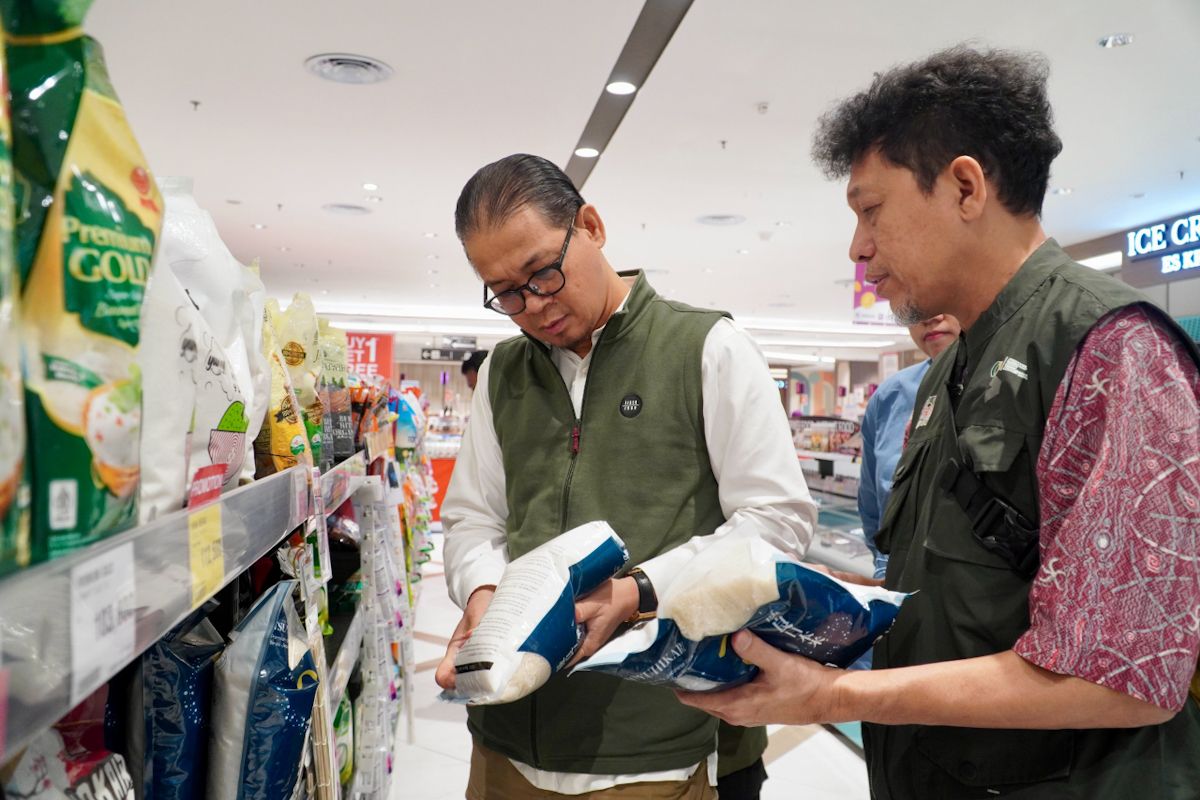
The National Food Agency (Bapanas) has stressed that producers of fortified rice must ensure nutritional content matches the claims on packaging labels as part of strengthened oversight of food safety, quality, and consumer protection.
“The nutritional value content must match what is stated on the packaging label. That must be complied with by rice producers,” said Andriko Noto Sutanto, Deputy for Consumption Diversification and Food Safety at Bapanas, when confirmed in Jakarta on Friday.
He explained that fortified rice is rice enriched with specific nutrients in accordance with the Indonesian National Standard (SNI), while rice with nutritional claims may contain two or more nutrients.
“Fortified rice is rice that has been enriched with nutritional value. For fortification, there is an SNI. Rice enriched with nutritional value can contain two nutrients, or more, on average two. That is why it falls into the special rice group,” said Andriko.
Andriko added that nutritionally enriched rice is classified as special rice because it has different characteristics compared to ordinary rice and must comply with government licensing and oversight requirements.
He stressed that distribution permits for fortified rice must state the type of micronutrients added as an effort to improve the nutritional quality of the population, especially for vulnerable and low-income groups.
“Special rice includes fortified rice or enriched rice. That is written in the distribution permit,” he explained.
“Micronutrients added to rice that are related to improving nutritional value, targeting our brothers and sisters who are still poor, we call that fortified rice,” he added.
Fortified rice is milled rice to which fortificant rice kernels are added at a minimum of 1 percent with the aim of achieving a specific nutrient composition. A standard has been issued, namely Indonesian National Standard (SNI) 9372:2025.
The SNI stipulates that per 100 grams of fortified rice must contain at least 0.25 milligrams of vitamin B1, 0.25 to 0.38 milligrams of folic acid, 1.0 to 1.5 micrograms of vitamin B12, 3.50 to 5.25 milligrams of iron, and 3.0 to 4.5 milligrams of zinc.
Producers of fortified rice in Indonesia must obtain a distribution permit for processed food (PSAT) before the product is distributed to the market. The permit is handled by Bapanas together with the Regional Food Safety Competent Authority (OKKPD) in each Indonesian province.
Previously, Bapanas found discrepancies in several brands of special rice at distribution points based on monitoring results in April 2026 in the Jakarta area.
Fifteen samples were obtained, consisting of 3 samples of fortified rice and 12 samples of rice with nutritional claims. The 15 samples from Bapanas monitoring came from 9 producers with 15 trade brands.
Laboratory results showed that of the 12 samples of rice with nutritional claims, 3 samples met the requirements, while 9 samples did not meet the requirements. In addition, 3 samples did not include nutritional value information in the form of the percentage of the Nutritional Adequacy Rate (AKG) on the packaging label.
Source: jawawa.id (https://jawawa.id/newsitem/bapanas-producers-must-ensure-nutritional-claims-on-fortified-rice-are-accurate-1786074836)
Originally published by Antara (Indonesian) (https://www.antaranews.com/berita/5683667/bapanas-tegaskan-produsen-wajib-penuhi-klaim-gizi-beras-fortifikasi), translated from Indonesian