
Bapanas: Intervention of 1.34 Million Tonnes of Rice Keeps Prices Under Control
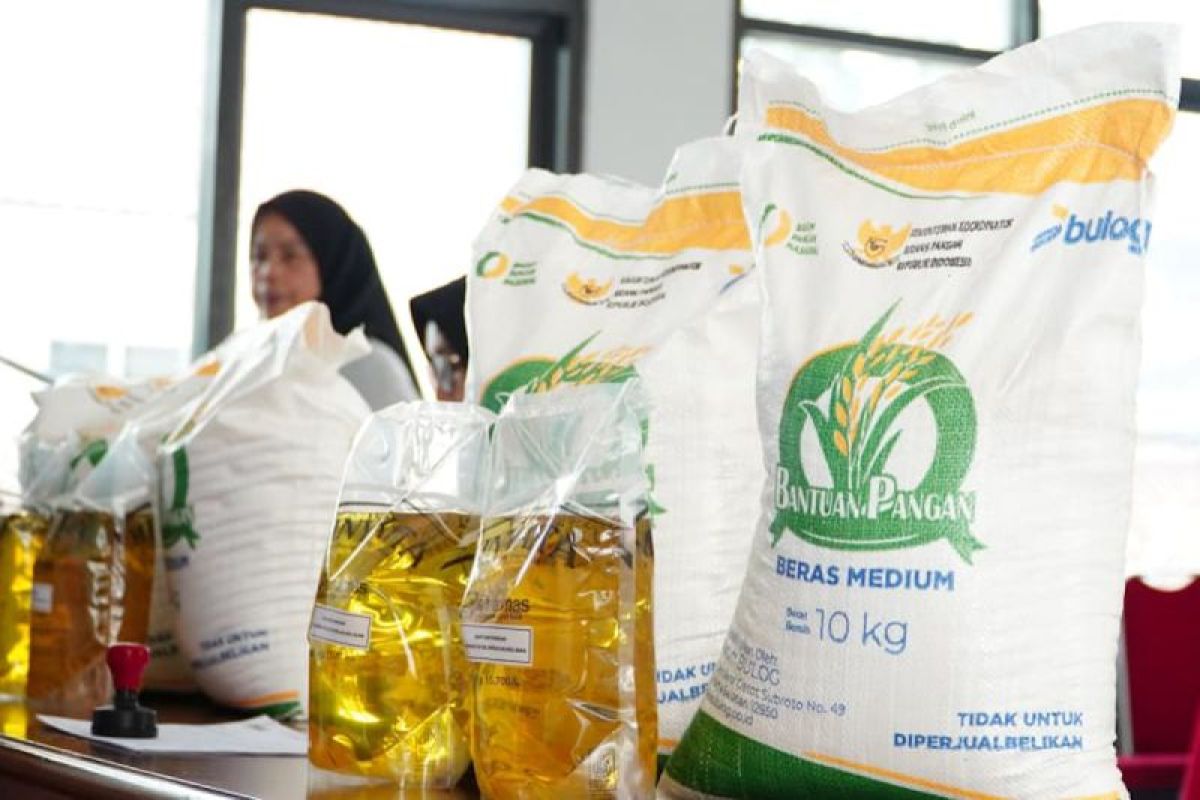
The National Food Agency (Bapanas) has stated that the distribution of 1.34 million tonnes of government rice reserves (CBP) has successfully maintained price stability and suppressed national rice inflation amid rising public demand. “Inflation and rice prices nationally remain under control, supported in part by the distribution of CBP stocks sourced from domestic rice production,” said Bapanas Head and Minister of Agriculture Andi Amran Sulaiman in a statement in Jakarta on Thursday. Bapanas stated that the 1.34 million tonnes of CBP intervention was carried out through Perum Bulog from January to June 2026 to maintain the commodity’s price stability. This comprised the realisation of the Food Supply and Price Stabilisation (SPHP) rice sales programme, totalling 221.05 thousand tonnes in January and February, followed by 406.5 thousand tonnes from March to June. For the food assistance programme, the allocation for February and March was finalised by the end of June, reaching 33.14 million beneficiary families with a total of 662.86 thousand tonnes of rice distributed. The remaining CBP was channelled to the civil servant budget group programme in certain regions, amounting to 40.72 thousand tonnes, and for natural disaster response, totalling 11.37 thousand tonnes. “Our stock today is the highest in history, since our independence. The stock today is 5.1 million tonnes. The FAO has just issued an announcement that our production has jumped, with an estimate of 38 million tonnes in 2026,” Amran said. He calculated that if total annual rice production remains around 34 million tonnes as in 2025, there would be a production surplus of about 4 million tonnes compared to 2024. This surplus could be repeated if 2026 production stays at 34 million tonnes, but if it reaches 38 million tonnes, the surplus would increase further. “If that happens, meaning an 8 million tonne surplus plus 4 million, that could reach 13 million tonnes, so we are building warehouses quickly. There are 100 warehouses with a budget of Rp5 trillion, capable of storing rice for two to three years,” Amran said. Meanwhile, Statistics Indonesia (BPS) recorded that year-on-year rice inflation in June 2026 stood at 3.98 per cent, easing by 0.57 per cent from 4.55 per cent in May 2026. On a month-to-month basis, rice inflation was recorded at 0.45 per cent, still below the one per cent level, reflecting relatively controlled price movements. “At the retail level, month-to-month rice inflation was 0.45 per cent, while year-on-year retail inflation was 3.98 per cent,” said BPS Deputy for Distribution and Services Statistics Ateng Hartono during a press conference in Jakarta on Wednesday (1/7). Historically, the annual rice inflation in June 2026 was far lower than the 11.88 per cent recorded in June 2024, and only slightly higher than the 3.38 per cent in June 2025. This indicates that price pressures on rice are increasingly under control compared to the previous two years. BPS also noted that monthly rice inflation in June 2026 was more stable than that of shallots and garlic. Shallots experienced 6.52 per cent inflation with a 0.04 per cent contribution, while garlic inflation was 6.88 per cent with a 0.03 per cent contribution. Rice contributed only 0.02 per cent to monthly inflation in June 2026. The 0.45 per cent monthly rice inflation in June 2026 also signals stable consumer-level rice prices, as monthly rice inflation has not exceeded one per cent since December 2025. At that time, rice inflation turned positive after a significant deflation of 0.59 per cent in November 2025, reaching 0.18 per cent in December. The monthly figures from January to June 2026 were sequentially 0.16 per cent, 0.43 per cent, 0.65 per cent, 0.58 per cent, 0.38 per cent, and finally 0.45 per cent.