
Bapanas: Indonesia's Rice Production Highest in Southeast Asia, Fourth in the World
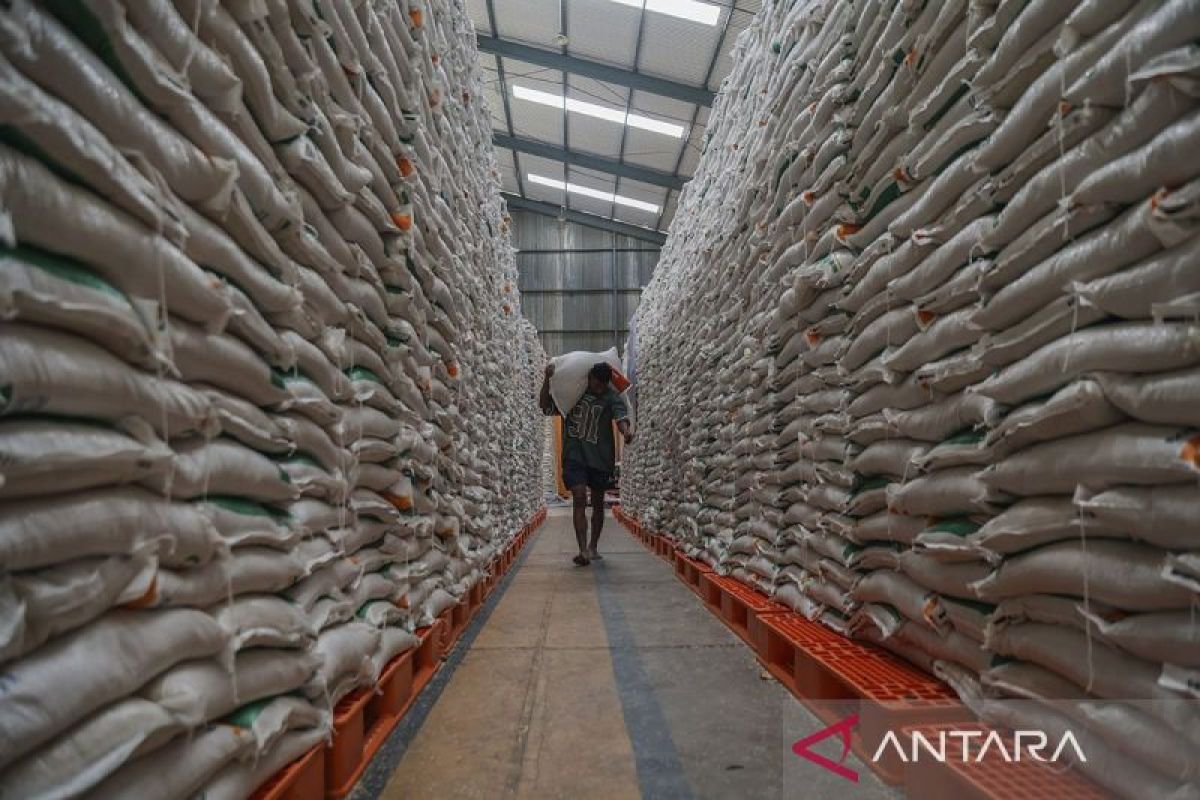
The National Food Agency (Bapanas), citing data from the Food and Agriculture Organization (FAO), stated that Indonesia has become the country with the highest rice production in Southeast Asia and ranks fourth in the world behind India, China, and Bangladesh in 2025. “The FAO has once again placed Indonesia as the highest rice-producing country in Southeast Asia and also the fourth highest in the world after India, China, and Bangladesh,” said Head of the National Food Agency and Minister of Agriculture Andi Amran Sulaiman in a statement received in Jakarta on Saturday. However, according to him, of the world’s top four, only China and Indonesia are projected to experience positive rice production growth. Meanwhile, when comparing estimated rice production for the 2025/2026 period with 2024/2025, Indonesia is the country with the highest production increase among the world’s major producing countries. Indonesia’s rice production increase is estimated to reach more than 4 million tonnes, far surpassing India’s 1.7 million tonnes, Brazil’s 1.5 million tonnes, and Bangladesh’s 1.1 million tonnes. He said the development of Indonesia’s rice sector has once again received recognition from the FAO. Besides announcing the development of Indonesia’s rice production, the FAO also reported that Indonesia experienced an increase in rice stocks and also succeeded in maintaining price stability at the farmer level. In the June 2026 edition of Food Outlook, the FAO reported that the increase in rice stocks in Indonesia was one of the factors in maintaining world rice reserve stocks. The food organisation also estimates that world rice stocks at the end of 2026/2027 could reach 213.8 million tonnes, which is the second highest record in the last 10 years. Amran confirmed that the national government rice reserve stock (CBP) managed by Perum Bulog is still above 5 million tonnes. He also confirmed that Indonesia will no longer have imports of consumption rice. “Our CBP stock as of today in June is around 5.2 million tonnes as of today and our stock is safe. But most importantly, since 2025 no medium rice import permits have been issued until now,” he said. He even asked those who still doubt the abundance of CBP stocks to see directly the Bulog warehouses in various regions. This is also to prove the government’s great optimism regarding the availability of rice for domestic needs. “Bulog’s warehouse capacity is only 3 million tonnes. But our stock is 5.2 million tonnes. This means Bulog today is renting warehouses with a capacity of 2.2 million tonnes. So for those who are not yet convinced, please go to Bulog warehouses throughout Indonesia,” Amran said again. Regarding rice stocks, the FAO provided closing stock projections in the June 2026 Food Outlook which estimates Indonesia’s rice stocks could reach 7.5 million tonnes in the 2025/2026 period and could also be even larger up to 7.8 million tonnes in the 2026/2027 period. Indonesia’s opportunity as a rice exporter is considered increasingly wide open. “And one more thing, rice is no longer a major contributor to inflation. This has been for two consecutive years,” he said. The monthly rice inflation rate in Indonesia has been sloping in the last two years. The last fairly high rice inflation, according to him, occurred in May 2024 at 3.59 percent. After that, he said rice inflation was more stable. Rice inflation had fluctuated in July 2025, but only at 1.35 percent. Most recently, rice inflation in May 2026 was at 0.38 percent. Although rice inflation is quite low to date, it does not make the condition of Indonesian farmers depressed. The FAO in its latest report stated that stable producer prices in several countries succeeded in encouraging farmers’ desire to prefer planting rice over other crops. The FAO mentioned this happened in Indonesia, South Korea, Pakistan, and the Philippines. This ideal condition certainly has a positive contribution to increasing harvests, but on the other hand there are countries reported by the UN organisation to have experienced a decline in rice production, including Cambodia, India, Myanmar, Nepal, Sri Lanka, and Thailand. The Indonesian rice farmer price index itself in data from the Central Statistics Agency (BPS) reflects a progressive trend. The price index received by rice farmers in May 2026 was at 147.97 and is the highest in the last 7 years. Likewise, the Food Crops Farmer Exchange Rate (NTP) index in May was at 113.79 and is the highest index in 2026.