
Bapanas Ensures Stable Supply and Prices for Chicken Eggs
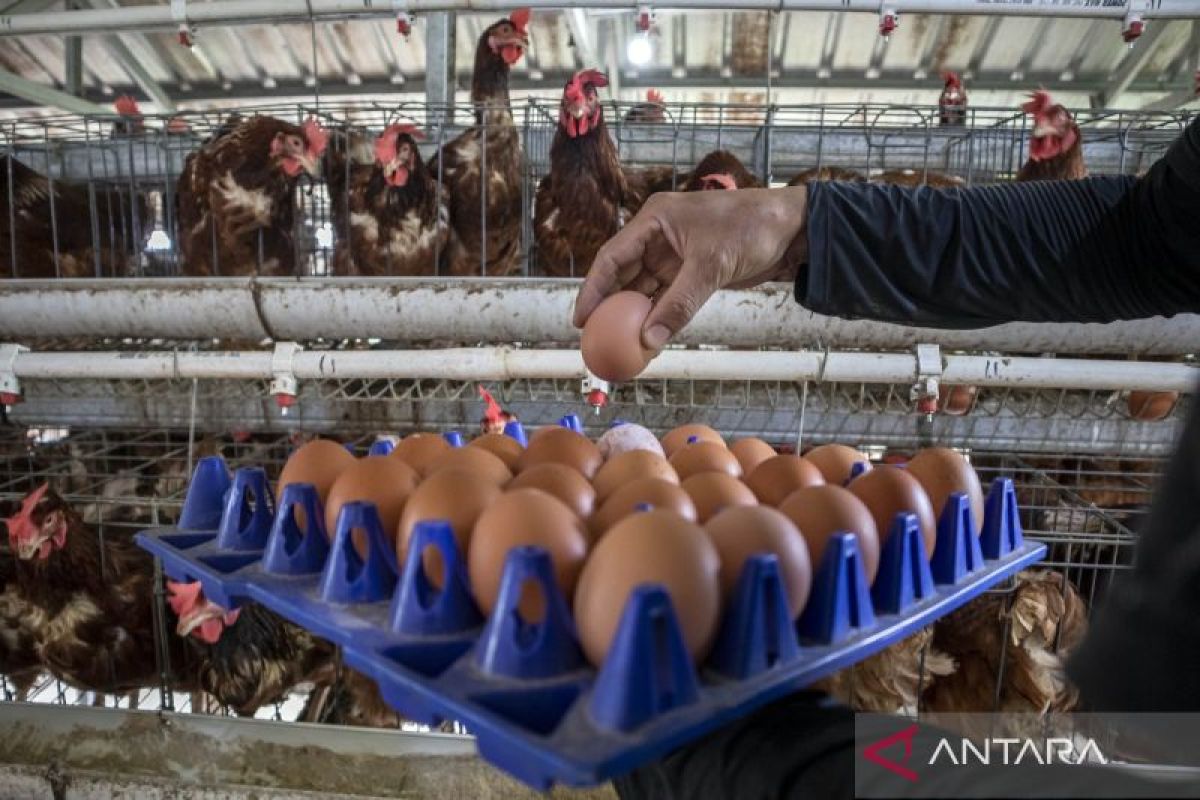
Jakarta (ANTARA) - The Head of the National Food Agency (Bapanas) and Minister of Agriculture, Andi Amran Sulaiman, has assured that the supply and prices of chicken eggs are safe and stable to meet public needs.
“Indonesia is currently surplus in the chicken egg commodity. The supply is abundant from domestic production, and Indonesia can even export,” said Amran in a statement confirmed in Jakarta on Wednesday.
Given this situation, Amran is optimistic that domestic chicken egg prices can continue to be maintained.
He also requested that there be no excuses for price increases in society.
“If there is any increase, I ask the Saber Task Force to trace it back to the distributors and producers. There must be no one creating price anomalies for food,” Amran emphasised.
According to him, chicken eggs are one of the strategic staple foods favoured by Indonesian society, so their price stability is always maintained by the government.
“This is because eggs are a good source of animal protein at a more affordable price compared to other animal protein sources,” he stated.
According to the Central Statistics Agency (BPS), said Amran, the average per capita consumption per week for chicken eggs in 2025 is at 2.362 kilograms (kg).
He mentioned that over the last 10 years, the average egg consumption in 2025 has increased by 19.1 percent, as the average per capita egg consumption per week in 2016 was 1.983 kg.
Most recently, Amran continued, in the monitoring by the Task Force for Clean Sweep (Saber) on Food Price, Safety, and Quality Violations as of 30 March, chicken egg prices in people’s markets were still found to be within reasonable bounds.
The Saber Food Task Force even recorded a depreciation in chicken egg prices following Eid al-Fitr 1447 Hijriah.
Bapanas, together with local partners, recorded that chicken egg prices at Kranggan Market, Yogyakarta, DIY, have dropped to Rp28,000 per kg.
Similarly, at Beringharjo Market, Yogyakarta, DIY, chicken egg prices have fallen over the last three days to Rp28,000 per kg from Rp30,000 per kg.
In North Sumatra (Sumut), the Saber Food Task Force recorded chicken egg prices at Gambir Market, Tebing Tinggi, at the lowest of Rp27,200 per kg.
Meanwhile, at Seutui Market, Banda Aceh, Aceh, chicken egg prices are at Rp28,500 per kg.
Chicken egg prices in Kalimantan and Papua are still fluctuating, partly due to distribution costs from egg production centres.
At Kemuning Market, Pontianak, West Kalimantan, chicken egg prices are around Rp33,000 per kg. Meanwhile, at Snon Bukor Market, Raja Ampat, Southwest Papua, chicken egg prices are at Rp36,000 per kg.
The reference purchase price (HAP) at the producer level for chicken eggs is set at a maximum of Rp26,500 per kg.
Meanwhile, the HAP at the consumer level is a maximum of Rp30,000 per kg.
This provision is contained in the Decree of the Head of the National Food Agency Number 529 of 2024.
Based on the Bapanas Food Balance Projection, domestic chicken egg production over a year is around 7.32 million tonnes and is estimated to support national consumption needs at 6.47 million tonnes.
Previously, President Prabowo Subianto, in a speech at the Indonesia-Japan Business Forum held in Tokyo, Japan, on Monday (30/3/2026), admitted to frequently contacting his aides directly in the early morning to receive reports on strategic staple food prices.
The Head of State said that a micromanagement pattern is applied to obtain detailed data and facts.
This includes matters related to food prices, such as chicken eggs.
“Yes, I admit I am a micromanager. I will call my ministers at 2 a.m. or 5 a.m., and I will ask them about the price of eggs today,” said the President.