
Bapanas Distributes 610.3 Thousand Tonnes of SPHP Rice as of 8 August 2026
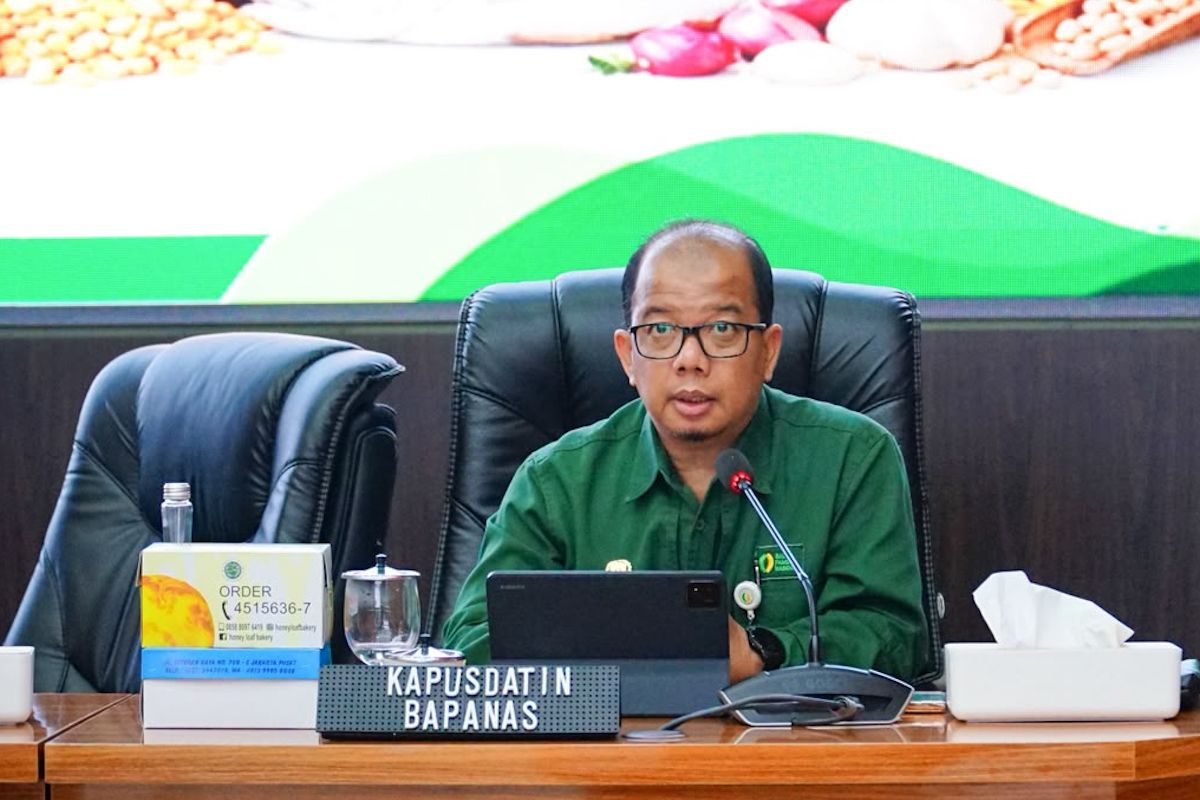
The National Food Agency (Bapanas) has reported that distribution of rice under the Food Supply and Price Stabilisation Programme (SPHP) reached 610.3 thousand tonnes as of 8 August 2026, as part of efforts to maintain rice price stability and strengthen supply for the public.
“One of the main supports for food price intervention is carried out through the distribution of SPHP rice. As of 8 August 2026, realisation has reached 610.3 thousand tonnes or 73.71 percent of the target of 828 thousand tonnes,” said Head of the Bapanas Data and Information Centre Kelik Budiana in a confirmed statement in Jakarta on Tuesday.
He made the remarks during the Regional Inflation Control Coordination Meeting at the Ministry of Home Affairs office in Jakarta.
State logistics company Perum Bulog distributes SPHP rice based on an assignment from Bapanas to maintain rice price stability, he continued. Distribution is carried out in 5-kilogramme packages of medium-quality rice with a broken grain rate of around 25 percent and moisture content of 14 percent, in accordance with government standards.
“In fact, 2 kg packaging is now being prepared,” he said.
SPHP rice is sold in accordance with the highest retail price (HET), namely Rp12,500 per kilogramme for zone 1 (Java, Lampung, South Sumatra, Bali, West Nusa Tenggara, Sulawesi), Rp13,100 per kilogramme for zone 2 (Sumatra excluding Lampung and South Sumatra, East Nusa Tenggara, Kalimantan), and Rp13,500 per kilogramme for zone 3 (Maluku, Papua).
SPHP rice distribution in 2026 is carried out throughout the year without pause, unlike the pattern of previous years which was periodic, following peak harvest conditions in order to maintain prices at the farmer level.
According to Kelik, food price stability continues to show maintained development in line with various measures taken to ensure supply is available and public needs can be met at affordable prices.
“Strengthening intervention from the supply, distribution and price sides continues to be carried out to support public purchasing power while keeping inflation under control,” he said.
Strengthening food stability is also realised through food assistance for the public. In February and March 2026, each beneficiary family (KPM) received 10 kilogrammes of rice and two litres of cooking oil per month.
The programme reached 33.2 million beneficiary families, with realisation as of 30 June 2026 reaching 664.8 million kilogrammes of rice and 132.7 million litres of cooking oil, or 99.70 percent.
“This food assistance is continued for three months for the period July to September 2026 based on the Coordinating Ministry for Food’s limited coordination meeting on 9 June 2026, for beneficiaries in deciles 1 to 4,” Kelik explained.
Public access to food at affordable prices is also being expanded through the Cheap Food Movement (GPM) carried out together with stakeholders.
As of 7 August 2026, the activity has been held 7,586 times and reached 38 provinces and 448 regencies/cities. The breadth of the activity’s implementation demonstrates strong collaboration in maintaining food availability and affordability in various regions.
Stabilisation support also touches the livestock sector. To maintain corn and egg prices at the farmer level, SPHP corn has been distributed to layer chicken egg farmers.
As of 8 August 2026, he said realisation of distribution has reached 110,573 tonnes or 45.93 percent of the target of 213,200 tonnes.
“In the context of stabilising corn and egg prices at the farmer level, the National Food Agency has distributed SPHP corn to layer chicken egg farmers. This SPHP corn distribution is in the context of stabilising egg and broiler chicken meat prices,” said Kelik.
These various measures run in tandem with monitoring of food price developments at the producer level.
Based on the Food Price Panel as of 9 August 2026, prices of a number of commodities were recorded below the Purchase Reference Price (HAP), such as shallots, broiler chickens, live cattle, and local dry shelled soybeans, which are part of price dynamics at the producer level.
Attention is also continuously given to the price of layer chicken eggs, which is 12.78 percent below the HAP, and intervention will be carried out immediately. Regular monitoring allows stabilisation measures to be carried out according to commodity developments, so that price balance can continue to be maintained for both producers and consumers.
Strengthening food stability runs in tandem with increasingly better national inflation developments. Statistics Indonesia (BPS) recorded Indonesia’s inflation in July 2026 at 2.88 percent year-on-year, down from 3.34 percent in June 2026. On a monthly basis, Indonesia also recorded deflation of 0.14 percent.