
Bapanas Confident Rising GKP Prices Will Boost Farmer Productivity
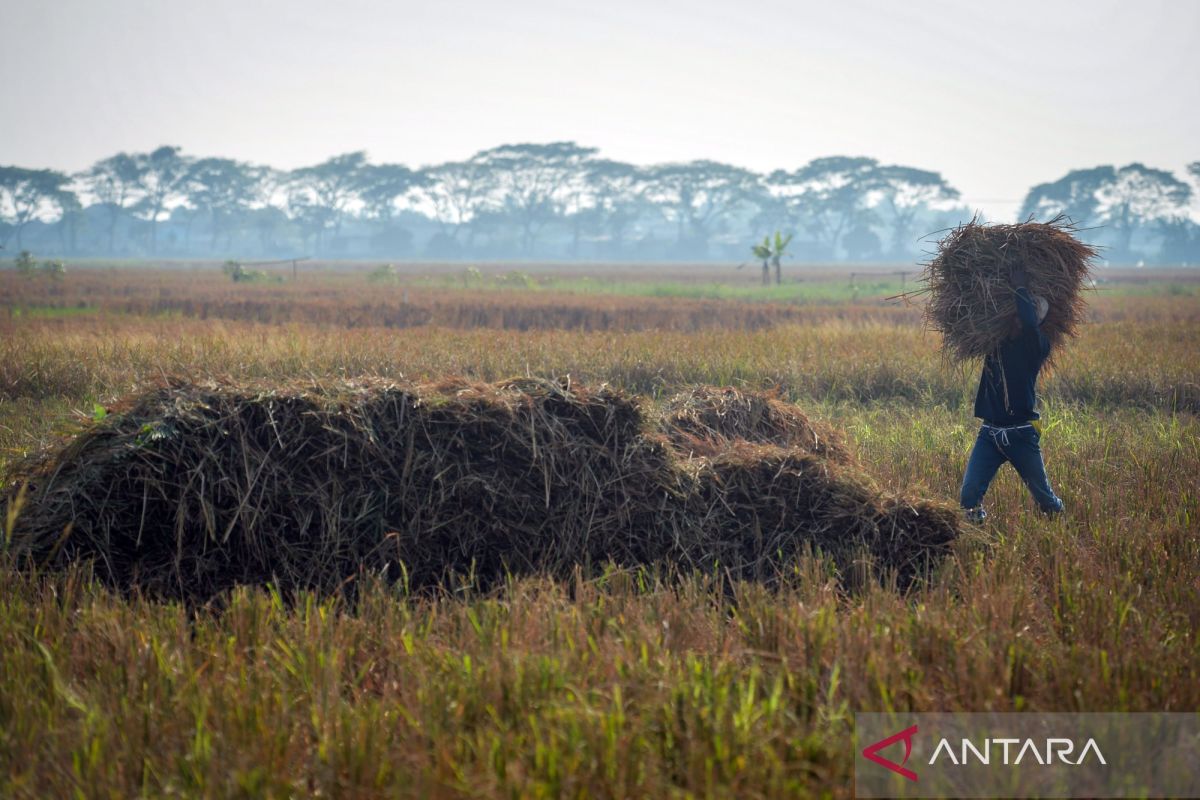
Jakarta (ANTARA) - The National Food Agency (Bapanas) assesses that the increase in the price of Harvested Dry Grain (GKP) has a positive impact on farmers because it can improve welfare and encourage productivity in the agricultural sector.
Deputy for Food Availability and Stabilisation at Bapanas, I Gusti Ketut Astawa, stated in Jakarta on Tuesday that the GKP price, which is above Rp7,000 per kilogramme, indicates favourable conditions for farmers.
“The price of rice is identical to the price of GKP. So, our average GKP now, if averaged, is around Rp7,000, but if we take the highest price, it is Rp7,500,” he said.
“What is the positive side? Our farmers are happy. If we want to be a producing country, if we want self-sufficiency, this is certainly a positive side. Why? Because the price is comfortable for our farmers, comfortable for them to produce,” he added.
He explained that a GKP price above Rp6,500 per kilogramme will impact the price of rice at the consumer level because the previous highest retail price assumption used that grain price as a reference.
“If the GKP is more than Rp6,500, it certainly cannot match the retail price, especially if it is above Rp7,000,” he said.
According to him, the government has also prepared a number of measures to maintain a balance between the interests of farmers and consumers. On the downstream side, the government provides food aid and distributes Stabilisation of Food Supply and Prices (SPHP) rice to help the community.
“That is why there is food aid, food aid for 33.24 million people. If one family has just three people, multiply by three, that is around 90-something million people who have been helped,” he stated.
He said the distribution of SPHP rice, the cheap food movement, and various other government interventions are instruments to maintain the affordability of rice prices in the community.
Regarding its impact on rice inflation, he is optimistic that various government programmes can help suppress price increases at the consumer level. Moreover, the food aid distributed to the community will reduce demand pressure in the market.
“This is also very supportive, because the upstream side is comfortable producing, the downstream side is helped with food aid and SPHP, not to mention the cheap food movement and so on,” he said.