
Bapanas Collaborates with Distributors to Keep Garlic Prices Under Control
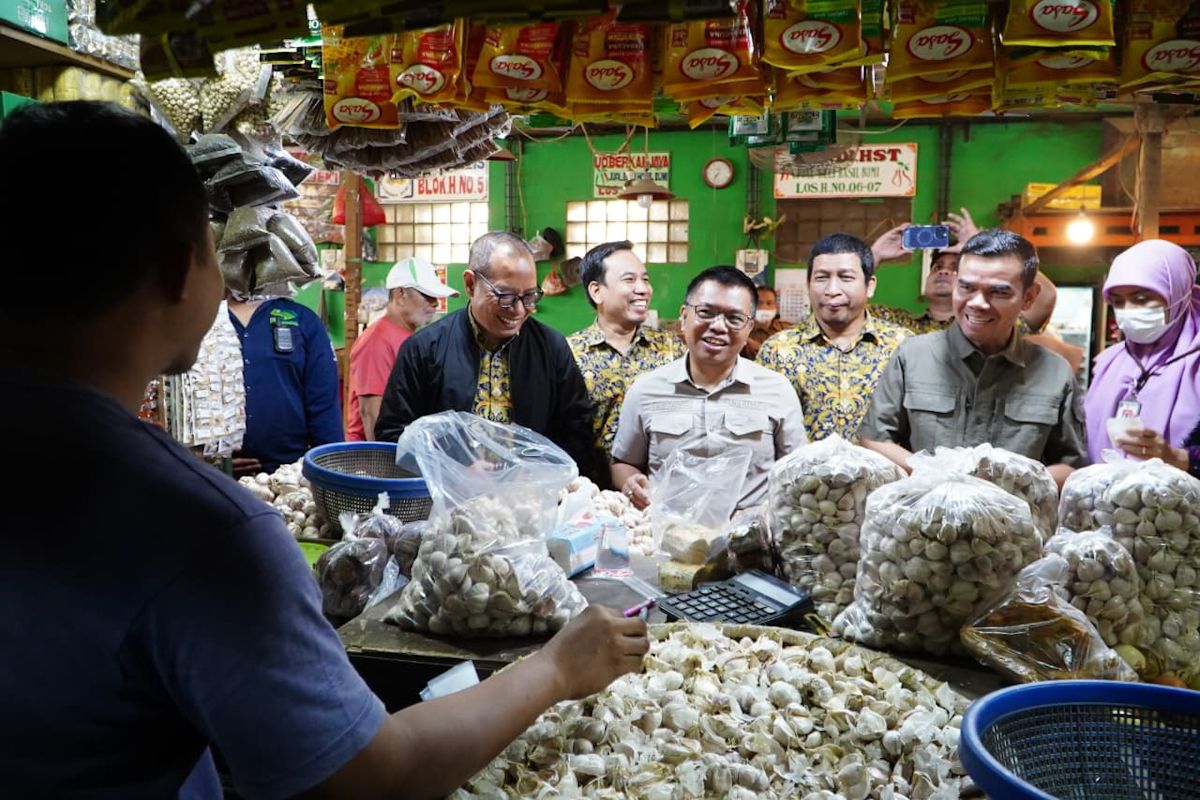
The National Food Agency (Bapanas) is collaborating with distributors and importers to strengthen garlic supply in order to keep prices under control, while ensuring smooth and sustainable distribution across various regions of Indonesia.
Bapanas Deputy for Food Availability and Stabilisation I Gusti Ketut Astawa stated that importers and distributors will be optimised to channel supplies, especially to eastern Indonesia, to reinforce availability and stabilise prices.
“We will gather the importers, along with the distributors. After that, distribution will be carried out to the eastern regions, because we also need to maintain prices there. Distribution is still relatively difficult and we must find a solution,” Ketut said in a confirmed statement in Jakarta on Sunday.
He acknowledged that his agency would actively involve importers and distributors. The supply from overseas procurement held by these businesses must also be distributed to eastern Indonesia.
Furthermore, he said that in addressing the Price Development Index (IPH) for garlic, which according to Central Statistics Agency (BPS) data continued to rise throughout July 2026, the government is monitoring prices at the wholesale level.
Bapanas, together with the DKI Jakarta Food Security, Marine and Agriculture Office (Dinas KPKP) and the market operator Perumda Pasar Jaya, found that the price of honan garlic was relatively stable. However, the more popular kating garlic variety requires more intensive supply.
“The price of garlic is on a slightly upward trend. We asked the garlic traders directly, and there are two categories here. The price of honan garlic is relatively stable. Meanwhile, kating garlic is relatively high,” Ketut explained.
The price of honan garlic at the Pasar Induk Kramat Jati (PIKJ) market has started to decline from Rp23,000 per kilogram to Rp22,500 per kilogram. Meanwhile, the more popular kating garlic requires additional stock at first-level distributor markets such as PIKJ.
He said the overseas supply of kating garlic is still limited, while demand in Jakarta is relatively high, so the government will coordinate further with importers.
“With PIKJ’s stock position being relatively stable, hopefully going forward we can control prices well. This is because PIKJ’s distribution covers not only Jakarta but various regions. This certainly serves as a barometer,” Ketut added.
Bapanas hopes that certainty of garlic stock at PIKJ will have a ripple effect on supply and price stability in various regions, especially eastern Indonesia which still experiences fluctuations.
According to Ketut, price control at the distributor and wholesale level at PIKJ can stabilize garlic prices in distribution areas, including eastern Indonesia.
Previously, Head of Bapanas who also serves as Minister of Agriculture Andi Amran Sulaiman stressed that import permits would be revoked for garlic importers who do not comply with government pricing regulations.
“To those importing, do not play games with the situation. If I catch you, your career as an importer ends. That will be your last opportunity as an importer,” Amran asserted.
Referring to the 2026 National Food Balance Projection data, the garlic import quota for consumption set by the government in the 2026 Commodity Balance is approximately 608.11 thousand tonnes, with an additional 67.73 thousand tonnes for processed garlic.
Meanwhile, domestic garlic production is estimated to reach 39.65 thousand tonnes in the form of konde garlic.