
Bapanas: Clean Sweep Task Force Prevents Subsidised Rice Adulteration in NTB to Combat Food Anomalies
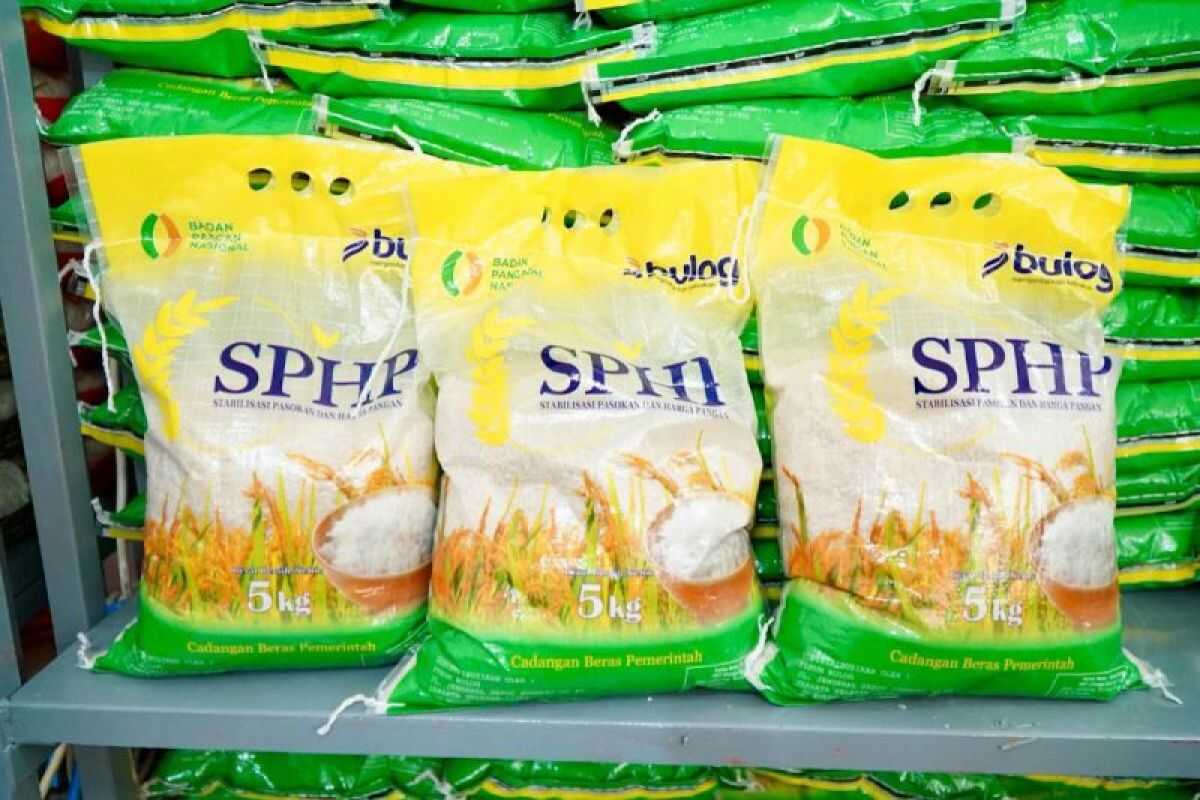
The National Food Agency (Bapanas) has stated that the prevention of subsidised rice (SPHP) adulteration in West Nusa Tenggara (NTB) by the Clean Sweep Task Force (Satgas Saber) for Food Price, Safety and Quality Violations demonstrates the seriousness of enforcement against food anomalies.
“This proves the seriousness in taking action against food anomaly perpetrators,” said Bapanas Deputy for Food Availability and Stabilisation and Central-Level Executive Chairman of Satgas Saber Pangan, I Gusti Ketut Astawa, in Jakarta on Friday.
Ketut stated that one individual had exploited SPHP rice and was immediately dealt with by NTB Regional Police. The individual was suspected of adulterating SPHP rice and selling it at medium-grade rice prices.
“They sold it as ordinary medium-grade rice. This has been followed up by NTB Regional Police, as we must indeed take action,” Ketut affirmed.
The SPHP rice programme, which continues to run until the end of February 2026, is an extension of the 2025 SPHP rice programme. In implementing the programme, the government has prepared a budget to subsidise costs for state logistics firm Perum Bulog as the programme operator.
This is because Perum Bulog releases SPHP rice to the public below the Maximum Retail Price (HET) for medium-grade rice across Zones 1 through 3.
SPHP rice has been sold in accordance with the HET, namely Rp12,500 per kilogramme for Zone 1 (Java, Lampung, South Sumatra, Bali, NTB, Sulawesi), Rp13,100 per kilogramme for Zone 2 (Sumatra excluding Lampung and South Sumatra, NTT, Kalimantan), and Rp13,500 per kilogramme for Zone 3 (Maluku, Papua).
Ketut continued that if there are practices of repackaging SPHP rice into different packaging and selling it for profit, this constitutes a food violation that must be prosecuted.
The case was uncovered following a public report. Based on this, NTB Regional Police investigated and discovered the practice of SPHP rice adulteration in West Lombok. The case also constitutes a violation of rice labelling and quality standards.
“The Satgas Saber Pangan team immediately followed up on the public report with a field investigation. As a result, the practice of transferring rice contents in violation of consumer protection was discovered. The suspect is alleged to have manipulated subsidised rice,” said NTB Regional Police Special Crimes Directorate Chief, Commissioner FX Endriadi.
Police revealed that the SPHP rice repackaging process was carried out so that the perpetrators could sell to the public at prices exceeding the SPHP rice price. The practice caused losses to both the public as consumers and the state.
“By removing the SPHP identity and packaging it in plain wrapping, the perpetrators could sell rice at prices higher than the government-set HET for SPHP rice,” said Endriadi.
“They then sold it as medium-grade rice at market stalls and directly to consumers in the West Lombok and Central Lombok areas,” he added.
At the raid location, NTB Satgas Saber seized a quantity of evidence including 140 sacks of rice ready for distribution in 50-kilogramme packaging, 1,400 emptied 5-kilogramme SPHP packaging sheets, 1,650 intact SPHP packages, 98 plain white reserve sacks, one sack-sewing machine, thread rolls, and a digital scale.