
Bapanas Chief Confirms El Niño Will Not Disrupt Indonesia's Food Security
The Head of the National Food Agency (Bapanas) and Minister of Agriculture, Andi Amran Sulaiman, has assured that the El Niño phenomenon will not disrupt Indonesia’s food security, as the government has strengthened food reserves and anticipated its impacts early on. “Now, thank God, under the direction of President Prabowo Subianto, there is no need to worry. The previous El Niño was more severe than the current predictions. It was said to occur in April, but there were floods instead. In May, June, and July, there were still floods. Now they say it might happen in August,” Amran stated in a confirmed statement in Jakarta on Tuesday.
The government’s preparedness to face the El Niño phenomenon is confirmed to be strong, particularly regarding the availability of strategic staple foods. Predictions of El Niño have existed for several months, making mitigation through strengthening the Government Food Reserves (CPP) a mandatory instrument to prepare. Amran emphasised this preparedness and urged the public to remain calm. The achievement of food self-sufficiency during President Prabowo Subianto’s leadership era is a significant accomplishment for public welfare.
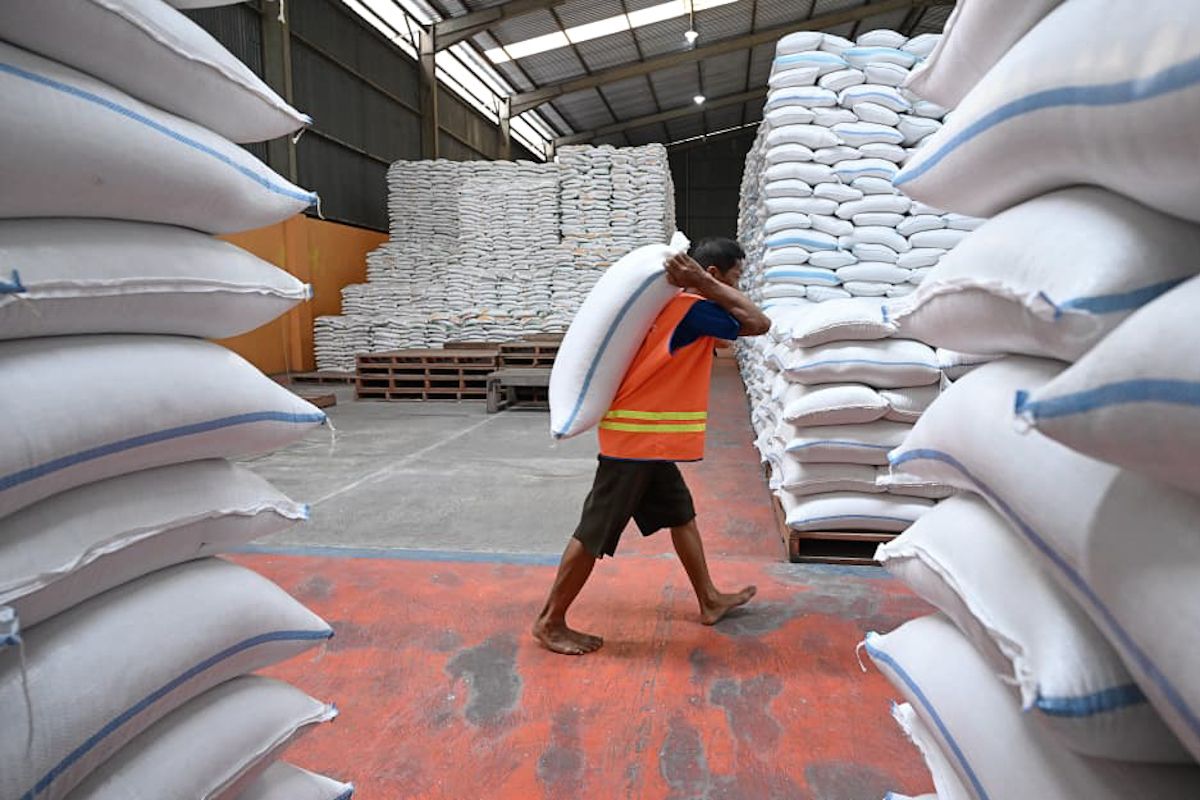
“The prediction was for an El Niño Godzilla in April, but it turned out to be floods. Thank God it did not happen, but it could make farmers afraid to plant,” Amran said. According to a Bapanas report, the CPP stock in the form of rice held by Perum Bulog stood at 5.24 million tonnes as of 20 July. Meanwhile, the total provincial-level government food reserves (CPPD) were recorded at 7.35 thousand tonnes as of the end of June 2026. For district/city level CPPD, there is a total of 13.15 thousand tonnes spread across 323 regions.
Additionally, CPP stocks in the form of feed maize as of 20 July still totalled 176 thousand tonnes. This feed maize stock is continuously distributed to poultry farmers through the supply and price stabilisation programme (SPHP) at more economical prices. Furthermore, CPP stocks include 1 thousand kilolitres of cooking oil managed by Perum Bulog and ID Food, around 2.79 thousand tonnes of consumption sugar also held by Bulog and ID Food, and 38 tonnes of chicken meat at ID Food.
For perishable commodities such as chillies, shallots, and broiler eggs, the government is optimistic that regular domestic food production can support demand, due to a high production surplus against consumption needs throughout the year. He noted that based on a report from Statistics Indonesia (BPS), the Price Development Index (IPH) remains quite favourable. Up to the third week of July 2026, only four provinces experienced an IPH increase, while 34 provinces saw a decrease. Similarly, at the district/city level, BPS reported 69 districts/cities with an IPH increase, while 283 districts/cities experienced a decrease.
Amran stated that Indonesia achieved food self-sufficiency within one year, faster than the four-year target set by President Prabowo. This success includes self-sufficiency in maize and rice. “We can realise our dream, the great idea of the President. We are now self-sufficient in rice and food in general,” Amran explained. He further noted that the Food and Agriculture Organization (FAO), in its latest report, highlighted projections that Indonesia’s rice production will increase further in 2026. “The FAO, the world acknowledges us. I saw earlier that Malaysia is currently in turmoil, facing rice difficulties. They import, if I am not mistaken, 40 to 60 per cent. But Indonesia, we are now number two highest in the world. It was just announced, the FAO announced that in 2026 Indonesia could achieve rice production of 38 million tonnes,” Amran said.