
Bapanas Bolsters Food Crisis Preparedness in NTT with 4,000 Aid Packages
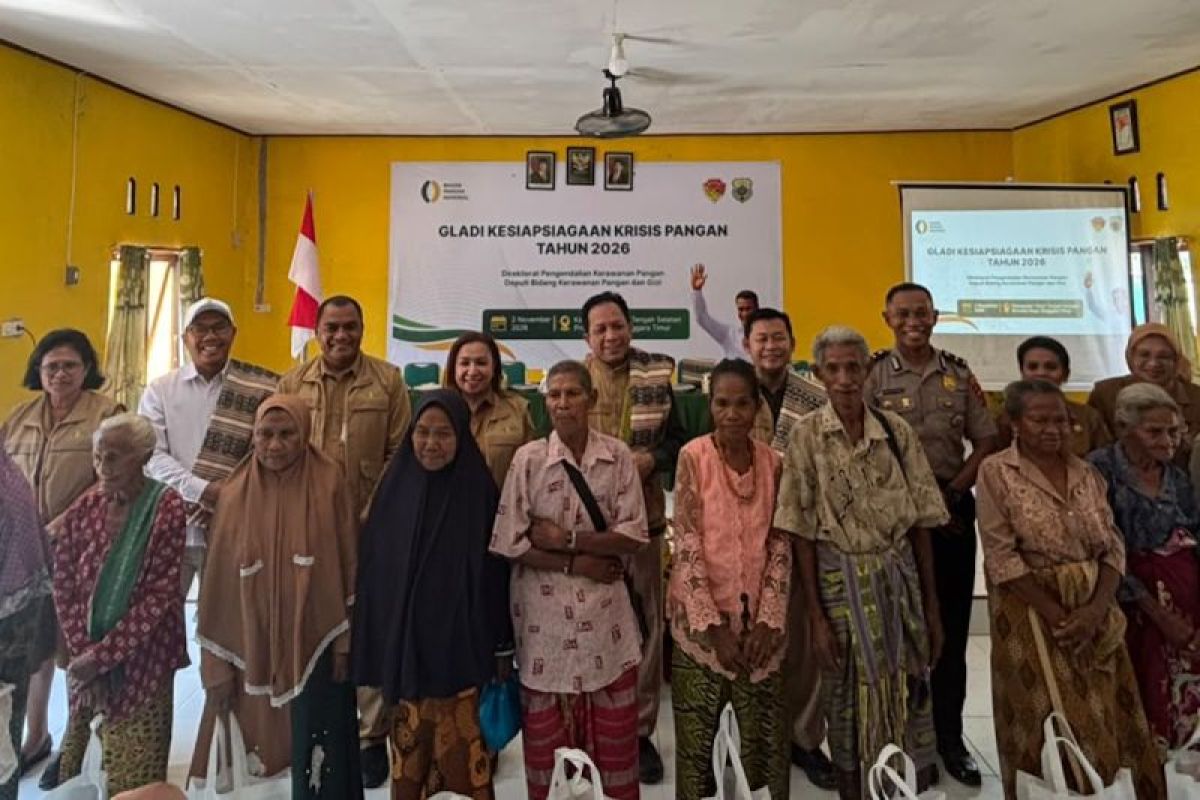
Jakarta (ANTARA) — The National Food Agency (Bapanas) is strengthening preparedness for food crises in South Central Timor Regency, East Nusa Tenggara (NTT), by distributing 4,000 aid packages to people vulnerable to food insecurity in the area.
“Based on our surveys, most food-insecure areas are in Papua and NTT. We are therefore working to ensure that they receive special attention, with a focus on NTT and Papua,” Bapanas Deputy for Food Vulnerability and Nutrition Aulia Sofyan said in Jakarta on Tuesday.
Bapanas is distributing the 4,000 food aid packages to poor residents in the first and second deciles across 13 food-insecure villages in South Central Timor Regency.
“Distribution began on 2 November and will run until 4 November 2026. This is part of the 2026 Food Crisis Preparedness Action,” she said.
Aulia personally oversaw the food aid distribution in Kiufatu Village, Kualin District, South Central Timor.
She said that, according to the 2025 Food Security and Vulnerability Map, 81 regencies and municipalities — 15.76 per cent of the national total — are classified as vulnerable to food insecurity.
East Nusa Tenggara is one of the provinces with a significant spread of food-insecure areas requiring attention, with 18 regencies and municipalities in that category.
She said NTT and Papua were a focus of efforts to address food insecurity because geographic challenges and environmental conditions could affect people’s access to and the availability of food.
This calls for targeted measures that not only meet current food needs but also strengthen local capacity to anticipate potential crises.
Aulia added that stronger regional food security must be supported by local government food reserves.
She said that, although local governments faced budget constraints and had to divide spending across various needs, food reserves should remain a priority to prepare for emergencies.
“Budget constraints are a challenge for local governments as they allocate spending. However, food reserves should at least be given attention and priority,” she stressed.
The Food Crisis Preparedness Action is part of the government’s mandate to ensure food availability and protect the public from the threat of food crises.
The initiative is based on Law No. 18/2012 on Food, Government Regulation No. 17/2015 on Food Security and Nutrition, and National Food Agency Regulation No. 19/2023 on Food Crisis Preparedness.
Bapanas Director of Food Vulnerability Control Rachmad Firdaus added that South Central Timor was selected as a priority area for the action following a food vulnerability assessment conducted in July 2026.
The intervention sites were selected after considering the vulnerability of the areas and their residents, so that assistance could be directed to groups requiring greater attention.
“On the first day of distribution, we had reached six villages in Kualin District, targeting 2,273 households. So far, distribution has reached 77.17 per cent of the first-day target, or about 43.85 per cent of the 4,000 packages prepared,” he said.
Rachmad stressed that preparedness for food crises required the involvement of all stakeholders.
Strengthening government food reserves, cooperation between regions and participation from various parties are important to anticipating potential crises and minimising their impact on communities.
Each aid package contains two 500-gram packs of jagung bose, a local corn dish; 20 chicken eggs; one 500-gram pack of mung beans; one litre of cooking oil; and 10 sachets of powdered milk.
The 4,000 packages comprise four tonnes of jagung bose, 80,000 chicken eggs, two tonnes of mung beans, 4,000 litres of cooking oil and 40,000 sachets of powdered milk.