
Bapanas and Food Task Force Tighten Oversight of SPHP Rice and RPK Distribution
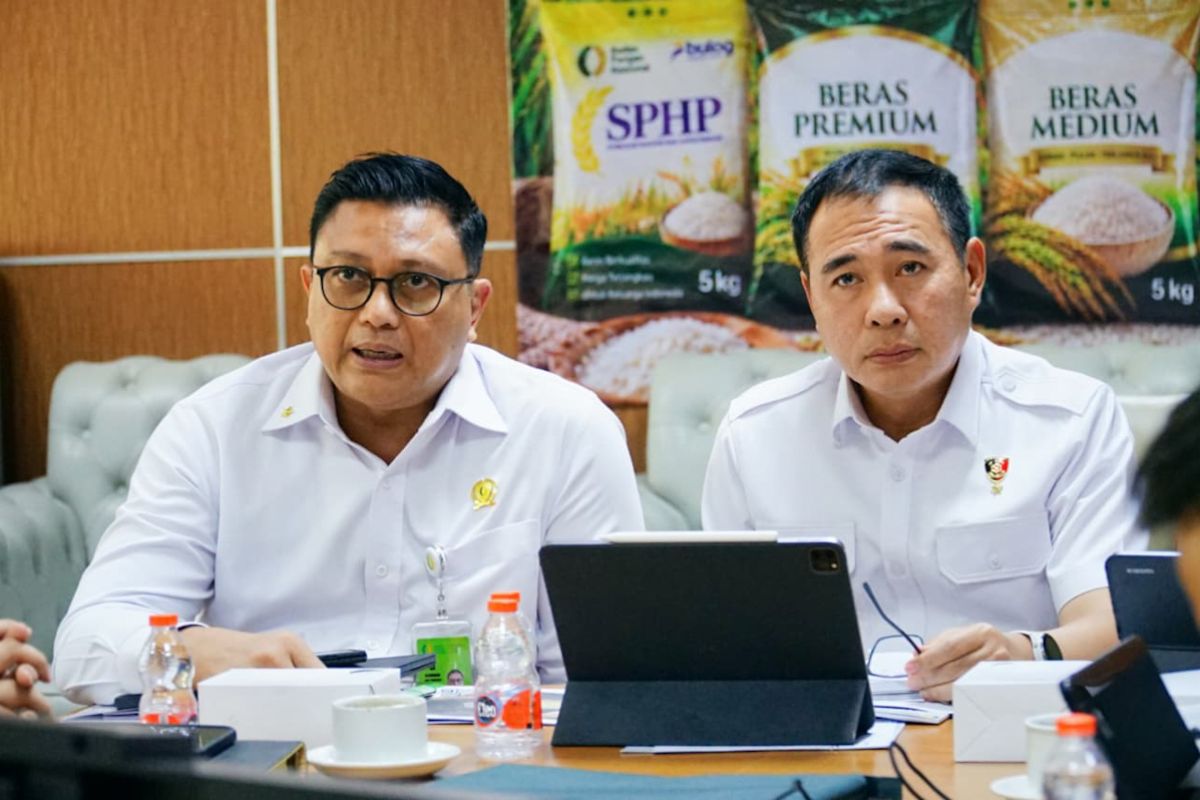
Jakarta (ANTARA) — The National Food Agency (Bapanas), together with the National Police’s Food Task Force, is tightening oversight of rice distributed under the Food Supply and Price Stabilisation (SPHP) programme and through Rumah Pangan Kita (RPK) outlets to prevent abuses, including unusually large orders.
“The move follows the uncovering of several cases in which SPHP rice was removed from its packaging, repackaged and then sold at a higher price,” Bapanas Deputy for Food Availability and Stabilisation Hermawan said in Jakarta on Sunday.
Bapanas recorded that RPK outlets accounted for the largest share of SPHP rice distribution. Under the first SPHP rice allocation, 828,000 tonnes were distributed from March to September. RPK outlets handled 193,800 tonnes, or 23.42 per cent of the total.
Under an additional SPHP rice allocation, distribution resumed in October, with RPK becoming the largest sales channel. As of 5 November, 46,200 tonnes had been distributed through RPK, or 29.78 per cent of the total 155,300 tonnes distributed.
“The first SPHP rice allocation was distributed on a massive scale, reaching 100 per cent, or 828,000 tonnes. But why are prices still high in most regions? We are concerned there may still be widespread abuse, including through RPK outlets,” Hermawan said.
He therefore called for special monitoring of any RPK outlet placing orders in volumes above the normal expected level.
Hermawan said he had written to the National Police’s Food Task Force offices across Indonesia, asking them to investigate RPK outlets partnered with state-owned logistics company Perum Bulog and ensure that SPHP rice was not being misappropriated.
“An RPK is like a shop. If its stock runs out within two or three days and it orders again, that should raise suspicion. Distribution may not be proper. Nothing can be concealed any longer,” he stressed.
Hermawan said there were concerns that the rice was not reaching the public, but was instead being blended with other rice and resold as premium or commercial rice.
One possible factor behind the practice, he said, was the improved quality of SPHP rice. All of Bulog’s rice supplies this year came from domestic farmers’ harvests, with no imports.
“SPHP rice is good quality because it is locally produced. There is no longer any old imported rice in storage,” Hermawan explained.
Earlier, Bapanas head and Agriculture Minister Andi Amran Sulaiman said the misuse of government subsidy programmes, including the blending of SPHP rice, was immoral.
“This is cruel. SPHP rice is specially packaged for the people of Indonesia and subsidised by the government. This is a betrayal of 115 million farmers and harms consumers. If there is a maximum penalty, those responsible deserve it,” Amran said.
Amran said this position was in line with President Prabowo Subianto’s direction not to tolerate practices that harm the public.
Each kilogram of SPHP rice receives an estimated state subsidy of around Rp5,510, channelled through Bulog, allowing it to be sold below the government-set Highest Retail Price (HET).
Bapanas and the police have uncovered several cases of SPHP rice abuse in quick succession. On 28 October, the East Jakarta Metro Police found that 600 tonnes of SPHP rice had been misused at two locations in East Jakarta.
The perpetrators removed the original packaging and transferred the rice into other branded bags so it could be sold at a higher price of up to Rp17,000 per kilogram. Bapanas estimates the resulting loss to the state could reach Rp3.3 billion.
The following day, 29 October, the West Nusa Tenggara (NTB) Regional Police uncovered two more cases of SPHP rice abuse.
In the first case, two tonnes of SPHP rice had been blended with other rice and sold under a different brand at Rp650,000 per 50-kilogram sack, or Rp13,000 per kilogram. The suspected offender is reported to have been carrying out the scheme since early June 2026.
In the second case, the NTB Regional Police uncovered the diversion of 1.5 tonnes of SPHP rice. Since early August, the offender had allegedly blended the rice and resold it under another brand for sale in Bali. The price after blending was Rp312,500 per 25-kilogram sack.
Meanwhile, the Pasuruan District Police in East Java announced on 30 October that they had arrested people suspected of blending a total of 20 tonnes of SPHP rice. The suspects allegedly bought the rice from Bulog’s Kebonagung warehouse in Malang before taking it to a repackaging site in Beji.
The suspects’ method was to open the original SPHP packaging and transfer the rice into plain green 50-kilogram sacks. The rice was then allegedly resold for Rp14,000 to Rp15,000 per kilogram.
Source: jawawa.id (https://jawawa.id/newsitem/bapanas-and-food-task-force-tighten-oversight-of-sphp-rice-and-rpk-distribution-1794124305)
Originally published by Antara (Indonesian) (https://www.antaranews.com/berita/5839647/bapanas-satgas-pangan-awasi-ketat-distribusi-beras-sphp-dan-rpk), translated from Indonesian