
Bapanas: 2026 SPHP rice distribution exceeds 2025 after additional one million tonnes
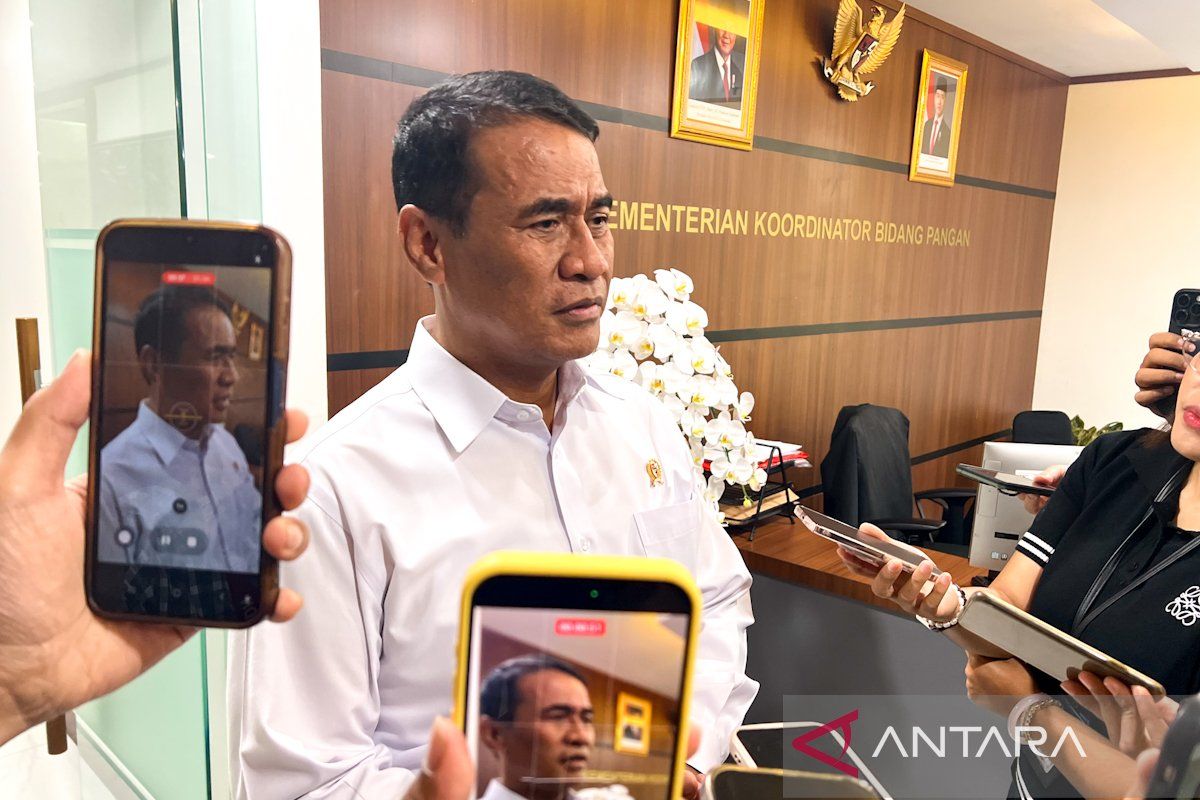
Jakarta (ANTARA) - The National Food Agency (Bapanas) has stated that the distribution of the rice supply and price stabilisation programme (SPHP) in 2026 has surpassed the 2025 achievement, after the government decided to add an allocation of one million tonnes through to the end of the year.
“The rice supply and price stabilisation programme (SPHP) is being continuously sharpened by the government,” said the Head of Bapanas, who also serves as Minister of Agriculture, Andi Amran Sulaiman, when confirmed in Jakarta on Tuesday.
Bapanas said the 2026 SPHP rice programme, rolled out from March with a target allocation of 828,000 tonnes, is now approaching 100 per cent.
“However, there must be no gap in the supply of affordable rice for the public until the end of 2026,” Amran said.
As of 7 September, realisation of SPHP rice sales had reached 758,000 tonnes, or 91.55 per cent. This year’s achievement is also drawing close to the full-year 2025 realisation of SPHP rice, which was recorded at 802.9 thousand tonnes. For that reason, the government decided to add another allocation of one million tonnes.
“We are adding to the SPHP. Medium-grade rice. To suppress prices, this is a large-scale market operation. SPHP (medium-grade rice) is being increased by one million tonnes,” he said.
Through this step, the government has again ensured the continuity of the SPHP rice programme, which has been running since the start of 2026. In January and February 2026, SPHP rice was implemented as a continuation of the 2025 programme, before resuming in early March as the 2026 SPHP rice programme.
The 2026 SPHP rice programme launched in March carries an allocation of 828,000 tonnes with a price subsidy budget of Rp4.97 trillion. That Additional Expenditure Budget (ABT) is already available in the Bapanas budget.
Meanwhile, regarding the additional allocation of one million tonnes, as decided at the Limited Coordination Meeting (Rakortas) on Monday (7/9) at the Coordinating Ministry for Food, the proposal will be submitted to obtain the President’s directive. Thereafter, the Ministry of Finance will review the proposed ABT.
Separately, Coordinating Minister for Food Zulkifli Hasan explained that the decision to increase the SPHP rice allocation was made to address the lean harvest season. Rice prices for the public must be protected by the government, even though Indonesia is currently experiencing drought.
“This year is dry, what we call the lean season, so rice prices will certainly rise. In response to that, we have just held a meeting and decided to increase the supply of subsidised rice. Medium-grade SPHP, previously 828 thousand tonnes, only 80 thousand tonnes remain. We have now added another one million tonnes of medium-grade SPHP,” said Zulkifli, known as Zulhas.
He said the government’s move is intended to flood the market with rice through to the end of the year, so that rice price stabilisation can be achieved.
As for rice price developments, Statistics Indonesia (BPS) has announced that the rice Price Development Index (IPH) has begun to decline.
By the first week of September, IPH increases were recorded in 115 regencies/cities, down from the last week of August, when 147 regencies/cities still recorded rising rice IPH.
Meanwhile, BPS reported that rice inflation up to August 2026 has begun to stabilise, both annually and monthly. Annual rice inflation stood at 2.77 per cent, down from 3.10 per cent the previous month.
That level represents an improvement compared with rice inflation in August 2025, which at the time marked the peak of rice inflation at 4.24 per cent.
Monthly rice inflation up to August 2026 likewise declined, standing at 0.42 per cent after 0.49 per cent the previous month. Notably, monthly rice inflation throughout 2026 has remained very stable, never exceeding 1 per cent.