
Banyuwangi Regent Holds Direct Dialogue to Address Farmers' and Fishermen's Issues
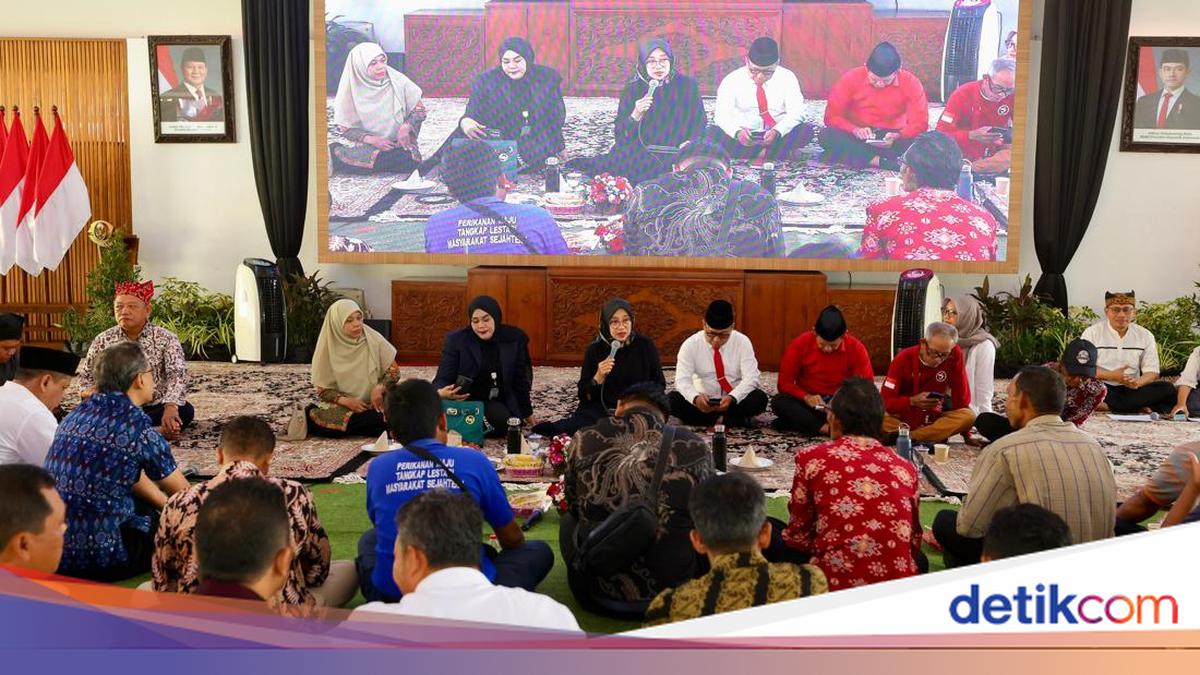
Various issues faced by farmers, fishermen, livestock breeders, and plantation operators in Banyuwangi can now be conveyed directly to Regent Ipuk Fiestiandani. Through the ‘Gesah Bareng Ambi Bupati’ (Chatting with the Regent) forum, the community not only voices complaints and suggestions but also receives direct responses and solutions from Ipuk.
The inaugural forum, held at the Pendopo Sabha Swagata Blambangan, was enthusiastically attended by hundreds of residents. A range of aspirations were openly expressed, from strengthening the downstream processing of agricultural products and market access, to the distribution of local eggs and milk, fishing zone issues for fishermen, and the development of coffee commodities.
Ipuk stressed that improving the welfare of those working in the food sector must be accompanied by strengthened downstream processing and market access. She also instructed relevant regional apparatus organisations (OPD) to immediately map out and follow up on every proposal submitted by the community. One such measure is strengthening the supply chain so that local products can be absorbed by a wider market.
According to Ipuk, the ‘Gesah Bareng Ambi Bupati’ forum is designed to shorten the distance between the government and the community. Through direct dialogue, it is hoped that various problems arising in the field can be quickly mapped and solutions found together.
“The goal is to bring the government closer to the community and hear their problems directly. I have asked the technical staff to follow up. So, for me, this is an effective meeting, listening directly to the community and executing solutions together,” Ipuk stated in a written release on Friday (14/8/2026).
The ‘Gesah Bareng Ambi Bupati’ forum will be held regularly every Friday on the second and fourth weeks of each month, with different themes. The public can convey various inputs, ideas, or problems they face directly to the government.
One aspiration came from Rahmat, an alumnus of the 2022 Jagoan Tani (Farming Champion) programme and a dairy entrepreneur. He hopes the Jagoan Tani programme will not stop at the competition stage but will continue with mentoring and tangible benefits for participants.
“This programme is excellent because it bridges us. In fact, this programme has also received national appreciation,” said Rahmat.
Rahmat, who develops a derivative product in the form of milk pie, hopes the district government can continue to provide facilitation so his products can penetrate a wider market.
“We want to be facilitated so our products can also be listed in e-catalogues, hotels, modern retail, and receive legal assistance,” said Rahmat.
Another aspiration was voiced by Umu, a representative of layer chicken farmers. She conveyed the current condition of the layer farming business, which is facing pressure partly due to rising feed prices. However, she noted that government intervention through the SPHP corn subsidy has been very helpful for the sustainability of farmers’ businesses.
“The SPHP corn assistance from the Agriculture Office has helped us greatly, Madam Regent. We hope this programme is sustainable and also reaches small-scale farmers,” said Umu.
“We also ask for the district government’s support to oversee the marketing of local eggs to penetrate markets outside the region,” she added.
From the fisheries sector, a representative of fishermen highlighted the issue of fishing zone restrictions between fishermen. Meanwhile, from the plantation sector, Abdurrahman, Secretary of the Farmers’ Group from Gombengsari Village, pushed for the establishment of an integrated coffee processing centre.
This step is considered important to strengthen the position of farmers while reducing dependence on price manipulation by middlemen.
“We also want the district government’s support to launch a Coffee School in Gombengsari. This is important to educate the younger generation while preserving our ancestral traditions,” said Abdurrahman.
An aspiration also came from Nur Ahmadi, a representative of a livestock group from Ketapang District. He appreciated the government’s support in opening road access and providing a feedlot facility in his area.
According to Nur, the livestock area continues to develop. Every resident’s house has a cattle pen. Besides developing downstream processing through the production of fertiliser and briquettes from livestock waste, residents also process the milk produced from local farms.
“Alhamdulillah, after the government helped with road access, transportation is now much faster. We also have an organic bank to produce fertiliser and briquettes,” said Nur.
“We hope the milk produced by residents can be included in the Free Nutritious Meals (MBG) programme, Madam Regent,” he concluded.