
Banyuwangi Poverty Rate Falls to 5.6%, Lowest Since 2004
Banyuwangi Regency’s poverty rate has continued to decline over the past five years, reaching 5.6% in 2026. Statistics Indonesia (BPS) data show that the figure was down from 8.07% in 2021 and was the lowest recorded since 2004.
The decline has been gradual: from 8.07% in 2021 to 7.51% in 2022 and 7.34% in 2023. The rate continued to fall to 6.54% in 2024 and 6.13% in 2025, before reaching 5.6% in 2026, a decrease of 0.53 percentage points over the past year.
The number of people living in poverty in Banyuwangi has also fallen. Banyuwangi BPS head Abdus Salam said that, according to March 2026 data, 91,570 people were living in poverty, a reduction of 8,560 from the same period a year earlier.
“The decline in poverty is reflected not only in the lower percentage and number of people living in poverty, but also in decreases in the Poverty Gap Index (P1) and Poverty Severity Index (P2). This indicates an improvement in poverty conditions, both in terms of the average spending gap between poor residents and the poverty line and inequality in spending among poor residents,” Abdus said in a written statement on Wednesday (4 November 2026).
The improved conditions are also reflected in the lower P1 and P2 indices. P1 measures the average distance between poor residents’ expenditure and the poverty line, while P2 indicates the level of spending inequality among people living in poverty.
“These two indices are important for understanding poverty in greater depth and for designing more precisely targeted poverty-reduction programmes,” he added.
In addition to changes in the poverty indices, the positive trend has been influenced by factors connected with people’s economic activity, Abdus said. These include changes in household income, employment opportunities and economic activity, as well as prices of basic goods, particularly food.
Food price stability also affects spending among lower-income households, he said, because food accounts for a large share of the expenditure used to calculate the poverty line.
“Food price stability is an important aspect to monitor because food expenditure makes up a large share of the poverty line. It is therefore essential to protect people’s purchasing power, particularly among lower-income groups,” he said.
Banyuwangi Regent Ipuk Fiestiandani said the decline in poverty was the result of collective effort and collaboration among various parties, with community support contributing to the success of poverty-reduction programmes in the regency.
As part of this joint effort, the Banyuwangi Regency Government is pursuing four main strategies to tackle poverty. One is to reduce the financial burden on poor and vulnerable residents through social assistance and the provision of basic necessities.
One initiative under this strategy is Banyuwangi Berbagi, which involves civil servants and the public. It distributes staple-food packages and protein-rich food to residents in the first and second welfare deciles, identified by name and address.
“There is also Rantang Kasih, which provides nutritious meals every day to poor older people living alone. In addition, social assistance from both the central and regional governments continues to be distributed to ease people’s financial burden,” she said.
After working to reduce household expenses through social assistance, the regional government is pursuing a further poverty-reduction strategy focused on improving people’s economic capacity and income.
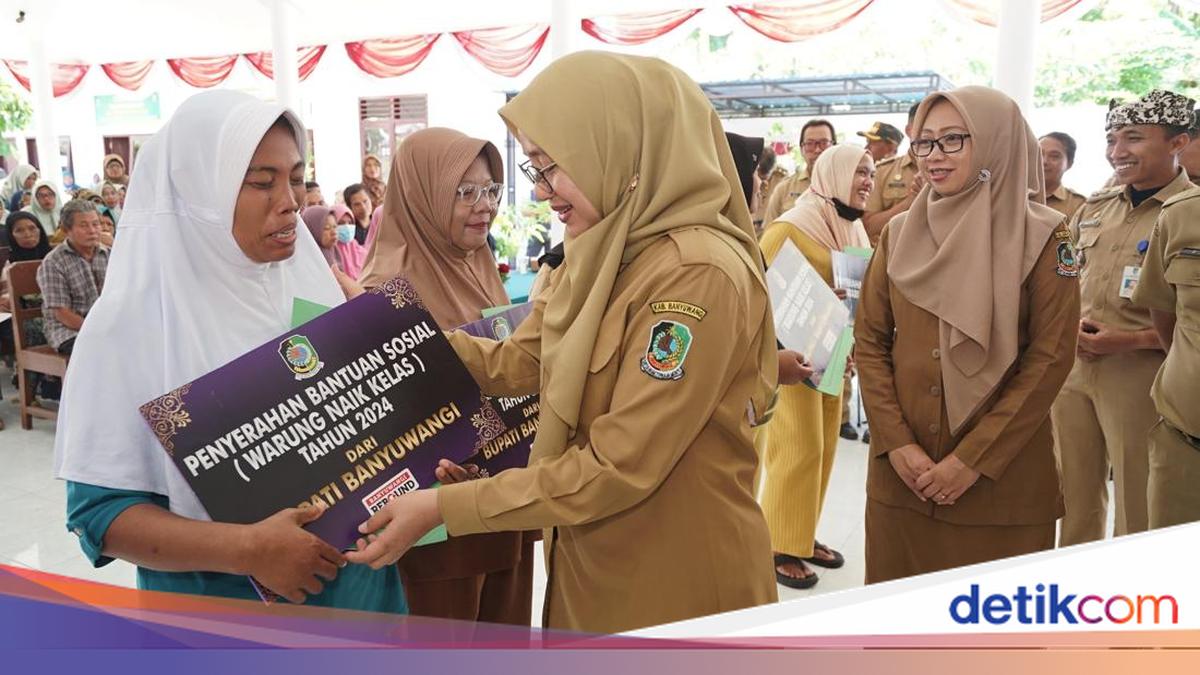
This is being carried out through several economic empowerment programmes, including UMKM Naik Kelas, Warung Naik Kelas (Wenak), the waiving of levies for traders in regional markets, and free delivery-cost support for micro, small and medium-sized enterprises (MSMEs).
The third strategy focuses on breaking the cycle of intergenerational poverty.
Measures include improving access to education and providing scholarships for children from low-income families, as well as offering skills training to widen employment opportunities and encourage economic independence.
“We are helping them gain wider access to education through scholarships. There is also the Banyuwangi Ayo Kursus programme, which provides free skills training and business equipment to vocational-school graduates and training participants so they can start their own businesses,” Ipuk said.
Source: jawawa.id (https://jawawa.id/newsitem/banyuwangi-poverty-rate-falls-to-5-6-lowest-since-2004-1793771647)
Originally published by detikcom (https://news.detik.com/berita/d-8737689/angka-kemiskinan-banyuwangi-turun-jadi-5-6-terendah-sejak-2004), translated from Indonesian