
Banyuwangi Farmers Process Rejected Dragon Fruit into Value-Added Products
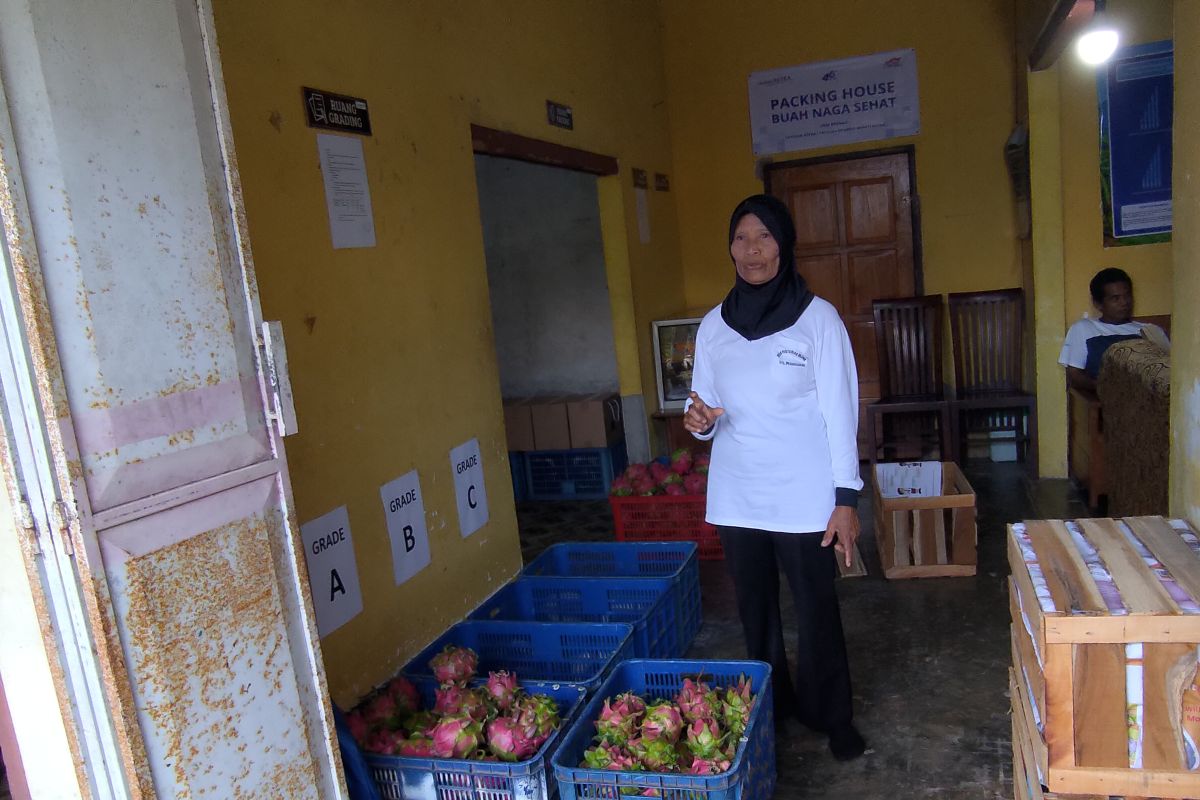
The Sinar Cabe Farmers Group in Sumbermulyo Village, Pasanggaran District, Banyuwangi Regency, East Java, is processing rejected dragon fruit into various derivative products to increase added value and minimise harvest losses. Group leader Sumartini explained that fruit with minor physical defects, such as cracks or bruises, previously had no economic value because it did not meet fresh market standards. “The produce that does not generate money is the rejected fruit. It might be slightly cracked but otherwise fine. Once it is bruised or cracked, it cannot be sold on the market,” she said. Harvested dragon fruit is sorted by size, weight, sugar content, and physical condition. Top-grade fruit is sold to modern retail markets, while lower grades are directed to other market segments at different prices. Rejected fruit is processed into value-added products or used as raw material for organic fertiliser. “The important thing is that no harvest goes to waste. Everything must be utilised,” she added. The group processes rejected dragon fruit into dried dragon fruit sale through a business partnership, with the farmers handling the drying process and a partner managing further processing. Production of dragon fruit sale began in March 2024, and by June 2026, 19,125 packages had been produced and completely absorbed by the market. The product is sold for Rp24,000 per package through modern retail outlets, souvenir centres in East Java, Bali, and the Special Region of Yogyakarta, as well as online marketplaces. Total sales value from the sale product is estimated at around Rp459 million since production commenced. The group also produces dodol (a traditional sweet toffee-like confection) made from dragon fruit on a made-to-order basis, while dragon fruit sponge cake is still under development. In 2025, the group sent samples of dried dragon fruit to the Netherlands for market exploration, although commercial sales have not yet begun. In addition to processed food products, unsold fruit is converted into liquid organic fertiliser to support organic dragon fruit cultivation. “As a group, we took the initiative to turn rejected fruit into liquid organic fertiliser that can be reapplied to the dragon fruit plants,” Sumartini said. Product development has been supported through mentoring by the Astra Foundation–Dharma Bhakti Astra Foundation (YDBA). The programme initially entered the village under the Desa Sejahtera Astra initiative to help expand market access when dragon fruit prices were under pressure. As challenges extended beyond marketing to include cultivation, business management, and post-harvest handling, YDBA established a branch in Banyuwangi in November 2021 to strengthen assistance. “Mentoring was expanded to cover cultivation improvement, group administration, institutional development, business legality, post-harvest handling, and product development,” said YDBA Banyuwangi Coordinator Azzuhri Tri Ahara. Through this support, the farmers group has obtained organic cultivation certification, implemented standard operating procedures for cultivation, sorting, grading, and post-harvest handling, and secured intellectual property rights and home industry food production permits. The mentoring also encouraged independent production of organic fertiliser and biological agents, strengthened pest and disease control, and implemented 5R principles in production and storage areas. As a result, the group’s organic dragon fruit commands a higher price than conventional fruit. Grade A1 organic dragon fruit sells for around Rp22,000 per kilogram at the farm level, approximately Rp5,000 higher than conventional dragon fruit. The Sinar Cabe Farmers Group currently has 30 active members managing 9.2 hectares of land, producing around 300 tonnes of dragon fruit per year with a monthly turnover of approximately Rp30 million from fruit sales.