
Banyumas Trials Plastic Waste-for-Groceries Scheme to Curb Serayu River Pollution
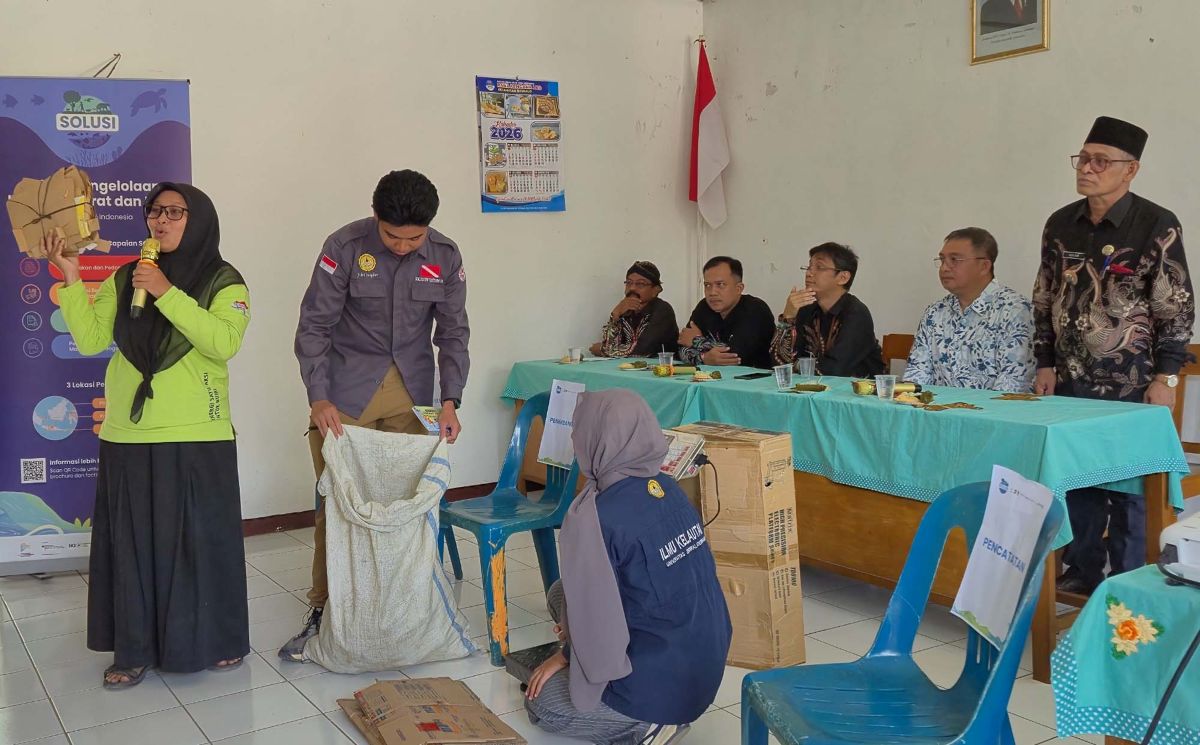
The Banyumas Regency government in Central Java is testing an incentive scheme for plastic waste management, allowing residents to exchange sorted plastic for groceries, food vouchers, or other household necessities. The programme aims to encourage behavioural change and reduce plastic pollution in the Serayu River basin.
The launch took place at Tambaknegara Village Hall, Rawalo District, marked by the inauguration of a digital dashboard and the handover of weighing equipment to Bank Sampah Mandirancan and Bank Sampah Jitu on Tuesday (21/7). These two waste banks will serve as pilot locations for the scheme in the Serayu River area.
The programme is a collaboration between the Banyumas Regency Government and the SOLUSI Consortium, which includes GIZ Indonesia, Landscape Alliance, the KEHATI Foundation, and SNV Indonesia, together with the National Development Planning Agency (Bappenas). At the regional level, implementation is supported by the Banyumas Regency Development Planning, Research, and Innovation Agency (BAPPERIDA).
BAPPERIDA Head Dedy Noerhasan stated that the incentive scheme is part of efforts to integrate regional development with community-based environmental management. “Through this incentive scheme, we hope that community participation, especially in the Serayu River basin, will increase so that the volume of plastic waste polluting the environment can be continuously reduced,” he said.
The programme was developed based on a behavioural change study conducted by SNV in 2025 across Central Java, Central Sulawesi, and the Bangka Belitung Islands. The study identified several issues, including limited waste services, a lack of supporting facilities for the reduce, reuse, recycle (3R) concept, low community-level waste management capacity, and high usage of single-use plastics.
In Banyumas Regency, these problems are still prevalent in rural areas along the Serayu River that are not yet covered by waste collection services. This situation has led some residents to burn plastic waste or dispose of it directly into the river. The Serayu is one of Central Java’s major rivers, flowing into the Indian Ocean through Cilacap Regency, making household-level waste management crucial to preventing plastic from reaching the sea.
Audrie Siahainenia, Programme Manager for SOLUSI at SNV, said the incentive scheme is designed to demonstrate that sustainable landscape and marine management can begin at the household level. She noted that residents who sort and deposit plastic waste not only gain economic benefits in the form of groceries or other incentives but also contribute to keeping rivers and coastal areas clean.
Under the scheme, members of community self-help groups and waste banks can deposit sorted plastic waste. The value of the waste is then exchanged for grocery packages or other household items according to a prepared mechanism. The programme is supported by a digital waste bank recording system, training for managers, monthly inter-member waste collection competitions, and river clean-up activities to boost community participation.
Beyond community involvement, the programme hopes to attract business participation through a Public-Private Community Partnership scheme. Galih, owner of CV Javari, expressed interest in adopting a similar scheme, as his organic farming business also generates waste that needs responsible management.
The programme’s success will be evaluated through several indicators, including an increase in the number of waste bank customers, a rise in the volume of plastic waste collected, customer retention rates, and the frequency of educational material dissemination by waste bank managers. In the long term, the programme aims to reduce plastic waste entering water bodies, particularly the Serayu River, thereby curbing pollution that flows to the southern coast of Java.