
Banyumas Civil Registry Tightens Domicile Data Verification to Prevent School Admission Manipulation
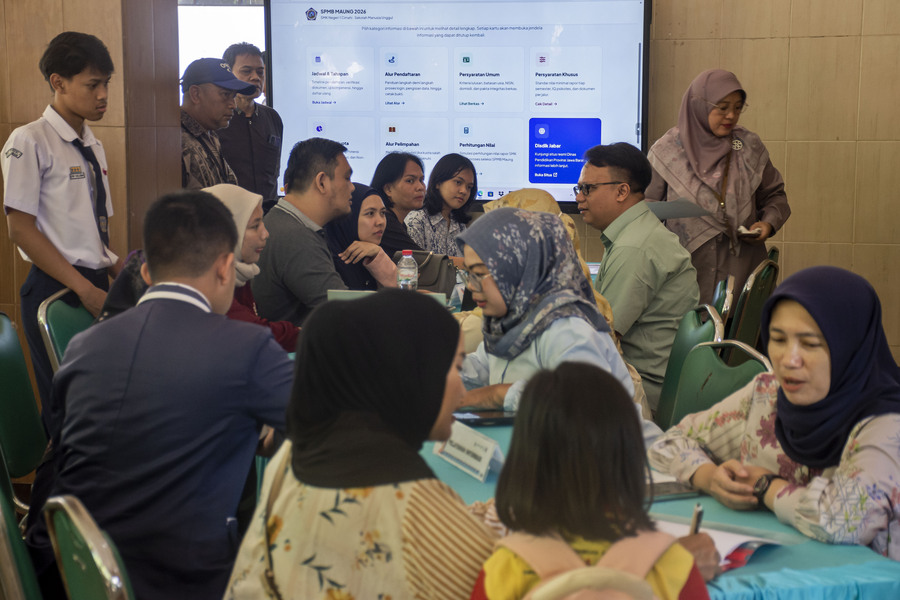
The Banyumas Civil Registry Office (Dindukcapil) in Central Java is intensifying its supervision of population administration data. This measure is being implemented to prevent the potential misuse of domicile transfers, which could be exploited for the purpose of the domicile-based Student Admission System (SPMB).
The Head of the Population Administration Information Management Division at Dindukcapil Banyumas, Ashar Nazarudin, stated that the agency possesses the capability to trace population movement history if discrepancies are found during the SPMB selection process. Current regulations require that a prospective student’s address must correspond to a Family Card (Kartu Keluarga) issued at least one year prior to the SPMB registration period.
“If there is a change of address or a domicile transfer conducted within a period of less as than one year, Dindukcapil can conduct further examinations of that data upon request from the SPMB committee,” he explained on Tuesday.
Ashar clarified that, administratively, the agency does not have the authority to restrict or prohibit citizens from changing their domicile, as this is a right of every resident processed through official mechanisms. “However, the population administration system allows for the tracking of movement history, which can be used as verification material to ensure compliance with SPMB regulations,” he said.
In addition to supporting data validation for school admissions, Dindukcapil Banyumas continues to develop digital-based population administration services through the ‘Gratis Kabeh’ application. Currently, this service is supported by operators distributed across 331 villages and sub-districts within the Banyumas region.
“The public can access various population administration services through village, sub-district, or district governments, or independently via the application. However, users are required to have an active Digital Population Identity (IKD),” he added.
He explained that an active IKD is a primary requirement for creating accounts for Dindukcapil Banyumas public services. With an active IKD, citizens aged 17 and above can manage various population services independently through digital platforms.
Nevertheless, the utilisation of IKD in Banyumas is considered to be not yet maximised. This condition is influenced by the limited integration of digital systems across various sectors, as the wider implementation of IKD is currently more prevalent in national-level services, including the banking sector.
On the other hand, the presence of population administration service operators at the village and sub-district levels is considered effective in reducing congestion at the Dindukcapil office. Currently, the number of citizens visiting the Dindukcapil office directly averages around 100 people per day, a significant decrease from previous levels which could reach 200 to 300 people daily.
“There are still members of the public who choose to come directly to the office because they are unaware that similar services are available in their villages or sub-districts. In fact, Dindukcapil actually gives priority to applications submitted through online services,” he added.