
Banyumas: A Global Hub for Coconut Sugar, But One Mistake Could Ruin Export Markets
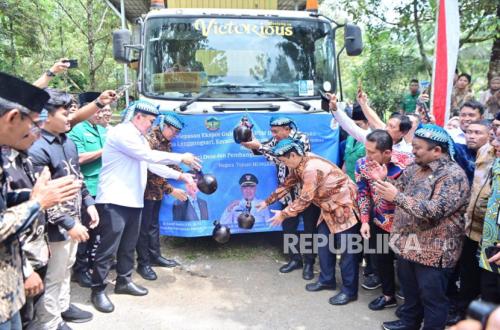
Banyumas Regency has reaffirmed its position as a global hub for coconut sugar exports. This status was highlighted by the release of a crystal coconut sugar export worth 46,000 US dollars to Chicago, United States, from the factory of PT Integral Mulia Cipta (IMC) in Wiradadi Village, Sokaraja District. Banyumas Regent Sadewo Tri Lastiono stated that Indonesia supplies approximately 90 percent of the world’s palm sugar needs, with around 80 percent of that originating from the Banyumas Raya region, which includes the regencies of Banyumas, Cilacap, Purbalingga, and Banjarnegara. From this region, palm sugar is marketed to Asia, Europe, the United States, and the Middle East.
According to Sadewo, maintaining the trust of the international market is far more difficult than opening new markets. Therefore, product quality, organic certification, and supply chain supervision are crucial factors for sustainable exports. He cited a past experience during the COVID-19 pandemic when four containers of palm sugar destined for Germany were rejected after testing revealed they were mixed with refined sugar. The issue was suspected to have occurred at a point in the trade chain after the product was collected, not at the level of the individual sap tappers. This incident served as a vital lesson that a single small mistake can destroy trust built over many years. Consequently, the Banyumas Regency Government is encouraging the strengthening of cooperatives, supply chain oversight, and the expansion of organic certification for coconut sugar producers.
Organic certification also provides economic benefits for tappers. Through a Corporate Social Responsibility (CSR) premium scheme from European buyers, members of certified organic cooperatives receive an additional income of around Rp5,000 per kilogram of palm sugar, incentivising them to maintain product quality. To further strengthen export competitiveness, Banyumas is proposing the construction of an internationally standardised palm sugar testing laboratory, requiring an investment of approximately Rp8 billion. Currently, testing is conducted in Europe, incurring higher costs and longer processing times.
On the production side, the government is beginning to promote the planting of dwarf coconut varieties to replace traditional tall coconut trees, which can reach heights of over a dozen metres. Besides being safer for tappers, this variety is expected to ensure the sustainability of coconut sugar production. The Ministry of Agriculture has distributed 10,000 seedlings as an initial phase of coconut plantation regeneration. Support for exports also comes from the central government. Minister of Trade Budi Santoso emphasised that product quality must be accompanied by complete trade documentation, particularly Certificates of Origin (SKA), to allow Indonesian products to benefit from preferential tariffs under international trade agreements, making them more competitively priced and boosting exports.