
Bantul's Segregated Waste Collection at 90 Percent, Running Smoothly: Official
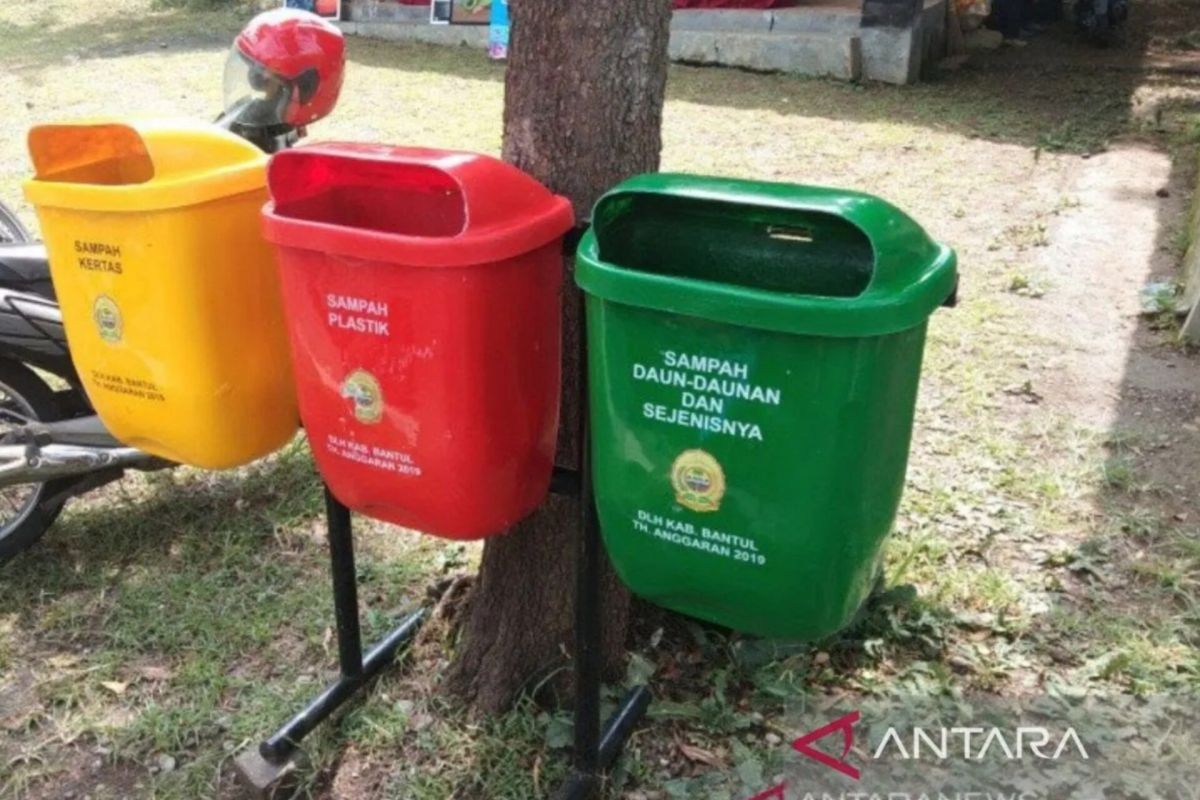
The Environmental Agency (DLH) of Bantul has confirmed that the segregated waste transportation programme is progressing well, with more than 90 percent of customers now complying with waste separation rules. Acting Head of the Bantul DLH, Fenty Yusdayati, stated that thousands of waste customers spread across the Bantul region are served by DLH officers for their waste collection. “There are 38 waste collection trucks and 114 sanitation workers operating at 320 waste pick-up points,” Fenty said in Yogyakarta on Wednesday. Based on this number, she confirmed that the collection programme, which has been running since 4 May 2026, is precisely on schedule. “It is running, and we continuously evaluate whether there are obstacles with the collection of organic waste for four days and inorganic waste for two days,” she explained. The waste collection schedule, Fenty continued, is divided into two categories: organic waste is collected on four days—Monday, Tuesday, Thursday, and Friday—while inorganic waste is collected two days a week. “Inorganic waste collection is on Wednesday and Saturday,” she said. She assessed that the waste collection progress has surpassed 90 percent, and customers have begun to diligently separate their organic and inorganic waste. “So the deviation is now small. Market waste is also already separated by the traders,” Fenty noted. Furthermore, she added, waste separation has been implemented in schools, offices, and residential areas that are also customers of the Bantul DLH’s waste collection service. “However, for waste in public spaces, it is indeed not yet optimal. Parks, for instance, have many users, and the segregation progress there is around 65 percent,” she said. According to her, the challenge of waste segregation in public spaces is more difficult due to the high mobility of people coming and going. “So we can only appeal to the public to continue separating their waste,” she said. Fenty explained that the benefit of waste segregation is that it accelerates the downstream processing at Waste Processing Sites (TPS). “The processed organic waste is taken by communities or institutions, such as ‘Adiwiyata’ schools, for fertiliser in their school grounds,” Fenty stated. She cited the example of the Niten Market TPS in Kasihan, Bantul, which processes organic waste into fertiliser, as do several other TPS. “As for the fertiliser, we currently still provide free access to all of it,” she clarified.