
Bantul Regency Government Hands Over Agricultural Machinery Grants to Farmer Groups
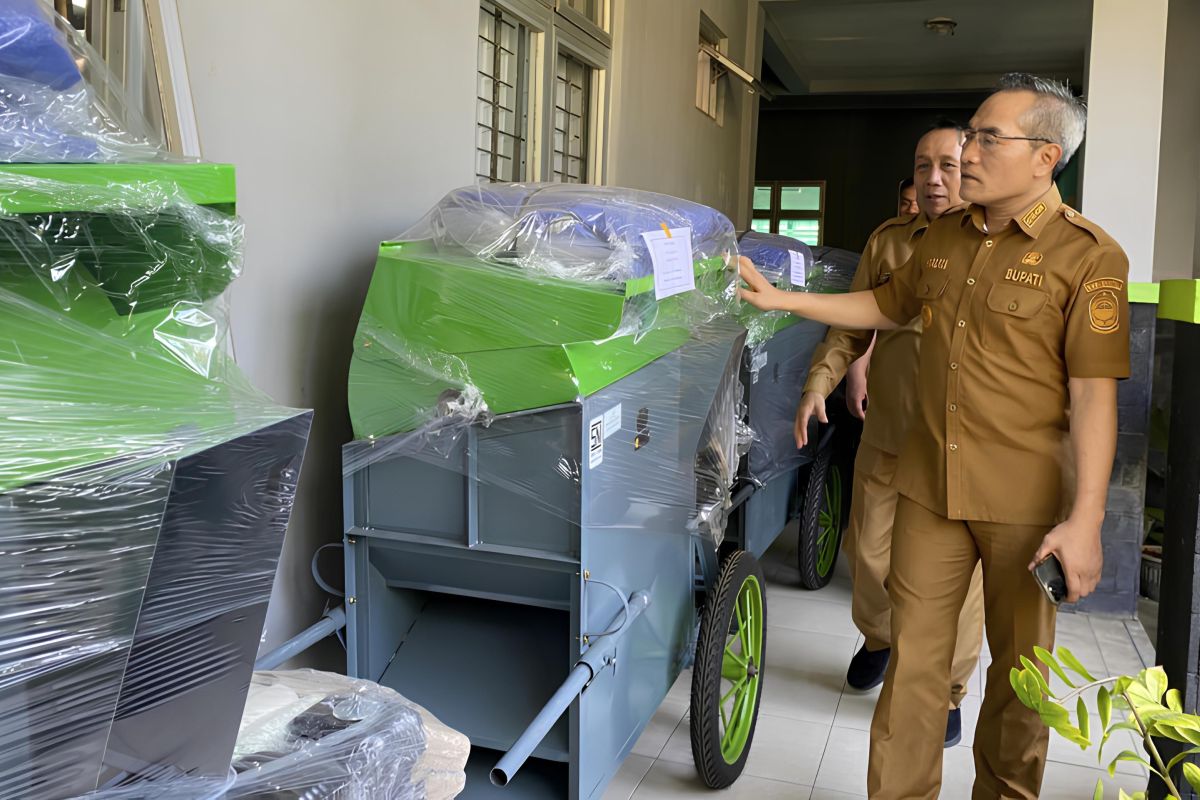
The Bantul Regency Government has handed over grants in the form of several agricultural machines (alsintan) to the Bantul Farmer Group Unions (Gapoktan) to encourage productivity in the local agricultural sector.
The Head of the Bantul Regency Food Security and Agriculture Office (DKPP), Joko Waluyo, stated that the provided machinery includes four hand sprayers, one rice transplanter, ten power threshers, and six post-harvest facilities for tobacco.
“Every recipient group is obliged to maintain and care for the donated equipment,” said Joko in Yogyakarta on Monday. The Bantul Regency Government has imposed conditions on the recipients to ensure the equipment is maintained, specifically prohibiting the sale of the machinery or its transfer to third parties.
Joko added that the agricultural tools can be operated outside of the specific group, provided that the operation is conducted responsibly and managed by the Gapoktan itself. The chairpersons of the Gapoktan have signed formal agreements on stamped paper to this effect.
Furthermore, the Gapoktan are required to submit monthly reports regarding the use of the machinery, including its condition and the benefits derived, as a form of accountability for maintenance. “There must be monthly reporting on the use of the tools; if any equipment is damaged, it will be the responsibility of the group,” he noted.
The Regent of Bantul, Abdul Halim Musliaks, emphasised that the assistance is provided free of charge to increase agricultural productivity, strengthen food security, and support farmer welfare, thereby driving the agricultural sector to play a larger role in national development.
“This grant of agricultural machinery is intended to encourage the agricultural sector to regain its glory and prosper the nation, because a resilient nation is one that possesses food, energy, and water security,” said Halim. He added that mastering three key commodities—food, energy, and water—is essential to reducing import dependency and ultimately transforming the country into a food commodity exporter. “We want our food security to become stronger; instead of being an importer, we should become an exporter,” he asserted.